On this page
- How Far Can You Actually Go from Bansko?
- Melnik and the Rozhen Monastery: Wine Country and Sandstone Pyramids
- Rila Monastery: Bulgaria’s UNESCO Heavyweight
- Plovdiv: The Case for a City Day Trip
- Lake Batak and the Rhodope Villages: The Quiet Alternative
- Gotse Delchev and the Greek Border Region: Bulgaria’s Underrated South
- 2026 Budget Reality: What Each Trip Actually Costs
- Practical Logistics: Driving, Timing, and What Nobody Tells You
- Frequently Asked Questions
💰 Click here to see Bulgaria Budget Breakdown
💰 Prices updated: August, 2026. Budget figures are estimates — always verify before travel.
Exchange Rate: $1 USD = €0.86
Daily Budget (per person)
Shoestring: €35.00 – €50.00 ($40.70 – $58.14)
Mid-range: €60.00 – €100.00 ($69.77 – $116.28)
Comfortable: €150.00 – €200.00 ($174.42 – $232.56)
Accommodation (per night)
Hostel/guesthouse: €5.00 – €20.00 ($5.81 – $23.26)
Mid-range hotel: €55.00 – €95.00 ($63.95 – $110.47)
Food (per meal)
Budget meal: €12.00 ($13.95)
Mid-range meal: €25.00 ($29.07)
Upscale meal: €60.00 ($69.77)
Transport
Single metro/bus trip: €0.80 ($0.93)
Monthly transport pass: €25.50 ($29.65)
How Far Can You Actually Go from Bansko?
Bansko sits in the Razlog Valley, wedged between the Pirin Mountains to the southwest and the Rhodope range to the north and east. That geography sounds limiting on paper, but in practice it puts you within striking distance of some of the most varied landscapes and historical sites in Bulgaria. The challenge in 2026 is that public transport from Bansko to most of these destinations is either infrequent, indirect, or non-existent outside ski season. If you arrived here expecting a network of tourist shuttle buses, you are in for a surprise. A rental car changes everything.
Road quality has improved significantly since the completion of the Struma Motorway (A3) extension in late 2024, which now links Blagoevgrad to the Greek border near Kulata with a fast, smooth four-lane road. This single infrastructure upgrade has cut travel times from Bansko southward by 30 to 40 minutes on several popular routes. From Bansko town centre, here is a realistic look at how far key destinations actually are:
- Melnik: approximately 85 km, around 1 hour 20 minutes by car
- Rila Monastery: approximately 75 km, around 1 hour 15 minutes by car
- Plovdiv: approximately 145 km, around 1 hour 55 minutes by car
- Lake Batak: approximately 95 km, around 1 hour 30 minutes by car
- Gotse Delchev: approximately 55 km, around 55 minutes by car
All of these are realistic one-day returns. None require an overnight stay, though for Plovdiv you will want an early start.
Melnik and the Rozhen Monastery: Wine Country and Sandstone Pyramids
Melnik is officially Bulgaria’s smallest town, with fewer than 200 registered residents, yet it attracts visitors out of proportion to its size because there is genuinely nothing else like it in the country. The sandstone pyramids that rise above the town look like they belong in a Cappadocia travel brochure. The Kordopulov House, a merchant mansion built in the 18th century, has wine cellars carved directly into the rock, and locals press Shiroka Melnishka Loza — a grape variety that grows nowhere else on earth at commercial scale. You can taste the wine straight from barrels in cool, dimly lit caves while dust motes drift through small windows above you. The contrast of dark, earthy silence underground and the harsh Macedonian sun outside is something you remember.

From Bansko, take the Blagoevgrad road north briefly, then cut southwest via Sandanski using the Struma Motorway. Sandanski itself is worth the 20-minute detour if you have time — it has a warm microclimate, a pedestrian spa zone, and a solid Roman archaeological site. But if you are keeping Melnik as the main event, press on.
The Rozhen Monastery sits about 7 km above Melnik by foot along a marked trail, or 10 km by a rough road. Most people drive up, walk through the monastery (free entry, modest dress required), and then walk the trail back down to Melnik — about 45 minutes downhill through vineyards and pyramids. This combination of monastery and walk is genuinely the best sequence for this trip.
Lunch in Melnik means grilled meats, shopska salad, and local red wine at one of the half-dozen mehanas along the main lane. Prices are tourist-level but not outrageous. Expect to pay 25–35 BGN (13–18 EUR) for a full meal with a glass of wine.
Rila Monastery: Bulgaria’s UNESCO Heavyweight
Rila Monastery is on almost every Bulgaria itinerary, and there is a reason for that: the painted frescoes covering every centimetre of the church’s exterior portico are one of the most visually dense experiences in all of Eastern Europe. Thousands of individual scenes, each outlined in bold black and filled with intense reds, blues, and ochres, wrap around the colonnaded walkway like a continuous animated film frozen mid-frame. Standing inside that portico on a quiet morning, with the smell of beeswax candles drifting from the church door and the sound of water from a mountain stream running somewhere beyond the walls, you understand why this place has operated continuously since the 10th century.

From Bansko, the most direct route runs north to Blagoevgrad, then east toward Rila village and up the gorge road into the monastery complex. The gorge road is narrow in sections and can get congested during summer peak hours (10:00–15:00). Plan to arrive before 10:00 or after 15:30 to avoid the worst of it. Parking at the monastery is 5 BGN (2.60 EUR). Entry to the monastery yard is free; the church interior requires modest dress but no ticket.
The monastery museum charges 10 BGN (5.20 EUR) and is genuinely worth it. It holds Rafail’s Cross — a wooden crucifix carved by a monk over 12 years in the early 19th century with more than 1,500 tiny figures, each the size of a grain of rice. He went blind completing it. The museum is air-conditioned, which matters in July and August.
If you have energy after the main complex, the trail to the Skalni Monastery (the hermitage of Saint Ivan of Rila, carved into a cliff face about 30 minutes uphill) is short, well-marked, and rewards you with views back down the valley. Wear shoes with grip — the path has loose rock sections.
Plovdiv: The Case for a City Day Trip
Plovdiv is the furthest destination on this list and the one that requires the most commitment. Leave Bansko by 8:00, and you arrive in Plovdiv Old Town by 10:00, which gives you a solid five to six hours before you need to head back. That is enough time, but only if you skip the impulse to wander aimlessly and instead pick a clear focus.

The Old Town is built across three of Plovdiv’s distinctive syenite hills, and the cobblestone streets between the National Revival mansions are genuinely beautiful rather than just postcard-ready. The Roman Theatre, still used for live concerts in summer, overlooks the lower city from its hillside position. Walk down through the Kapana creative quarter afterward — a grid of narrow streets filled with independent galleries, record shops, and espresso bars — and you have seen the essential Plovdiv in a compact loop of about three kilometres.
Plovdiv was a 2019 European Capital of Culture and has kept investing in its arts infrastructure since then. By 2026 the Tsar Simeon Garden renovation is complete, and the new Contemporary Arts Centre near the train station opened in late 2025, giving the city a genuine anchor for contemporary exhibitions. If that kind of thing interests you, factor in an extra hour.
The drive from Bansko goes via Velingrad and through the Rhodope foothills — a more scenic alternative to the motorway route — or faster via Blagoevgrad and the Trakia Motorway connection. The scenic route adds about 25 minutes but is more interesting.
Lake Batak and the Rhodope Villages: The Quiet Alternative
Most visitors driving west from Bansko instinctively turn toward Rila or the Struma Valley. Turning east instead, toward the Rhodope plateau, opens a completely different Bulgaria — slower, quieter, and largely without tourist infrastructure in the western sense of that word.
Lake Batak is a large reservoir ringed by pine forest at around 1,000 metres elevation. It is a working reservoir, not a national park, so development around it is patchy — some stretches have concrete-block guesthouses and motorboat hire, others are completely undeveloped forest right to the water’s edge. The drive around the lake takes about 45 minutes and passes through the village of Batak itself, which has a significant and sobering history: an April Uprising massacre in 1876 wiped out most of the village’s population, and the Church of Sveta Nedelia, where hundreds sought shelter, is now a memorial and small museum.

Above and beyond the lake, the Rhodope villages of Dorkovo, Rakitovo, and Velingrad form a loose corridor worth exploring. Velingrad in particular has developed a serious spa tourism infrastructure — it sits over one of the largest concentrations of mineral springs in the Balkans. A day visit gives you access to several public mineral pools for as little as 10–15 BGN (5–8 EUR) per person. The water temperature varies by pool, from a cool 32°C to a near-scalding 62°C at the source.
This route is best in late spring or autumn when the forest colours are striking and the roads are uncrowded. In peak summer, it is pleasant but not exceptional.
Gotse Delchev and the Greek Border Region: Bulgaria’s Underrated South
Gotse Delchev (known locally as Gotse) is a small town in the Nevrokop Valley, about 55 kilometres south of Bansko through the eastern Pirin range. It does not appear on most day trip lists, and that absence is the whole point. This is real, working provincial Bulgaria — a covered bazaar area that has been trading for centuries, a riverside park along the Mesta River, and a quiet pedestrian centre with bakeries, hardware shops, and mehanas sitting side by side without any attempt to curate themselves for visitors.

The drive itself is part of the reason to go. The road from Bansko climbs into the Pirin foothills, passes through the Mesta River gorge, and drops into the valley at Gotse. At certain points in autumn, the beech and oak cover on the hillsides turns from green to deep copper and gold, and the gorge glows with it in the late afternoon light.
South of Gotse, the road continues toward the Greek border at Ilinden. Since Bulgaria’s full Schengen land border integration in January 2025, crossing into Greece here is faster than it used to be — no systematic passport checks for EU and Schengen-document holders. This makes a short loop into northeastern Greece (Kavala or Xanthi are both under an hour from the border) technically feasible as part of a very long day, though that crosses from day trip into mini-road-trip territory.
Closer to Gotse, the villages of Leshten and Kovachevitsa are among the most intact National Revival stone-house villages in the whole country. Both sit high on the hillsides above the valley and have been protected as architectural reserves since the 1970s. Kovachevitsa in particular feels genuinely isolated — the road up is single-track in places, the village has no mobile signal on some networks, and the handful of guesthouses operate more like family homes than hotels.
2026 Budget Reality: What Each Trip Actually Costs
These figures assume you are driving from Bansko, travelling as a couple, and eating one proper sit-down meal per day. Fuel prices in Bulgaria in 2026 are approximately 2.50–2.70 BGN per litre (1.28–1.38 EUR) for diesel, slightly more for petrol.
Melnik and Rozhen Monastery
- Budget: 60–80 BGN per person (31–41 EUR) — covering fuel (roughly 40 BGN total for the car), a mehana lunch, and a wine tasting
- Mid-range: 100–130 BGN per person (51–67 EUR) — adds a wine purchase to take home and a second tasting session
- Comfortable: 160–200 BGN per person (82–103 EUR) — adds a guided tour of the Kordopulov House and a longer lunch

Rila Monastery
- Budget: 40–55 BGN per person (21–28 EUR) — fuel, parking, museum entry, simple lunch from a stall
- Mid-range: 70–90 BGN per person (36–46 EUR) — restaurant lunch, museum, and the hermitage trail
- Comfortable: 110–140 BGN per person (56–72 EUR) — guided tour, restaurant meal with wine, extra time exploring
Plovdiv
- Budget: 80–100 BGN per person (41–51 EUR) — fuel, street food lunch in Kapana, one museum entry
- Mid-range: 130–170 BGN per person (67–87 EUR) — restaurant lunch, two to three museums, coffee stops
- Comfortable: 200–250 BGN per person (103–128 EUR) — full day with guided Old Town walk, quality restaurant dinner before driving back
Lake Batak and Velingrad
- Budget: 50–70 BGN per person (26–36 EUR) — fuel, public mineral pool entry, lunch at a local restaurant
- Mid-range: 90–120 BGN per person (46–62 EUR) — private spa facility plus lunch
Practical Logistics: Driving, Timing, and What Nobody Tells You
Rental Cars in Bansko in 2026
Several local rental agencies operate year-round from Bansko, with prices starting around 55–70 BGN per day (28–36 EUR) for a small car in low season, rising to 90–130 BGN (46–67 EUR) in peak ski season (December to March) and peak summer (July to August). Book at least a week ahead in ski season — inventory genuinely runs short. National companies like Europcar and Hertz operate from Blagoevgrad (35 minutes north) and Sofia Airport if local options are full.
The Narrow Mountain Road Reality
Several routes from Bansko involve mountain passes or narrow valley roads. The road from Bansko through the Mesta Gorge toward Gotse Delchev has sections where two cars cannot pass simultaneously — one must reverse to a wider point. This is normal, nobody panics, and locals do it by instinct. Slow down and use your horn before blind corners. Google Maps handles Bulgarian mountain roads reasonably well in 2026, but it sometimes routes you onto forest tracks that are technically driveable but not comfortable in a standard rental car. Cross-reference with Maps.me if you are venturing off the main valley roads.

Timing by Season
- January–March: Rila Monastery road can have ice and occasional closure above 1,000m. Melnik and Gotse Delchev are accessible year-round. Plovdiv is fine in any weather.
- April–June: Best all-round window. Roads clear, sites uncrowded, wildflowers across the Pirin and Rhodope foothills.
- July–August: Hot (35°C+ in Plovdiv and the Struma Valley). Start all trips before 9:00. Rila crowds peak on weekends.
- September–November: The most underrated window. Autumn colour, harvest season, warm but not oppressive. Wine tasting in Melnik is especially good during the harvest in late September and October.
Public Transport: The Honest Picture
One direct bus runs daily from Bansko to Melnik via Blagoevgrad and Sandanski, but it departs very early and the return is poorly timed for a day visit. Rila Monastery has no direct bus from Bansko — you would need to connect via Blagoevgrad and Rila town, which takes over three hours each way. Plovdiv by public transport from Bansko involves multiple transfers. For these day trips specifically, a rental car or organised tour is the practical choice. Organised day tours from Bansko do run to Rila and Melnik — check with the accommodation reception desks, as schedules change seasonally.
Frequently Asked Questions
What is the best day trip from Bansko for first-time visitors?
Rila Monastery is the most rewarding single day trip from Bansko for first-time visitors to Bulgaria. The drive is straightforward, the monastery is visually overwhelming in a very positive way, and the combination of the main complex plus the Skalni hermitage trail fills a full day without feeling rushed. Go on a weekday to avoid weekend crowds.

Can I do a day trip from Bansko without a car?
It is possible for Melnik — a daily bus runs via Blagoevgrad and Sandanski, though the timing is inconvenient. For most other destinations including Rila Monastery, Lake Batak, and Plovdiv, the public transport connections from Bansko are too slow or indirect for a comfortable day return. Organised day tours booked through local guesthouses and agencies are the practical alternative to renting a car.
How many day trips can I realistically fit into a one-week stay in Bansko?
Three to four comfortable day trips works well for a seven-day stay, leaving time to explore the Bansko Old Town, hike locally in the Pirin Mountains, and recover on quieter days. Trying to do a day trip every single day is exhausting, especially if you are also skiing or hiking. Prioritise Rila, Melnik, and either Plovdiv or Gotse Delchev depending on your interests.
Is it safe to drive the mountain roads near Bansko?
Yes, with reasonable preparation. The main roads toward all destinations listed here are paved and maintained. Some secondary roads have narrow sections and occasional potholes. Drive cautiously on blind mountain corners, avoid night driving on unfamiliar passes, and check local weather before heading out in winter or early spring when ice is possible above 800 metres. A standard two-wheel-drive rental car handles all these routes in good conditions.
Has the Schengen border change made Greek day trips from Bansko more viable in 2026?
Full Schengen land border integration in January 2025 removed systematic passport checks at Bulgarian-Greek crossings for eligible travellers. This has reduced border wait times significantly at the Kulata-Promachonas crossing near Sandanski. Combining Melnik with a loop into northern Greece (Kavala or Serres) is now more practical as a longer day trip, though it remains ambitious. Non-EU visitors still need to carry valid travel documents at all times.
Explore more
Bansko Nightlife Guide: Best Bars, Clubs & Live Music
The Ultimate Bansko Shopping Guide: Souvenirs, Handicrafts & Ski Gear Shops
Bansko Nightlife: Your Guide to the Best Bars, Apres-Ski Spots & Clubs
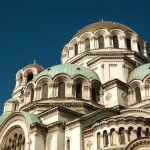
📷 Featured image by Vitaliy Paykov on Unsplash.