On this page
- Nessebar — the Walled City Across the Water
- Sozopol — Two Old Towns, One Peninsula
- Ropotamo Nature Reserve — Boat Rides and River Wilderness
- Pomorie — Salt, Mud, and a Museum Unlike Any Other
- Strandzha Nature Park — Bulgaria’s Most Underrated Wilderness
- Tsarevo and Ahtopol — the Quiet South Coast
- Sinemorets and the Veleka River — Where the Wild Beach Ends
- Kazanlak and the Thracian Tomb — History in the Rose Valley
- Sliven and Kotel — Balkan Villages One Hour Inland
- 2026 Budget Reality — What These Excursions Actually Cost
- Frequently Asked Questions
💰 Click here to see Bulgaria Budget Breakdown
💰 Prices updated: August, 2026. Budget figures are estimates — always verify before travel.
Exchange Rate: $1 USD = €0.86
Daily Budget (per person)
Shoestring: €35.00 – €50.00 ($40.70 – $58.14)
Mid-range: €60.00 – €100.00 ($69.77 – $116.28)
Comfortable: €150.00 – €200.00 ($174.42 – $232.56)
Accommodation (per night)
Hostel/guesthouse: €5.00 – €20.00 ($5.81 – $23.26)
Mid-range hotel: €55.00 – €95.00 ($63.95 – $110.47)
Food (per meal)
Budget meal: €12.00 ($13.95)
Mid-range meal: €25.00 ($29.07)
Upscale meal: €60.00 ($69.77)
Transport
Single metro/bus trip: €0.80 ($0.93)
Monthly transport pass: €25.50 ($29.65)
Burgas in summer 2026 is busier than ever. The city’s own beaches fill up fast, parking near the lake parks has become a daily lottery, and the seafront restaurants are packed by noon. The good news: Burgas is one of the best-positioned cities in Bulgaria for day trips. Within two hours in any direction, you can reach wild river beaches, medieval walled towns, ancient Thracian tombs, and mountain villages where the pace of life hasn’t changed in decades. This guide covers ten excursions worth planning around — with logistics, timing, and honest advice on what actually makes each one worth the effort.
Nessebar — the Walled City Across the Water
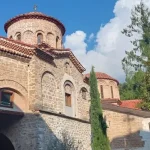
Nessebar sits on a narrow rocky peninsula connected to the mainland by a causeway, just 35 kilometres north of Burgas. It is a UNESCO World Heritage site, and the old town is genuinely remarkable — a dense cluster of Byzantine churches, wooden-balconied houses, and narrow cobblestone lanes packed into an area you can walk end-to-end in about fifteen minutes. The problem in 2026 is the same as in previous years: the main pedestrian street running through old Nessebar is lined almost entirely with souvenir shops, and between July and August the crowds can make it feel more like a theme park than a historic town.
The solution is to arrive before 9:00 or after 17:00. The tour buses leave by late afternoon, and the old town transforms. The sound of sea birds replaces the vendor noise, and the light on the stone churches turns golden. The Church of St. Stefan and the ruins of the Basilica of St. Sofia are the architectural highlights — both free to walk around outside, with a small entry fee for the interior of St. Stefan (around 4 BGN / €2).
Getting there from Burgas is simple. The No. 10 bus runs regularly from Burgas bus station to Nessebar for around 4 BGN (€2) each way. By car it’s a 30-minute drive on the A1 motorway, which was upgraded again in 2025 and handles summer traffic well. Parking is easiest in the lots on the mainland side of the causeway — do not try to drive into the old town itself.
Sozopol — Two Old Towns, One Peninsula
Sozopol is 35 kilometres south of Burgas and shares Nessebar’s DNA — ancient settlement, rocky peninsula, Orthodox churches — but it has a distinctly different character. Where Nessebar leans into its UNESCO status with commercial intensity, Sozopol still feels like a living town. Local families still occupy the old wooden houses. The fishing boats still go out. There are actual bakeries where you can buy a fresh tutmanik (cheese-filled pastry) and eat it on a wall overlooking the sea, the salt air mixing with the warm dough smell in a way that makes the whole trip feel worthwhile before you’ve seen a single church.
Sozopol has two old towns worth exploring: the original peninsula (Staria Sozopol) and the newer Harmanite district, which extends south and has a calmer, longer beach. The Archaeological Museum on the peninsula holds some extraordinary finds from ancient Apollonia — the Greek colony that predates Sozopol — including Bronze Age anchors, Hellenistic pottery, and jewellery. Entry is around 6 BGN (€3).
The Apollonia Arts Festival, held every September, draws international musicians, theatre companies, and visual artists. If your trip falls in early September, timing a day visit around one of the outdoor evening performances is a genuine highlight — many events are free or low-cost.

Buses run from Burgas South Bus Station to Sozopol roughly every 30–40 minutes in summer. Journey time is about 40 minutes, fare around 5 BGN (€2.50). By car, park in the large lots outside the old town — summer parking inside the peninsula is restricted.
Ropotamo Nature Reserve — Boat Rides and River Wilderness
Twenty kilometres south of Sozopol, the Ropotamo River pushes through dense riparian forest before emptying into the Black Sea. This nature reserve is one of the most biodiverse areas on the Bulgarian coast, and the boat trips along the river are genuinely atmospheric — you drift under willows and water lilies, past nesting cormorants and the occasional otter track in the mud. The boat captains know the wildlife well and will cut the engine when herons are feeding nearby.
The reserve entrance and boat dock are signposted off the main E87 coastal road. Boat trips run approximately every 30–45 minutes during the day in summer, cost around 12 BGN (€6) per adult, and last about 40 minutes. There are also walking trails along the river and to a small beach at the river mouth — the water there is calm and the sand is flanked by reeds and forest, nothing like the developed beaches to the north.
Most visitors combine Ropotamo with a stop in Sozopol on the same day. If you’re driving south, it’s an easy addition — the parking area is large and free. Public transport access is limited; the closest you can get by bus is the Primorsko stop, still a few kilometres away. A taxi from Primorsko costs around 10–12 BGN (€5–6).
Pomorie — Salt, Mud, and a Museum Unlike Any Other
Pomorie is only 18 kilometres north of Burgas — close enough to visit as a half-day trip. Most visitors know it, if at all, as a spa town with mud treatment centres. That’s accurate, but Pomorie has an angle that almost nobody talks about: the salt-production lake on the western edge of town, and the Pomorie Lake Saltworks Museum, which explains how the town has been harvesting salt since antiquity. The museum is small but genuinely interesting, and includes a walk along the salt pans where you can see evaporation pools in vivid shades of pink and white — the colour comes from halophilic algae, and it’s one of those sights that photographs well but looks even more surreal in person.

The Pomorie monastery, located inside the town itself, is one of the oldest active monasteries in Bulgaria. It’s free to enter, tranquil even in summer, and architecturally modest in the best way — no crowds, no ticket queue, just cool stone corridors and a working monastic community.
For the mud treatments Pomorie is famous for, the lakeside health centres are still operating in 2026 and offer basic therapeutic mud baths from around 25–35 BGN (€12–18) per session without booking far in advance on weekdays. The mud here has a high mineral content and is prescribed by local doctors for joint conditions — but even if you’re just curious, a session is an unusual and strangely enjoyable experience.
Strandzha Nature Park — Bulgaria’s Most Underrated Wilderness
Most tourists on the Bulgarian Black Sea coast never go to Strandzha. This is a mistake, and if you have a car or are willing to join a guided day tour from Burgas, this is the excursion that will most stay with you. Strandzha is Bulgaria’s largest nature park — over 1,100 square kilometres of ancient oak and beech forest, river valleys, medieval ruins, and a handful of villages that feel genuinely remote despite being 60–80 kilometres from Burgas.
The forest here is old-growth in places, the kind of dense deciduous canopy that blocks out the sky and fills the air with a cool, mushroom-and-moss smell even in July. Walking the trails near Malko Tarnovo — the main town inside the park — you’ll cross stone bridges over clear streams and find ruins of Byzantine and medieval settlements almost without signage. The town itself has a small but well-curated historical museum focused on the Strandzha region’s Thracian and Roman layers.

In 2026, several Burgas-based operators now offer guided Strandzha day tours with 4×4 vehicles, typically including Malko Tarnovo, a river swim stop, and a traditional lunch in a village mehana. Prices range from 80–120 BGN (€40–60) per person. Independent drivers should note that some forest tracks require a permit — check with the park administration in Malko Tarnovo before going off the main roads.
Tsarevo and Ahtopol — the Quiet South Coast
Drive south past Sozopol and Primorsko and the coast changes character significantly. Tsarevo, about 60 kilometres from Burgas, is a small town with a functioning fishing port, good seafood restaurants on the harbour, and a laid-back atmosphere that the larger resort towns have long lost. The adjacent beaches — particularly Coral Beach just north of town — are cleaner and less crowded than anything near Sunny Beach or even Sozopol in peak season.
Another 12 kilometres south is Ahtopol, the last significant settlement before the Turkish border zone. Ahtopol is tiny — just a few streets, a rocky cape, a small beach, and a lighthouse. It feels like the edge of something. The seafood here is extraordinarily fresh because the boats go out daily from the small port and sell directly to the local restaurants. A grilled sea bass with a view of the cape costs around 20–28 BGN (€10–14) for a full plate, and the quality is hard to match anywhere on the coast.

Public transport to Tsarevo runs from Burgas South Bus Station; journey time is about 1.5 hours. Ahtopol is served less frequently — check the summer schedule, as additional buses run June through September. By car, the E87 road runs the full length and is in good condition after 2024 resurfacing works.
Sinemorets and the Veleka River — Where the Wild Beach Ends
Sinemorets, 90 kilometres from Burgas, is as far south as you can comfortably go in a day. The village sits above the point where the Veleka River meets the Black Sea, and this meeting point creates one of the most striking natural beaches in Bulgaria — a wide river mouth with shallow warm water on one side, open sea on the other, and dunes held together by tamarisk scrub. The Veleka river beach is not developed. There are no sunbed rentals, no beach bars, no music. Just water, sand, and reeds, with kites and marsh harriers drifting overhead.
The village itself is small and somewhat prepared for visitors — there are a few guesthouses, a handful of restaurants, and a river crossing by small wooden boat to reach the wilder northern side of the beach (costs around 2–3 BGN / €1). The walk upstream along the Veleka through the Strandzha forest edge is exceptional in the morning before the heat peaks, the river reflecting the tree canopy and the path still cool in the shade.
A car is essentially necessary for Sinemorets — bus services are infrequent and the last stretch of road is narrow. Fill your tank in Tsarevo or Ahtopol before heading further south. The road into Sinemorets is paved but winding; allow 1.5–2 hours from Burgas.
Kazanlak and the Thracian Tomb — History in the Rose Valley
This is the one excursion on this list that goes inland rather than along the coast, and it’s a genuine change of pace. Kazanlak is about 200 kilometres northwest of Burgas — roughly 2.5 hours by car via the Trakiya motorway (A1). The drive is easy and the motorway is in excellent condition following its final section upgrades completed in late 2024.

The reason to go: the Thracian Tomb of Kazanlak, a UNESCO World Heritage site containing some of the finest Thracian fresco paintings ever discovered. The original tomb is climate-controlled and has restricted access, but the full-scale replica next to it is open daily and gives you a complete sense of the burial chamber’s proportions and artwork — circular domed architecture, painted hunting scenes, and a portrait of a Thracian ruler and his wife that has survived more than 2,300 years with remarkable colour intensity.
Kazanlak is also the heart of the Bulgarian rose oil industry. The Valley of the Roses Museum in town explains the distillation process, and in May–June you can visit working rose farms nearby. Outside rose season, the town is quiet but the museum complex (tomb, historical museum, and ethnographic exhibits) can fill a full day easily. Return to Burgas by early evening — traffic on the A1 heading east is lightest after 18:00.
Sliven and Kotel — Balkan Villages One Hour Inland
For travellers who want to understand Bulgaria beyond the coast, Sliven and Kotel offer a compact inland excursion with authentic character. Sliven is about 100 kilometres northwest of Burgas — roughly one hour on the A1 and then the E773. The city itself is most famous for the Blue Rocks Nature Park just above it: a dramatic cliff formation of dark basalt columns rising over the city, accessible by cable car. The cable car was refurbished in 2023 and runs reliably; a return ticket costs 14 BGN (€7). From the top, the view across the Thracian Plain on a clear day extends for extraordinary distances.

Kotel, 40 kilometres further into the Balkan Mountains from Sliven, is one of Bulgaria’s best-preserved Revival-period towns. The streets are lined with large timber-framed houses from the 18th and 19th centuries, and the town has been a centre of carpet weaving for centuries. The Kotel carpet — with its specific geometric patterns in deep red, black, and gold — is one of the most recognised traditional crafts in Bulgaria. Several family workshops still operate and sell directly; prices for a handwoven piece start around 150–300 BGN (€75–150) depending on size.
Combine Sliven and Kotel in one day by driving: Blue Rocks in the morning, lunch in Sliven, then the mountain road to Kotel in the afternoon. The road between them is winding but scenic and in good condition. Return to Burgas via Sliven on the A1.
2026 Budget Reality — What These Excursions Actually Cost
Costs for day trips from Burgas vary significantly depending on transport choice and what you do at the destination. Here is an honest breakdown for 2026 prices.
Transport Costs
- Bus (Burgas to Nessebar / Sozopol / Pomorie): 4–6 BGN (€2–3) each way. Affordable and reliable in summer.
- Car fuel (full day, 150–200 km round trip): Approximately 30–50 BGN (€15–25) depending on vehicle efficiency. Petrol in Bulgaria averages 2.45–2.60 BGN per litre in 2026.
- Guided day tour (Strandzha / themed excursions): 80–140 BGN (€40–70) per person, usually including transport and lunch.
Entry Fees and Activities
- Budget: Most sites (Nessebar churches, Sozopol waterfront, Pomorie salt pans exterior, Sinemorets beach) cost nothing or under 6 BGN (€3).
- Mid-range: Ropotamo boat trip (12 BGN / €6), Kazanlak tomb replica (8 BGN / €4), Sliven cable car (14 BGN / €7), Sozopol museum (6 BGN / €3).
- Comfortable: Pomorie mud bath (25–35 BGN / €12–18), guided Strandzha tour (80–120 BGN / €40–60 per person).
Food and Drink on the Road
- Budget lunch (mehana set menu or fast food): 12–18 BGN (€6–9) per person.
- Mid-range sit-down meal with a drink: 20–35 BGN (€10–18) per person.
- Ahtopol / Sozopol harbour seafood restaurant: 30–50 BGN (€15–25) per person for a full meal with wine.

A realistic budget for a full day trip — including transport by bus, one paid attraction, lunch, and a coffee — is 40–70 BGN (€20–35) per person. With a car and more activities, plan for 80–150 BGN (€40–75) per person for a comfortable day.
Frequently Asked Questions
What is the easiest day trip from Burgas for first-time visitors?
Nessebar is the most accessible — frequent buses, short journey, iconic sights, and a well-marked old town that’s easy to navigate without a guide. It combines easily with a beach stop at Sunny Beach on the return.
Do I need a car to do day trips from Burgas?
Not for the coast. Nessebar, Sozopol, Pomorie, Primorsko, and Tsarevo are all reachable by bus from Burgas South Bus Station. For inland destinations (Strandzha, Kazanlak, Sliven, Kotel) and remote spots like Sinemorets, a car or a guided tour is strongly recommended. Bus schedules to these areas are sparse in 2026.
Which day trip from Burgas is best for nature lovers?
Strandzha Nature Park and the Veleka River at Sinemorets are the two standouts. Strandzha offers ancient forest, river valleys, and real wilderness. Sinemorets has one of Bulgaria’s last undeveloped river-mouth beaches. Both reward visitors willing to go slightly further than the standard coastal circuit.
Is it safe to swim at the beaches near these day trip destinations?
Yes — water quality on the Bulgarian south coast consistently meets EU standards, monitored annually. The safest and cleanest swimming spots for day-trippers include the beaches at Sinemorets (Veleka mouth), Tsarevo (Coral Beach), and Ahtopol. These have calmer conditions and lower visitor density than the northern resort beaches.
How far in advance should I plan day trips from Burgas in summer 2026?
For independent trips by bus or car, no advance booking is needed. For guided tours (especially Strandzha 4×4 tours), book at least 3–5 days ahead in July and August as groups fill quickly. Pomorie mud bath centres can be visited walk-in on weekdays; weekends in peak season benefit from a same-day phone booking.
Explore more
Exploring Lazur: Burgas’ Vibrant Seaside District Guide
Shopping in Burgas, Bulgaria — Best Markets and Stores
Best Day Trips from Burgas: Unforgettable Bulgarian Adventures
📷 Featured image by Atanas Teodosiev on Unsplash.