On this page
- BDZ Trains: When Slow Actually Saves You Money
- Intercity Buses: The Backbone of Budget Travel in Bulgaria
- The Sofia Metro — Cheapest Kilometres in the Country
- Airport Transfer Without the Rip-Off
- Taxi Apps vs Street Taxis — Know the Difference
- Car Rental: When It Makes Financial Sense (and When It Doesn’t)
- Domestic Flights — Almost Never Worth It on a Budget
- 2026 Budget Reality: What Transport Actually Costs Across Bulgaria
- Common Mistakes That Cost Travellers Money
- Frequently Asked Questions
Bulgaria is genuinely one of the most affordable countries in Europe to travel around — but that doesn’t mean you can’t waste money if you don’t know the system. In 2026, the question isn’t whether transport is cheap here; it’s knowing which option to pick for each specific trip. Plenty of visitors arriving at Sofia Airport end up in an unlicensed taxi paying 60 BGN for a ride that should cost 20. Others book domestic flights between cities that are perfectly connected by a 30 BGN overnight bus. This guide cuts through the confusion and lays out every realistic transport option, with actual 2026 prices, step-by-step booking instructions, and the specific apps and websites you need.
BDZ Trains: When Slow Actually Saves You Money
BDZ (Български държавни железници) — Bulgaria’s national railway — has a reputation for being slow. That reputation is mostly deserved. But for budget-conscious travellers with a loose schedule, it’s often the cheapest way to cover long distances, and the scenery on routes like Sofia to Plovdiv or through the Rhodope foothills genuinely rewards the patience required.
There are three train categories. Ekspresen (Express) trains are fastest with fewer stops and carry a slightly higher fare. Bărz (Fast) trains are the standard long-distance option — more stops, moderate speed, typical pricing. Pătniški (Passenger) trains are the local plodders, stopping at almost every village station, best for short regional hops or if you genuinely have nowhere to be.
Step-by-Step: How to Buy BDZ Tickets Online
- Go to www.bdz.bg and click the language toggle in the top right corner to switch to English.
- Select “Buy Tickets” from the main menu.
- Enter your departure and arrival stations, travel date, and preferred time.
- Choose your train from the results. Pick 2nd class — it’s the standard and the cheapest option.
- Select passenger type. Adults pay full price. Students with a valid ISIC card may qualify for discounts. Children under 7 travel free without a separate seat. Children aged 7–10 often receive a 50% reduction.
- Proceed to payment using a debit or credit card. The system has been significantly improved since 2024 and now handles international cards reliably.
- Your e-ticket arrives by email. Show it on your phone or print it — either works.
You can also buy tickets at station windows, where both cash and card are accepted. Buying from the conductor on board is possible in a pinch but costs an extra 1–2 BGN (~0.50–1.00 EUR) in surcharges, and you may not get a seat. Avoid it if you’re watching your budget.
2026 Train Fares (2nd Class, One-Way)
- Sofia – Plovdiv: 11–16 BGN (~5.60–8.20 EUR) | Journey time: 2.5–4 hours
- Sofia – Varna: 28–38 BGN (~14.30–19.40 EUR) | Journey time: 6–8 hours
- Sofia – Burgas: 28–38 BGN (~14.30–19.40 EUR) | Journey time: 6–7.5 hours
- Sofia – Veliko Tarnovo (via Gorna Oryahovitsa): 20–28 BGN (~10.20–14.30 EUR) | Journey time: 4–5 hours
Return tickets typically offer a 5–10% discount over two separate one-way fares. BDZ has introduced some newer rolling stock on key routes since 2024, so comfort has improved slightly on select services, though it remains variable. The core advice: book online in advance, choose 2nd class, and treat the journey time as part of the experience rather than a problem to solve.
Intercity Buses: The Backbone of Budget Travel in Bulgaria
For most point-to-point journeys across Bulgaria, intercity buses are the practical default. They cover a far wider network than trains, run more frequently on popular routes, and are generally faster. The trade-off is that they’re slightly pricier than trains on the same corridor — but not by much, and the time saving often justifies it.
The main operators in 2026 are Union Ivkoni (www.union-ivkoni.com), Biomet (www.biomet-bg.com), Etap-Grup (www.etapgroup.com), and Group Plus (www.groupplus.bg). Each operates different routes, so you may need to check more than one. The aggregator site www.busfor.bg is useful for comparing schedules and booking across operators from one place. For checking timetables without booking, www.avtogari.info gives a broad overview of departures across Bulgaria’s bus stations.
2026 Bus Fares (One-Way)
- Sofia – Plovdiv: 16–22 BGN (~8.20–11.25 EUR) | Journey time: 2–2.5 hours
- Sofia – Varna: 32–48 BGN (~16.40–24.50 EUR) | Journey time: 6–7 hours
- Sofia – Burgas: 32–48 BGN (~16.40–24.50 EUR) | Journey time: 5–6 hours
- Sofia – Veliko Tarnovo: 25–35 BGN (~12.80–17.90 EUR) | Journey time: 3.5–4 hours
Tickets can be bought online through operator websites or via busfor.bg. At bus stations (avtogara), ticket windows accept both cash and card. For popular weekend routes — especially Sofia to the coast in summer — buy at least a day in advance. Seats fill up. Several operators have upgraded their fleets since 2024, and it’s now common to find buses with Wi-Fi and USB charging ports on major routes, which makes the journey considerably more bearable.
The smell of warm diesel and engine hum as a fully loaded coach pulls out of Sofia’s Central Bus Station at 7am is oddly comforting once you realise you’re travelling 300 kilometres for under 25 BGN. That’s the reality of budget Bulgaria.
The Sofia Metro — Cheapest Kilometres in the Country
Inside Sofia, nothing beats the metro for value. A single journey costs 1.80–2.00 BGN (approximately 0.92–1.02 EUR) regardless of distance. The network in 2026 runs four lines: M1 (Red), M2 (Blue), M3 (Green), and M4 (Orange — a branch of M2 that connects the airport to the city centre). For anyone spending more than a couple of days in Sofia, understanding the ticket options saves real money.
Ticket Options and 2026 Prices
- Single Journey: 1.80–2.00 BGN (~0.92–1.02 EUR)
- 10-Trip Rechargeable Card: 14–16 BGN (~7.15–8.20 EUR) — cheaper per journey than single tickets
- Daily Pass (24 hours): 5–6 BGN (~2.55–3.05 EUR)
- 3-Day Pass (72 hours): 12–15 BGN (~6.15–7.65 EUR)
- Sofia City Card (Tourist Pass): Covers unlimited public transport for 1, 3, or 7 days and often bundles museum entry discounts. A 3-day card is estimated at 25–30 BGN (~12.80–15.35 EUR) for 2026.
The biggest practical change since 2024 is the full rollout of contactless bank card payment at every metro turnstile across the entire network. Tap your Visa or Mastercard debit or credit card directly at the gate and it deducts the single journey fare automatically. No ticket needed, no queue at the machine. For short visits, this is the easiest approach. For stays of three days or more, the 3-day pass or Sofia City Card makes more financial sense.
The SofiaPass app — the official Sofia Urban Mobility Centre (SUMC) mobile app — also lets you buy digital QR-code tickets for single journeys or passes directly on your phone. Vending machines at every station accept both cash and card if you prefer a physical ticket.
Airport Transfer Without the Rip-Off
Sofia Airport (SOF) has two terminals. Terminal 2 is the main international hub; Terminal 1 handles some charter and regional flights. Getting into the city cheaply is simple once you know the layout — but arriving tired after a long flight makes it easy to make an expensive mistake.
Option 1: Metro (Best Value)
Terminal 2 has a direct metro station on the M4 line. If you land at Terminal 1, a free airport shuttle bus runs every 15–20 minutes (journey: 5–7 minutes) to Terminal 2. From there, take the M4 towards Obelya. The journey to Serdika station — the city-centre interchange connecting M1 and M2 — takes around 20 minutes. Total cost: 1.80–2.00 BGN. Pay by contactless bank card at the turnstile or buy a ticket from the machine inside Terminal 2 before you exit.
Option 2: Bus (Also Cheap)
Bus 84 runs from Terminal 2 to the city centre (near Orlov Most on Gen. Gurko Street). Bus 184 connects Terminal 1 to the same destination. Fare: 1.80–2.00 BGN. Buy from vending machines at the stop or from the driver in cash (exact change preferred). The bus is slower than the metro and depends on traffic, but it’s a legitimate backup option.
Option 3: Taxi (Convenient, Not Cheap)
If you need a taxi, use OK Supertrans (www.oksupertrans.com) — the official airport taxi partner. Their desks are inside both terminals. Alternatively, book via Bolt, Yellow!, or Green Taxi apps before you reach the exit. Expected fare to the city centre: 20–30 BGN (~10.20–15.35 EUR) depending on traffic. Never accept a ride from someone approaching you unsolicited in the arrivals hall. That’s where the 60 BGN stories begin.
Taxi Apps vs Street Taxis — Know the Difference
Traditional street taxis in Bulgaria operate legally and most are honest, but the industry has a well-documented history of overcharging tourists, particularly around tourist hotspots, bus stations, and airports. The simplest way to sidestep this entirely is to use an app where the fare is calculated transparently before you get in.
Bolt is the dominant ride-hailing platform in Bulgaria in 2026, available in Sofia, Plovdiv, Varna, Burgas, and other major cities. Uber left Bulgaria years ago and has not returned. No new international ride-hailing competitors have entered the market.
2026 Fare Estimates (Sofia)
- Bolt – Daytime: 1.10–1.30 BGN/km (~0.56–0.67 EUR/km) | Minimum fare: 5–6 BGN
- Bolt – Nighttime/Weekend: 1.30–1.60 BGN/km (~0.67–0.82 EUR/km)
- Yellow! / Green Taxi / TaxiMe – Daytime: 1.20–1.50 BGN/km (~0.61–0.77 EUR/km) | Minimum fare: 5–7 BGN
- Yellow! / Green Taxi / TaxiMe – Nighttime/Weekend: 1.50–1.80 BGN/km (~0.77–0.92 EUR/km)
Yellow! (www.yellow333.com) is the largest traditional taxi company with its own app — slightly pricier than Bolt on average but known for reliability. TaxiMe is another local app worth having installed. Green Taxi markets itself as an eco-friendly option with its own app. All four use surge pricing during peak demand, so a ride home from a Friday night concert will cost noticeably more than a Tuesday afternoon trip to the supermarket.
For the best fare: open Bolt, check the estimate, then cross-reference with Yellow! or TaxiMe. The difference is usually 1–3 BGN on a typical city journey, but it adds up over a trip.
Car Rental: When It Makes Financial Sense (and When It Doesn’t)
Car rental in Bulgaria is not a budget hack in itself. For a solo traveller hopping between well-connected cities, public transport will almost always be cheaper. But for a group of three or four people wanting to explore the Rhodope villages, the Belogradchik Rocks, or the monasteries of the Balkan Range — places with no bus service and infrequent taxis — a rental car shifts from luxury to necessity, and the per-person cost becomes very reasonable.
Cheapest Rental Companies in 2026
Local Bulgarian companies consistently undercut the international brands. The most established are Top Rent A Car (www.toprentacar.bg), Yes Rent A Car (www.yesrentacar.bg), and Autojet (www.autojet.bg). Book directly through their websites for the best rates, and always book well in advance for summer and ski season travel.
2026 Rental Costs (Economy Car)
- Short rental (3–7 days): 40–70 BGN/day (~20.45–35.80 EUR/day)
- Longer rental (7+ days): 30–50 BGN/day (~15.35–25.55 EUR/day)
- Fuel (A95H petrol / Diesel): 2.60–3.20 BGN/litre (~1.33–1.64 EUR/litre)
- Vignette (road tax): Weekly ~15 BGN (~7.65 EUR), Monthly ~30 BGN (~15.35 EUR) — almost always already included in the rental car
- Full insurance (zero excess): 10–25 BGN/day extra — strongly recommended
The deposit (200–600 BGN / ~100–300 EUR) is held on your card during the rental period. One-way rentals between different cities carry significant drop-off fees — typically 50–150 BGN (~25–75 EUR) — so factor that in if your route doesn’t loop back to the starting point. The vignette system for national roads outside city limits is managed digitally at www.bgtoll.bg, but you won’t need to worry about it if the car comes from a rental agency, as they handle it.
Domestic Flights — Almost Never Worth It on a Budget
Bulgaria Air (www.air.bg) operates domestic routes between Sofia (SOF), Varna (VAR), and Burgas (BOJ). The flights themselves take around 50 minutes — but once you factor in check-in time, airport security, baggage, and the journey to and from airports at both ends, the time advantage over a direct bus largely evaporates for most travellers.
Economy fares in 2026 (without checked luggage) run 80–160 BGN (~40.90–81.80 EUR) one-way for either route. Adding a checked bag costs an extra 30–50 BGN (~15–25 EUR). Compare that to a bus ticket on the same route for 32–48 BGN, and the calculus is clear. Wizz Air occasionally operates domestic legs as part of international routing, but there is no dedicated low-cost domestic carrier in Bulgaria as of 2026.
Domestic flights make sense in one specific scenario: if you have an extremely tight schedule and money is less of a concern than hours. For everyone else travelling on a budget, the overnight bus to the Black Sea coast — departing Sofia at 11pm, arriving Varna at 6am — lets you sleep through the journey and save a night’s accommodation cost on top of the cheaper ticket price. That’s a real hack worth considering.
2026 Budget Reality: What Transport Actually Costs Across Bulgaria
Here’s an honest breakdown of what different types of travellers can expect to spend on transport, based on 2026 pricing.
Budget Traveller
- Uses metro and city buses exclusively within Sofia: 1.80–2.00 BGN per journey, or 12–15 BGN for a 3-day pass
- Travels intercity by train (2nd class, booked online): 11–38 BGN per long-distance leg
- Airport transfer by metro: 1.80–2.00 BGN
- Typical daily transport spend in Sofia: 4–8 BGN (~2–4 EUR)
- Intercity travel: 11–38 BGN per journey
Mid-Range Traveller
- Uses metro for most city journeys, occasional Bolt for convenience
- Travels intercity by bus (booked online): 16–48 BGN per leg
- Airport transfer by taxi/Bolt: 20–30 BGN
- Typical daily transport spend in Sofia: 10–20 BGN (~5–10 EUR)
Comfortable Traveller
- Bolt or Yellow! for most city transport
- Intercity by bus (booked in advance, comfortable operator): 25–48 BGN per leg
- Occasional car rental for day trips: 40–70 BGN/day plus fuel
- Typical daily transport spend: 30–60 BGN (~15–30 EUR)
These figures reflect modest price increases since 2024 driven by inflation and fuel costs, but Bulgaria’s transport remains significantly cheaper than most of Western Europe at every tier.
Common Mistakes That Cost Travellers Money
Knowing what not to do is just as valuable as knowing the cheapest option.
- Accepting unsolicited taxi rides at the airport. Always use the OK Supertrans desk inside the terminal or book via app. The informal operators outside arrivals consistently overcharge.
- Buying train tickets on board. The conductor surcharge is small but unnecessary. Booking at www.bdz.bg takes five minutes and saves you 1–2 BGN per journey while guaranteeing a seat.
- Booking domestic flights between Sofia and the Black Sea coast. The bus covers the same route for a fraction of the price. The time saving rarely justifies the cost difference for budget travellers.
- Renting a car for solo city-hopping. Between Sofia, Plovdiv, Varna, and Burgas, public transport coverage is strong. A rental car adds fuel, insurance, and parking costs without meaningful benefit over buses or trains.
- Ignoring the 10-trip metro card. If you’re spending more than two days in Sofia, the per-trip cost on the rechargeable card (14–16 BGN for 10 journeys) is lower than buying single tickets each time.
- Not checking busfor.bg before buying tickets at the station. Prices can vary between operators on the same route. Two minutes of checking online can save 5–10 BGN on a single ticket.
- Waiting until peak season to book intercity buses. Summer buses to the Black Sea coast — particularly on Friday afternoons — sell out. Book online a day or two ahead.
Frequently Asked Questions
What is the absolute cheapest way to get from Sofia to Plovdiv?
The train is usually the cheapest option on this route, with 2nd class tickets costing 11–16 BGN (~5.60–8.20 EUR) booked online at www.bdz.bg. Journey time is 2.5–4 hours depending on the service. The bus is faster (2–2.5 hours) but costs 16–22 BGN. Both are genuinely affordable — the choice comes down to how much your time is worth.
Is the Sofia Metro easy to use for tourists in 2026?
Very easy. Since 2024, all metro turnstiles accept contactless Visa and Mastercard bank cards directly — tap and go, no ticket purchase needed. Vending machines at every station accept cash and card if you prefer a physical ticket. Signs are in both Bulgarian and English throughout the network. A single journey costs 1.80–2.00 BGN (~0.92–1.02 EUR).
How do I avoid getting ripped off by taxis in Bulgaria?
Use the Bolt app for transparent, pre-calculated fares. At Sofia Airport specifically, use the OK Supertrans desk inside the terminal or book via a recognised app. Never accept a ride from someone who approaches you in arrivals. Licensed taxis display a yellow tariff card on the dashboard — if you don’t see one, don’t get in.
Is it worth renting a car to travel around Bulgaria?
For groups of three or four people, or for reaching remote areas like rural Rhodope villages or lesser-visited monasteries, yes. For solo travellers or pairs sticking to the main cities, no — public transport between Sofia, Plovdiv, Varna, and Burgas is frequent, affordable, and avoids parking headaches. Economy rentals run 40–70 BGN per day (~20.45–35.80 EUR) before fuel and insurance.
Are domestic flights a budget option in Bulgaria?
No. Bulgaria Air fares between Sofia, Varna, and Burgas run 80–160 BGN (~40.90–81.80 EUR) one-way, compared to 32–48 BGN for the same journey by bus. The time saving is real but modest once airport procedures are factored in. For budget travellers, the overnight bus to the coast is the smarter financial choice by a significant margin.
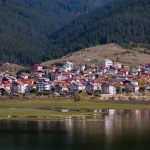
📷 Featured image by Luba Ertel on Unsplash.