On this page
- The 10 Destinations at a Glance
- The North: Belogradchik and Vidin
- The Rhodopes: Shiroka Laka and Devin
- The Rose Valley and Kazanlak
- The Black Sea Beyond Varna: Kamen Bryag and Shabla
- Melnik and the Southwest Corner
- Getting There Without a Car
- Day Trip or Overnight?
- 2026 Budget Reality
- Frequently Asked Questions
💰 Click here to see Bulgaria Budget Breakdown
💰 Prices updated: August, 2026. Budget figures are estimates — always verify before travel.
Exchange Rate: $1 USD = €0.86
Daily Budget (per person)
Shoestring: €35.00 – €50.00 ($40.70 – $58.14)
Mid-range: €60.00 – €100.00 ($69.77 – $116.28)
Comfortable: €150.00 – €200.00 ($174.42 – $232.56)
Accommodation (per night)
Hostel/guesthouse: €5.00 – €20.00 ($5.81 – $23.26)
Mid-range hotel: €55.00 – €95.00 ($63.95 – $110.47)
Food (per meal)
Budget meal: €12.00 ($13.95)
Mid-range meal: €25.00 ($29.07)
Upscale meal: €60.00 ($69.77)
Transport
Single metro/bus trip: €0.80 ($0.93)
Monthly transport pass: €25.50 ($29.65)
Sofia and Plovdiv are genuinely excellent cities, but in 2026 they are carrying more tourist weight than ever. Summer weekends in Plovdiv’s Old Town now feel closer to Prague’s tourist district than the relaxed cultural city Bulgarians remember. Meanwhile, the standard itinerary — Sofia, Plovdiv, maybe Veliko Tarnovo — leaves enormous stretches of the country unseen. If you have already done those, or if you want to avoid the crowds from the start, Bulgaria has a long list of places that are still largely to themselves.
The 10 Destinations at a Glance
Before diving into detail, here is a quick map of what this guide covers and what makes each place worth your time:
- Belogradchik (Northwest) — bizarre sandstone rock formations and a Roman-Ottoman fortress
- Vidin (Northwest, Danube) — a forgotten frontier city with Bulgaria’s best-preserved medieval castle
- Shiroka Laka (Rhodopes) — a UNESCO-protected village that still feels lived-in
- Devin (Rhodopes) — mineral spa town surrounded by gorges and hiking trails
- Kazanlak (Rose Valley) — Thracian tombs, rose festivals, and a valley that smells extraordinary in May
- Kamen Bryag (Northeast Black Sea) — clifftop village above wild coast, near the Yailata rock sanctuary
- Shabla (Northeast Black Sea) — Bulgaria’s easternmost point, a lighthouse, and flamingo lagoons
- Melnik (Southwest) — Bulgaria’s smallest town by population, famous for wine and sandstone pyramids
- Kovachevitsa (Southwest Rhodopes) — a stone-house village with no hotels, only guesthouses, completely unhurried
- Tryavna (Central Balkan) — woodcarving tradition, medieval bridge, and one of the most walkable old towns in Bulgaria
The North: Belogradchik and Vidin
Northwestern Bulgaria is the country’s least-visited region, partly because it takes effort to reach and partly because it never made the standard tourist route. That is exactly why it is worth going.
Belogradchik sits among rock formations that look engineered rather than natural — columns of red and ochre sandstone rising up to 200 metres, shaped over millions of years into forms that locals have given names: the Madonna, the Schoolgirl, the Bear. The Belogradchik Fortress is built directly into these rocks, with Roman foundations beneath Ottoman and Bulgarian additions. Walking the fortress walls at dusk, when the stone turns deep amber and swallows dart between the pillars, is one of those genuinely strange experiences that Bulgaria keeps hiding in plain sight.
Vidin, 70 kilometres north on the Danube, is a different mood entirely. The Baba Vida fortress — Bulgaria’s only fully intact medieval castle — sits right on the river, surrounded by water on three sides. The city itself is quietly faded, a reminder of the Ottoman trade routes that once made the Danube frontier prosperous. The 2026 Danube cycling path extension now connects Vidin to neighbouring Serbian and Romanian riverside towns, which has brought a new wave of cycling tourists through the region without changing the town’s character.

The Rhodopes: Shiroka Laka and Devin
The Rhodope Mountains cover a huge area of southern Bulgaria, and most tourists pass through only the northern edge on the way to somewhere else. The villages deeper inside the range operate on their own timetable.
Shiroka Laka is a genuine village, not a reconstructed one. Stone houses with overhanging upper floors crowd both sides of the river, connected by a humpback bridge that has been photographed so many times it has become a cliché — but still stops you cold when you actually see it. The village is a centre for Bulgarian folk music, particularly the gaida (bagpipe), and if you visit during the first Sunday of March, the Kukeri festival fills the lanes with masked figures in elaborate costumes. The air here carries woodsmoke even in October, and the quiet is almost physical.
Devin, about 30 kilometres east, is a working spa town rather than a showcase village. Its mineral springs feed a network of hotels ranging from Soviet-era blocks to genuinely comfortable modern wellness retreats. The surrounding area has some of the best gorge walks in Bulgaria — the Trigrad Gorge and the Devil’s Throat cave are both within easy driving distance. Devin is where Bulgarians go when they want to disappear for a few days, which tells you something.
The Rose Valley and Kazanlak
Kazanlak sits at the centre of the Rose Valley, the narrow plain between the Balkan Range and the Sredna Gora mountains that produces the majority of the world’s rose oil. In late May and early June, the valley blooms with the Damascene roses used for attar production, and the smell — sweet, dense, slightly medicinal — drifts across the entire region before sunrise when picking happens. The Rose Festival, held in early June, has grown significantly since 2024 with new international attendance, but the picking itself remains a quiet, pre-dawn ritual that you can join on smaller farms with advance arrangement.
Beyond the roses, Kazanlak is home to the Thracian Tomb of Kazanlak, a UNESCO World Heritage site with some of the finest Hellenistic-era frescoes in the Balkans. A high-quality replica is open to visitors; the original is sealed for preservation. The surrounding Valley of the Thracian Kings contains multiple burial mounds, several of which have been excavated and opened to the public in recent years.

The Black Sea Beyond Varna: Kamen Bryag and Shabla
The northeastern Black Sea coast above Varna is a different world from the resort strips of Sunny Beach or Golden Sands. The coastline here is clifftop, wild, and largely undeveloped.
Kamen Bryag is a small fishing settlement at the edge of a plateau that drops sharply into the sea. Just south of the village, the Yailata archaeological reserve contains cave dwellings and necropolis sites carved into the cliffs above the water — occupied from the Chalcolithic period through the medieval era. There are no ticket booths, no audio guides, and few other visitors. You walk among the carved chambers with the Black Sea audible but invisible below the cliff edge.
Shabla, further northeast, is notable for two things: the Shabla lighthouse (the oldest working lighthouse on the Bulgarian coast, built in 1857) and the Durankulak and Shabla lakes, which form one of the most important wetland bird habitats in southeast Europe. Greater flamingos winter here in significant numbers, and the area has been designated a Ramsar site. The 2026 Via Pontica cycling route now officially passes through Shabla, providing a marked path for cyclists following the Black Sea coast.
Melnik and the Southwest Corner
Melnik is Bulgaria’s smallest town by official count — fewer than 300 permanent residents — and sits in a gorge carved into white sandstone pyramids in the far southwest, near the Greek border. It produces wine from the Shiroka Melnishka Loza grape, a variety found almost nowhere else in the world, which makes deep, dark reds that age well and taste nothing like the international varieties Bulgaria more commonly exports. Several of Melnik’s old merchant houses have been converted into wine cellars where you taste directly from the barrel in rooms carved into the sandstone.
Nearby Rozhen Monastery, a 4-kilometre walk or short drive above town, is worth the trip separately — its painted exterior galleries and courtyard fountain are among the most peaceful spots in Bulgarian religious architecture.

Getting There Without a Car
A car makes most of these destinations easier, but it is not always necessary. Here is the honest picture for 2026:
- Kazanlak has direct train connections from Sofia (around 3 hours) and Plovdiv (1.5 hours). Bus connections are also frequent.
- Vidin is served by overnight train from Sofia (approximately 4 hours). The 2025 motorway extension to Montana reduced driving time from Sofia to under 2.5 hours.
- Devin and Shiroka Laka are accessible by bus from Plovdiv, though connections to Shiroka Laka require a change at Smolyan and are infrequent — plan around the schedule.
- Melnik has one daily bus from Sofia via Sandanski. Return service is early afternoon, which makes a same-day trip tight but possible.
- Kamen Bryag and Shabla have limited public transport. Renting a car from Varna (approximately 70–80 km south) is the practical option.
- Belogradchik has bus connections from Vidin and from Montana, but schedules are limited. Combined with Vidin, it makes a logical two-stop northwest trip.
- Tryavna sits on the Gabrovo–Tsareva Livada railway line with connections to Gorna Oryahovitsa, which links to the Sofia–Varna main line. Reachable by train from Veliko Tarnovo area.
Day Trip or Overnight?
Not every destination on this list requires a multi-day commitment. Here is a direct breakdown:
- Day trip works fine: Kazanlak (from Plovdiv or Veliko Tarnovo), Tryavna (from Veliko Tarnovo), Rozhen Monastery (combined with Melnik).
- Overnight strongly recommended: Belogradchik (the morning light on the rocks is genuinely different), Devin (the point is to slow down), Shiroka Laka (evening and early morning are when the village is at its best), Shabla and Kamen Bryag (the area rewards a morning and evening on the cliffs, not just a quick stop).
- Minimum two nights: Melnik (if you want to do the wine cellars properly and walk to Rozhen), Vidin (the city has more depth than a single afternoon reveals, and the Danube cycling route is worth at least a half-day segment).
2026 Budget Reality
These destinations are consistently cheaper than Sofia, Plovdiv, or the Black Sea resorts. Here is what to expect across budget levels:
Accommodation (per night, double room)
- Budget: 40–70 BGN (20–35 EUR / 22–38 USD) — guesthouses in Shiroka Laka, Kovachevitsa, Kamen Bryag
- Mid-range: 80–150 BGN (40–75 EUR / 44–82 USD) — comfortable family hotels in Kazanlak, Devin, Vidin, Tryavna
- Comfortable: 160–280 BGN (80–140 EUR / 88–153 USD) — wellness hotels in Devin, boutique wine hotels in Melnik

Food and Drink (per person, per day)
- Budget: 25–40 BGN (12–20 EUR) — local mehanas (taverns) serving grilled meats, salads, and house wine
- Mid-range: 50–80 BGN (25–40 EUR) — sit-down meals with regional specialities and a bottle of local wine
- Comfortable: 100+ BGN (50+ EUR) — higher-end restaurants in Kazanlak during festival season or wine-paired dinners in Melnik
Transport
- Sofia to Kazanlak by bus: approximately 14 BGN (7 EUR) one way
- Sofia to Vidin by train: approximately 20 BGN (10 EUR) one way
- Car rental from Sofia or Plovdiv: 60–90 BGN per day (30–45 EUR) for a standard vehicle in 2026
Frequently Asked Questions
Which of these destinations is easiest to reach from Sofia without a car?
Kazanlak is the most straightforward, with direct trains and frequent buses from Sofia. Vidin is also reachable by train. The northeastern Black Sea spots (Kamen Bryag, Shabla) genuinely need a rental car to visit comfortably.
Is it safe to visit Belogradchik and the northwest region?
Completely safe. The northwest’s low tourist numbers reflect its distance from main hubs, not any safety issue. Locals in smaller towns are often more welcoming to foreign visitors precisely because they see fewer of them. Standard common-sense travel practices apply, nothing more specific than that.
When is the best time of year to visit the Rose Valley?
Late May to early June, when the Damascene roses bloom and picking is underway. The Rose Festival in Kazanlak typically falls the first weekend of June. Outside this window, the valley is pleasant but the signature experience — the scent, the fields of pink, the morning harvest — is absent.
Can I visit Melnik as a day trip from Sofia?
Technically yes, but it is tight. To do the wine cellars properly and walk to Rozhen Monastery, an overnight stay is a much better use of your time and makes the trip feel unhurried.
Do these destinations have English-speaking guides or tourist offices?
English is less widely spoken in regional Bulgaria than in Sofia or Plovdiv. Kazanlak and Tryavna have tourist information centres with English-language materials. For Belogradchik, Melnik, and the Rhodope villages, basic Bulgarian phrases help considerably, and Google Translate handles most practical situations. Hiring a guide in advance through Sofia-based agencies is worth it for sites like the Valley of the Thracian Kings.
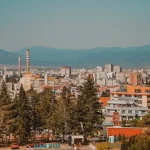
📷 Featured image by Andrea Sánchez on Unsplash.