On this page
- What Makes Nessebar Different From Every Other Black Sea Town
- The UNESCO Old Town: Monuments, Ruins, and What to Actually Prioritise
- The Food Scene: Where Locals and Visitors Both Eat Well
- Getting to Nessebar in 2026
- Day Trip or Overnight? Making the Right Call
- 2026 Budget Reality: What Things Actually Cost
- Practical Tips Before You Go
- Frequently Asked Questions
💰 Click here to see Bulgaria Budget Breakdown
💰 Prices updated: October, 2026. Budget figures are estimates — always verify before travel.
Exchange Rate: $1 USD = €0.88
Daily Budget (per person)
Shoestring: €35.00 – €50.00 ($39.77 – $56.82)
Mid-range: €60.00 – €100.00 ($68.18 – $113.64)
Comfortable: €150.00 – €200.00 ($170.45 – $227.27)
Accommodation (per night)
Hostel/guesthouse: €5.00 – €20.00 ($5.68 – $22.73)
Mid-range hotel: €55.00 – €95.00 ($62.50 – $107.95)
Food (per meal)
Budget meal: €7.00 ($7.95)
Mid-range meal: €20.00 ($22.73)
Upscale meal: €60.00 ($68.18)
Transport
Single metro/bus trip: €1.00 ($1.14)
Monthly transport pass: €26.00 ($29.55)
What Makes Nessebar Different From Every Other Black Sea Town
If you have spent any time on Bulgaria‘s Black Sea coast in summer, you know the drill: packed beaches, identical seafood restaurants, and towns that blur together by the third day. Nessebar cuts through all of that. The old town sits on a narrow rocky peninsula barely 850 metres long, connected to the mainland by a single stone causeway. That geography alone sets the mood before you even arrive — you are walking into something that feels genuinely separate from the resort sprawl of Sunny Beach next door.
UNESCO added Nessebar to its World Heritage List in 1983, recognising the extraordinary density of Byzantine churches, Thracian foundations, and Bulgarian National Revival timber houses packed into this small space. What UNESCO does not fully convey is how alive the place feels in 2026. Yes, there is tourism pressure — the peninsula gets busy in July and August — but arrive before 9 a.m. or after 7 p.m. and you will find cobbled lanes, sea wind, and the kind of quiet that makes the history feel real rather than staged.
The UNESCO Old Town: Monuments, Ruins, and What to Actually Prioritise
Nessebar’s old town holds more than 40 churches and ruins across a space you can walk end to end in 15 minutes. The challenge is not finding things to see — it is knowing which ones to spend time on and which are little more than signposted foundations.
The Churches Worth Slowing Down For
- Church of Christ Pantocrator (14th century): The one most photographed, on the main street. The ceramic decoration on the exterior walls — alternating bands of red brick and white stone with green glazed discs embedded into the façade — is genuinely unlike anything you will see elsewhere in Bulgaria. Step inside; the small interior hosts rotating exhibitions of medieval icons.
- Church of St John the Baptist (5th–6th century): One of the oldest surviving structures on the peninsula. The stonework is rougher and the interior stripped bare, but that is exactly what makes it compelling. You can see the physical layers of Nessebar’s history in the walls themselves.
- New Metropolitan Church of St Stefan: Do not skip this one. It contains the most complete collection of 16th–17th century frescoes in the entire region. The reds and ochres have survived remarkably well. The smell of old stone and candle smoke inside is something you carry with you.
The Archaeology Museum
Small but precise. Located near the entrance causeway, it holds Thracian, Greek, and Byzantine artefacts excavated from the peninsula. Entry costs 6 BGN (approximately €3 / $3.30). Spend 45 minutes here before walking the old town and everything you see afterward makes more sense — the ruins stop being anonymous stonework and start having context.
The Sea Wall and the Windmill
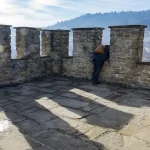
Walk the perimeter path along the sea wall, especially the southern edge. The Black Sea stretches out on both sides of the narrow peninsula here, and on a clear morning the light off the water is extraordinary — flat gold before 8 a.m., sharp and restless by midday. The old windmill near the causeway is one of Nessebar’s most photographed landmarks, a wooden post mill that dates to the 19th century and still stands at the peninsula’s entrance.
The Food Scene: Where Locals and Visitors Both Eat Well
Nessebar’s old town has its share of tourist-trap restaurants with laminated menus and aggressive door staff. They are easy to spot and easy to avoid. The better options are mostly on the quieter southern and western lanes, away from the main pedestrian artery.
- Mencheva Kashta: A Bulgarian National Revival house converted into a restaurant. The terrace overlooks the sea wall. Order the stuffed squid or the black mussel soup — both come from Nessebar Bay fishing boats, not frozen stock. Main courses run 18–28 BGN (€9–14).
- Kapitanska Sreshta (Captain’s Meeting): Old-school, no frills, consistent. Popular with Bulgarian families visiting for the day. The grilled fish plates are large and fairly priced at 20–25 BGN (€10–13). Arrive by noon or after 2 p.m. to avoid the lunch rush.
- Bakery near the St Spas Church ruins: No formal name on the signage, but locals know it. Opens at 7 a.m. Sells banitsa, mekitsi, and strong coffee. The banitsa comes out of the oven in rounds throughout the morning — the pastry is still warm and faintly crisp when you tear into it on a sea-facing bench nearby. Best breakfast option on the peninsula, at around 2–4 BGN per piece.
For the full seafood experience without old-town prices, walk back across the causeway to Nessebar’s new town port area. Several working fish restaurants here serve the same Black Sea catch at 20–30% lower prices.

Getting to Nessebar in 2026
Nessebar sits 35 kilometres south of Burgas. Burgas Airport remains the primary entry point for the coast, with 2026 seeing expanded direct routes from London Stansted, Warsaw, Budapest, and Berlin through Ryanair and Wizz Air. The airport is 25 kilometres from Nessebar, making it closer than most Black Sea destinations to its nearest hub.
From Burgas Airport
The most convenient option is a shared transfer or taxi. A metered taxi to Nessebar costs 35–50 BGN (€18–25) depending on traffic. In 2026, the Yandex Go and inDriver apps both operate reliably in Burgas region — always a better option than unmarked taxis at the airport forecourt.
By Bus
Buses run from Burgas Central Bus Station to Nessebar roughly every 30–40 minutes in peak season, taking about 45 minutes. The fare is 5–6 BGN (approximately €2.50–3). This is also the route used from Sunny Beach and Pomorie. The bus deposits you at the new town, a 10-minute walk from the old town causeway.
From Sofia
Direct buses from Sofia’s Central Bus Station to Nessebar run in summer (June–September), taking approximately 5.5–6 hours and costing 30–40 BGN (€15–20). Outside summer, the practical route is Sofia to Burgas by bus or train, then local connection to Nessebar.
Day Trip or Overnight? Making the Right Call
Nessebar is one of Bulgaria’s most visited day-trip destinations, and honestly, a day trip works well if your base is Sunny Beach, Burgas, or Pomorie. The old town is compact, and six to seven hours is enough to see everything at a comfortable pace, eat a proper lunch, and sit by the sea wall for a while.
That said, staying overnight changes the experience significantly. By 6 p.m. in summer, the day-tripper crowd has largely cleared. The light on the old churches in the late evening is a different thing entirely — warm and low, casting long shadows across the Byzantine stonework. Morning is even better. You have the cobblestone lanes almost to yourself before 8:30 a.m., and the fishing boats returning to the small harbour add a layer of activity that pure tourists never see.
Accommodation in the old town itself is limited to guesthouses and small family-run hotels, most charging 80–150 BGN (€40–75) per night for a double in mid-season. The new town has a wider range at lower prices. For anyone who wants the full Nessebar atmosphere rather than just a tick-box visit, one night minimum is the right call.

2026 Budget Reality: What Things Actually Cost
- Budget (under 80 BGN / €40 per day): Bus transport, bakery breakfast, self-catering or the cheapest sit-down lunch, free entry to most church ruins and the sea wall walk. The Archaeology Museum and St Stefan Church have small entry fees totalling around 10 BGN.
- Mid-range (80–180 BGN / €40–90 per day): Guesthouse stay in the new town, sit-down meals at local restaurants twice daily, occasional taxi, a boat trip around the peninsula (available from the port, roughly 20–25 BGN per person in 2026).
- Comfortable (180–300 BGN / €90–150 per day): Old town guesthouse accommodation, full seafood dinners with wine at better restaurants, private transfer from the airport, guided walking tour of the UNESCO monuments (available in English for around 25–35 BGN per person from the Archaeology Museum desk).
Entry to most church ruins and the perimeter walk is free. The main paid sites — Archaeology Museum, New Metropolitan Church of St Stefan, and the occasional temporary exhibition — total around 12–15 BGN (€6–7.50) if you visit all of them. Nessebar is genuinely one of the more affordable UNESCO sites on the European coast.
Practical Tips Before You Go
- Cobblestones throughout: The old town’s lanes are entirely cobbled. Comfortable flat shoes are not optional — sandals with grip or proper walking shoes. Heels are a bad idea.
- Heat in July–August: The peninsula has very little shade and temperatures regularly hit 32–35°C. Carry water and plan indoor stops (the churches are cool) during midday hours.
- Cash still useful: Most restaurants now accept cards, but smaller stalls, the bakery, and some boat operators are cash-only. An ATM sits just past the causeway at the old town entrance.
- Parking situation: If you are driving, park in the designated lots on the mainland side of the causeway. No private vehicles are permitted in the old town. Paid parking costs 3–5 BGN per hour in peak season.
- Off-season visit: Nessebar between October and April is quiet, cooler (10–15°C in autumn), and genuinely beautiful in a different way. Most restaurants close, but a handful stay open year-round for locals and the trickle of visitors. Several churches and the museum operate on reduced hours — check ahead.
Frequently Asked Questions
Is Nessebar old town free to enter?
Yes, walking into the old town across the causeway costs nothing. Individual sites have small entry fees — the Archaeology Museum is 6 BGN, the New Metropolitan Church of St Stefan is 4 BGN. Most ruined church foundations are open-air and free to visit at any time.

How long do you need in Nessebar?
A half-day (4–5 hours) covers the main monuments at a quick pace. A full day allows proper meals, a perimeter walk, the museum, and time to sit and absorb the atmosphere. One night gives you early morning and evening light on the old town — when the peninsula is at its best and crowds are thinnest.
Is Nessebar worth visiting in 2026 or is it too touristy?
It is busy in peak summer, but the UNESCO monuments and the sea-peninsula setting are genuinely remarkable. The historic substance here is real, not manufactured — the churches, the sea wall, and the layers of civilisation make Nessebar worth the effort despite the high-season crowds.
What is the best way to get from Sunny Beach to Nessebar?
The easiest option is the local bus that runs between Sunny Beach, Nessebar, and Burgas throughout the day. The journey takes about 10–15 minutes and costs around 3–4 BGN. Taxis are available but rarely necessary given the short distance. The road between the two is straightforward to walk in about 35–40 minutes along the coastal path.
Can you swim near Nessebar old town?
There are small beaches on both sides of the causeway and a sandy stretch at the base of the peninsula in the new town area. The water quality around the old town itself is generally good. Larger, better-equipped beaches are a short distance north toward Sunny Beach or south toward Ravda, both reachable by bus in under 15 minutes.