On this page
- What Makes Nessebar’s Old Town Different From Every Other Coastal Town
- The Ruined Churches: Why So Many, and What to Actually Look For
- The Architecture You’ll Walk Past Without Realising Its Age
- Where to Eat in Nessebar Old Town (Without Getting Burned)
- Day Trip or Overnight? Making the Right Call
- Getting to Nessebar in 2026
- 2026 Budget Reality: What to Expect to Spend
- Practical Tips Before You Go
- Frequently Asked Questions
💰 Click here to see Bulgaria Budget Breakdown
💰 Prices updated: August, 2026. Budget figures are estimates — always verify before travel.
Exchange Rate: $1 USD = €0.86
Daily Budget (per person)
Shoestring: €35.00 – €50.00 ($40.70 – $58.14)
Mid-range: €60.00 – €100.00 ($69.77 – $116.28)
Comfortable: €150.00 – €200.00 ($174.42 – $232.56)
Accommodation (per night)
Hostel/guesthouse: €5.00 – €20.00 ($5.81 – $23.26)
Mid-range hotel: €55.00 – €95.00 ($63.95 – $110.47)
Food (per meal)
Budget meal: €12.00 ($13.95)
Mid-range meal: €25.00 ($29.07)
Upscale meal: €60.00 ($69.77)
Transport
Single metro/bus trip: €0.80 ($0.93)
Monthly transport pass: €25.50 ($29.65)
What Makes Nessebar’s Old Town Different From Every Other Coastal Town
In summer 2026, Bulgaria‘s Black Sea coast is more crowded than ever. Sunny Beach — just three kilometres away — draws enormous crowds, and budget travellers from across Europe are filling the resorts. Against that backdrop, Nessebar Old Town sits on a narrow rocky peninsula barely 850 metres long, connected to the mainland by a single road, and it feels like it belongs to a completely different century. UNESCO added it to the World Heritage List in 1983, recognising a settlement that has been continuously inhabited for over three thousand years. Thracians, Greeks, Romans, Byzantines, and Bulgarians all left their mark here — sometimes literally on top of each other. What you get is not a reconstructed heritage village. It is a working, sometimes chaotic, occasionally tourist-trap-heavy, but genuinely ancient place that rewards anyone who shows up curious and on foot.
The real problem visitors face in 2026 is that Nessebar is famous enough to pull large day-trip crowds between 11:00 and 16:00, but not famous enough globally that most people know how to navigate it well. The result is that thousands of visitors walk the same 200-metre main strip, eat at the same three restaurants, and leave feeling vaguely underwhelmed. This guide is built around avoiding exactly that.
The Ruined Churches: Why So Many, and What to Actually Look For
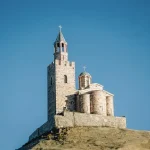
Nessebar has more medieval churches per square kilometre than almost anywhere in the Balkans. There are roughly forty recorded religious structures on this tiny peninsula, though many exist only as foundations or partial walls. The most photogenic survivors are clustered in the interior of the Old Town, away from the seafront souvenir strip.
- Church of Christ Pantocrator — Now an art gallery, but the exterior is the real draw. The alternating bands of red brick and white stone, decorated with ceramic discs and blind arcades, are a textbook example of late Byzantine craftsmanship from the 13th–14th century. Stand back at the small square in front and look at the apse. The geometric patterns were designed to catch the angle of afternoon light.
- Church of St. John the Baptist — One of the oldest in town, dating to the 5th–6th century. The interior is stripped bare, which actually makes it easier to appreciate the early Christian basilica structure without distraction.
- New Metropolitan Church (St. Stefan) — Still an active church and arguably the best interior on the peninsula. The preserved frescoes, painted between the 11th and 18th centuries, cover nearly every surface. Entry costs 5 BGN (around 2.50 EUR). Go in the morning when the light through the windows is soft and the tour groups haven’t yet arrived.
- Church of St. Paraskeva — Roofless and open to the sky, its ruined nave is used for occasional outdoor concerts in summer. The contrast between crumbling Byzantine stonework and open blue sky above is one of Nessebar’s most striking visual moments.
One thing many visitors miss: the ruins are not fenced off or over-managed. You can walk right up to the stonework, sit on the old foundations, and spend twenty quiet minutes with a church that has been standing since the medieval Bulgarian tsars were building their empire. That kind of unmediated access to genuine antiquity is increasingly rare in 2026 Europe.
The Architecture You’ll Walk Past Without Realising Its Age
Beyond the churches, Nessebar’s streetscape is defined by a specific style of Bulgarian National Revival house — wooden upper floors cantilevered over narrow cobblestone lanes, with the stone ground floors dating back centuries. Many of these buildings are from the 18th and 19th centuries, but they sit on Byzantine or even earlier foundations. The upper stories are dark timber framing filled with whitewashed render, and on a warm morning the smell of old wood and salt air is unmistakable.
Walk away from the main pedestrian street and head towards the northern shore. The lanes become quieter, the cats more numerous, and the houses more authentically worn. These are not museum pieces — people live in them. Laundry dries above doorways. An elderly resident might be sitting outside. The stones underfoot are uneven and polished smooth by centuries of foot traffic. This part of Nessebar is genuinely unreconstructed, and it is the part most worth slowing down for.
The Ancient Thracian and Greek city walls along the western edge of the peninsula are partially preserved. Walking along this stretch, with the sea visible on both sides of the narrow land, gives you the clearest sense of how strategically valuable this location has always been.
Where to Eat in Nessebar Old Town (Without Getting Burned)
Nessebar has a reputation for tourist-trap restaurants, and it is partly deserved. Places directly on the waterfront promenade are often overpriced and average. That said, there are genuinely good options if you know where to look.
- Kapitanska Sreshta — One of the most established fish restaurants in the Old Town. Sit on the terrace facing the water, order the grilled bream or the shopska salad, and expect to pay around 25–35 BGN (13–18 EUR) per person for a full meal with a local beer. The quality is consistent and the portions are substantial.
- Taverna Neptun — More casual, tucked slightly back from the main drag. Strong on grilled meat as well as fish. Local Burgasko beer on tap.
- Morning bakeries near the entrance gate — Before the crowds arrive, small bakeries near the main gate sell banitsa and mekitsi for 1.50–2 BGN each. The banitsa comes out of the oven warm, the cheese still steaming when you break it open. Breakfast here costs almost nothing and is better than anything you’ll find in the restaurants.
Avoid any restaurant that has a staff member standing outside actively ushering you in. In Nessebar, the best places rely on reputation, not salesmanship.
Day Trip or Overnight? Making the Right Call
Most people visit Nessebar as a day trip from Sunny Beach, Sveti Vlas, or Burgas, and for many that is completely sufficient. The Old Town is small enough to cover thoroughly in three to four hours. If you arrive early, see the churches, walk the perimeter walls, have a long lunch, and leave by 15:00, you will have had a full experience.
Overnight stays change the nature of the visit entirely. After the day tourists leave, Nessebar becomes quieter and more residential. The restaurants calm down. You can sit with a glass of wine on a terrace and watch the sky over the Black Sea go dark. The morning light on the water and stone is genuinely beautiful, and you’ll have the churches to yourself before 09:00.
Staying overnight makes most sense if you are not based at a nearby resort, or if you want to combine Nessebar with a visit to Pomorie (30 minutes north by bus) or a day in Burgas (40 minutes away). As a standalone night, it is pleasant but compact — there is no nightlife to speak of in the Old Town itself.
Accommodation options in the Old Town range from small guesthouses in renovated National Revival buildings to a handful of mid-range hotels. Expect to pay 80–160 BGN (40–82 EUR) per night for a double room in a decent guesthouse in summer 2026.
Getting to Nessebar in 2026
Nessebar is well connected to the rest of the Black Sea coast and to Burgas.
- From Burgas: Minibuses (marshrutki) run frequently throughout the day from Burgas bus station, taking around 40 minutes. The fare is approximately 5–6 BGN (2.50–3 EUR) one way. Regular buses on the same route are slightly cheaper but slower. In 2026, Burgas Airport continues to receive direct seasonal flights from across Europe, making it the main entry point for coastal visitors.
- From Sunny Beach: A local bus runs the 3-kilometre route in under 10 minutes. There is also a walking path along the coast for those who prefer to arrive on foot — it takes about 30–35 minutes.
- From Sofia: Take the train or bus to Burgas (about 7–8 hours by bus, slightly longer by train), then connect onward to Nessebar. Direct buses from Sofia to Sunny Beach also stop near Nessebar. The journey by bus from Sofia’s central bus station takes approximately 7.5 hours and costs 35–50 BGN (18–26 EUR).
- By car: Parking outside the Old Town (near the entrance gate) is available but fills up fast in July and August. Arrive before 09:00 or after 17:00 if driving in peak season. The Old Town itself is pedestrian-only.
2026 Budget Reality: What to Expect to Spend
Nessebar is more affordable than its UNESCO status might suggest, but prices have risen noticeably since 2023 as coastal tourism has intensified.
- Budget traveller — Day trip from a nearby resort, skip the sit-down restaurants, buy street food and bakery items, visit the free external sights only. Total spend: 15–25 BGN (8–13 EUR) for a full day including transport from Sunny Beach.
- Mid-range — Sit-down lunch at a reputable restaurant, entry to St. Stefan church (5 BGN), a coffee on a terrace, possibly a small souvenir. Total spend: 60–90 BGN (31–46 EUR) per person for a day trip, or 180–250 BGN (92–128 EUR) per person overnight including accommodation and meals.
- Comfortable — Overnight in one of the better Old Town guesthouses, two restaurant meals, wine with dinner, a guided tour of the archaeological museum (entry 8 BGN / 4 EUR). Total spend: 300–400 BGN (154–205 EUR) per person for a one-night stay covering all expenses.
Church entry fees are modest (free to 8 BGN depending on the site), and most of the best sights — the walls, the ruined churches, the streetscape — cost nothing to see.
Practical Tips Before You Go
- Wear comfortable shoes. The cobblestones are uneven and can be slippery, especially in the morning when sea mist settles on the stones. Sandals are fine on the promenade but awkward in the older lanes.
- The Archaeological Museum near the entrance gate holds finds from 3,000 years of settlement, including Thracian and Greek artefacts. It is small, well-curated, and takes about 45 minutes. Entry is 8 BGN (4 EUR) as of 2026.
- Swimming: There are small beaches on both sides of the peninsula, accessible by steps from the perimeter path. They are pebbly rather than sandy, and the water is clear. Much less crowded than Sunny Beach.
- Cash: Most restaurants and shops accept cards in 2026, but smaller bakeries and market stalls are still cash-preferred. Keep 20–30 BGN in coins and small notes.
- Bulgaria joined the Eurozone? Not yet — the lev (BGN) remains the currency in 2026, with Eurozone entry still under discussion. Do not assume euros are accepted everywhere.
Frequently Asked Questions
Is Nessebar Old Town worth visiting if I’m already staying at Sunny Beach?
Yes, without question. Sunny Beach is three kilometres away and a short bus ride connects the two. Nessebar’s Old Town offers a complete change of atmosphere — ancient churches, cobblestone streets, and actual history. Even a half-day visit is worthwhile. Arriving early in the morning before the crowds makes the experience significantly better.
How long do you need in Nessebar Old Town?
Three to four hours is enough to see the main churches, walk the perimeter walls, and have a meal. A full day allows you to slow down, visit the Archaeological Museum, explore the quieter northern lanes, and swim off the small peninsula beaches. An overnight stay is only necessary if you want the early-morning or evening atmosphere.
Is Nessebar suitable for children?
Yes, though the cobblestones make prams and pushchairs impractical. Older children often enjoy the ruined churches and the sea walls. The small beaches on the peninsula sides are calm and suitable for swimming. The Old Town is compact, so there is not a lot of walking required to cover the main sights.
What is the best time of year to visit Nessebar Old Town?
May, June, and September are ideal. The weather is warm, the sea is swimmable, and the crowds are significantly lighter than in July and August. October is quiet and atmospheric, though some restaurants close after mid-October. July and August are viable but require early arrival to avoid the worst of the day-trip coach crowds.
Are there guided tours of Nessebar Old Town available in 2026?
Yes. Local guides operate walking tours from the main gate, typically lasting 90 minutes and covering the key churches, the city walls, and the archaeological context. Prices run around 20–30 BGN (10–15 EUR) per person. Tours in English run daily in summer. Booking through your accommodation the evening before is usually sufficient.