On this page
- What Makes Melnik’s Wine Tradition Different from the Rest of Bulgaria
- The Grape That Belongs to No One Else — Shiroka Melnishka Loza
- The Best Wineries to Visit in 2026
- Day Trip or Overnight? Honest Advice for Planning Your Visit
- Beyond the Barrel — What Else Melnik Offers
- Getting to Melnik in 2026
- 2026 Budget Reality — What You’ll Actually Spend
- Frequently Asked Questions
💰 Click here to see Bulgaria Budget Breakdown
💰 Prices updated: August, 2026. Budget figures are estimates — always verify before travel.
Exchange Rate: $1 USD = €0.86
Daily Budget (per person)
Shoestring: €35.00 – €50.00 ($40.70 – $58.14)
Mid-range: €60.00 – €100.00 ($69.77 – $116.28)
Comfortable: €150.00 – €200.00 ($174.42 – $232.56)
Accommodation (per night)
Hostel/guesthouse: €5.00 – €20.00 ($5.81 – $23.26)
Mid-range hotel: €55.00 – €95.00 ($63.95 – $110.47)
Food (per meal)
Budget meal: €12.00 ($13.95)
Mid-range meal: €25.00 ($29.07)
Upscale meal: €60.00 ($69.77)
Transport
Single metro/bus trip: €0.80 ($0.93)
Monthly transport pass: €25.50 ($29.65)
What Makes Melnik’s Wine Tradition Different from the Rest of Bulgaria
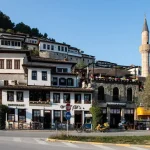
If you have been researching Bulgarian wine regions in 2026, you have probably found a dozen articles mentioning Thrace and the Rose Valley. Melnik rarely gets the headline, which is a genuine surprise given that it holds Bulgaria‘s oldest continuously documented wine culture. The town itself — officially the smallest town in Bulgaria by population, with fewer than 200 permanent residents — sits in a dramatic sandstone landscape in the southwestern corner of the country, near the Greek border. That geography is not decorative. It is the whole reason the wine tradition exists here at all.
The Struma River valley acts as a natural funnel for warm Mediterranean air moving north from Greece. Combined with the sandstone pyramids that absorb and radiate heat through cool nights, the microclimate here is unlike anywhere else in Bulgaria. Winters are mild enough that the local vine variety survived centuries of Ottoman rule and Balkan upheaval. By the time Bulgaria’s communist-era wine industry was standardising everything, Melnik’s growers were already too isolated and too stubborn to fully conform.
That stubbornness produced a living tradition. Many of the cellars carved into the sandstone cliffs below town date back 200 to 400 years. The practice of ageing wine in these rock-cut spaces, where humidity and temperature stay naturally stable, predates any modern wine technology. Walking into one feels less like a tasting room visit and more like stepping into a working archive.
The Grape That Belongs to No One Else — Shiroka Melnishka Loza
Shiroka Melnishka Loza translates roughly as “the broad-leafed Melnik vine,” and that name tells you everything about how local this variety is. It grows almost nowhere outside the Melnik basin. Attempts to transplant it to other Bulgarian regions have consistently produced inferior results. The vine is deeply site-specific in a way that wine scientists describe as rare even by global standards.
The grape produces wines that are deeply coloured — almost opaque purple-red when young — with firm, grippy tannins and flavours that shift between dried plums, dark cherries, tobacco, and something faintly like sun-warmed earth. Good examples need at least three to five years in bottle before they soften enough to be genuinely enjoyable. The best examples from producers like Damianitza and Orbelus can develop for fifteen years or more.
There is also a lighter, younger-drinking style called Melnik 55 — a cross developed in the 1970s that ripens earlier and produces softer, more approachable reds. You will find it poured freely in local restaurants. It is honest, unpretentious wine that goes well with grilled meats and strong cheese. Do not dismiss it because it lacks complexity. That is not what it is trying to be.
Since 2024, the Melnik wine region has been working toward formal EU Protected Designation of Origin (PDO) status for Shiroka Melnishka Loza. As of 2026, this process is in its final administrative stages, which means producers are labelling their bottles with greater precision and pride than before. It is a good moment to pay attention.
The Best Wineries to Visit in 2026
Access and opening hours have changed since the road improvements on the access route began, so verify directly before visiting. That said, these are the producers worth your time.
Damianitza Winery
Located just outside Melnik toward Sandanski, Damianitza is the most visitor-ready operation in the region. Their cellar tours run daily from April through October and include tastings of four to six wines. The No Man’s Land label — a Shiroka Melnishka Loza aged in French oak — is their flagship and consistently one of the best red wines produced in Bulgaria. The tasting room smells of old oak and cool stone, and the guides speak fluent English. Book ahead in summer; they fill up on weekends.
Orbelus Winery
A smaller, family-run estate near the village of Kapatovo, about 8 kilometres from Melnik. Orbelus works with both Shiroka Melnishka Loza and Merlot, and their approach is lower-intervention than Damianitza. Visits are by appointment only. The reward is a more personal experience — you often taste with the winemaker directly, and the wines themselves are more contemplative, less polished. Their top-tier red, Amphora, is aged in clay vessels buried in the hillside.
Kordopulov House Cellar
This is not a commercial winery in the modern sense, but the historic cellar beneath the 18th-century Kordopulov House in Melnik town is a must. The house itself is the largest National Revival-era building in Bulgaria, and the underground cellar contains barrels and old equipment that have been in continuous use for generations. You can taste local wine here in an atmospheric setting that no purpose-built tasting room can replicate. The entry fee for the house and cellar combined is modest.
Day Trip or Overnight? Honest Advice for Planning Your Visit
Most people visit Melnik as a day trip from Sandanski (30 kilometres away) or from Bansko (about 60 kilometres). That is workable, but it means rushing. Melnik town itself takes about two hours to walk properly, and if you are visiting more than one winery, a day trip becomes genuinely tight.
An overnight stay changes the experience completely. In the early morning before tour groups arrive, the sandstone pyramids glow amber in the sunrise, and the narrow lane through town — lined with old stone houses and walnut trees — is completely quiet. The sound of water from a small stream running alongside the main path is the only thing you hear. That is the Melnik most visitors never see.
There are around ten small guesthouses in and around the town, most family-run. Capacity is limited, so book well ahead for summer weekends and the September-October harvest period, which draws serious wine tourists from across Europe.
If you are coming specifically for wine, two nights is the right call. One day for the town and Kordopulov House, one day for proper winery visits with time to sit, taste slowly, and talk to the people who make the wine.
Beyond the Barrel — What Else Melnik Offers
The sandstone landscape is remarkable on its own terms. The pyramids — locally called “pyramids” though they are more correctly eroded sandstone formations — reach up to 100 metres and create a surreal backdrop to an already unusual town. Several marked walking trails lead up into the formations, and the views back over the Struma valley reward the climb. In autumn, the vine leaves turn deep red and orange, and the contrast against the pale yellow sandstone is genuinely striking.
The Rozhen Monastery, about 6 kilometres from Melnik, is one of the best-preserved medieval monasteries in the country and well worth the short drive or walk. Unlike the heavily touristed Rila Monastery, Rozhen sees relatively few visitors and retains a quiet, working religious atmosphere. The monastery church contains 16th-century frescoes in good condition.
Food in Melnik is simple and local. The restaurants in town are small and serve traditional Shopska cuisine — grilled meats, bean soups, fresh white cheese — alongside local wine poured from unlabelled carafes. The roast lamb at Mehana Mencheva Kushta is worth seeking out. Expect earthy flavours, generous portions, and prices that feel almost anachronistic compared to Sofia or Bansko.
Getting to Melnik in 2026
Melnik has no railway station. The nearest rail hub is Sandanski, served by trains from Sofia (approximately 3.5 hours, with connections through Pernik or Dupnitsa). From Sandanski, a local bus runs to Melnik on a limited schedule — typically twice daily — or taxis are readily available for around 35–45 BGN (18–23 EUR) each way.
By car from Sofia, the E79 route via Blagoevgrad and Sandanski covers roughly 170 kilometres. In 2026, roadworks between Kresna and Sandanski continue as part of the Struma Motorway (A3) completion project. This section has caused significant delays since 2023. The detour through the Kresna Gorge is scenic but slow — allow at least 2.5 to 3 hours from Sofia rather than the 2 hours the map suggests.
From Bansko, the drive south via Gotse Delchev takes about 90 minutes on quieter roads that avoid the E79 construction zone entirely. This is the recommended route in 2026 if you are already in the Pirin area.
There are no direct bus services from Sofia to Melnik. Buses from Sofia’s Central Bus Station run frequently to Sandanski (roughly every 1–2 hours, 18–22 BGN), and the connection from there is straightforward.
2026 Budget Reality — What You’ll Actually Spend
Melnik is one of the most affordable wine destinations in Europe, and that has not changed significantly in 2026 despite wider Bulgarian inflation trends.
- Accommodation (per room, per night): Budget guesthouses: 50–70 BGN (25–36 EUR). Mid-range rooms with private bathroom and breakfast: 90–130 BGN (46–66 EUR). There is no comfortable/luxury tier in Melnik — the top end stops at mid-range by national standards.
- Winery visits and tastings: Damianitza standard tasting: 25–35 BGN (13–18 EUR) per person. Orbelus appointment visit: 40–50 BGN (20–26 EUR) per person. Kordopulov House entry including cellar: 8 BGN (4 EUR).
- Meals: Lunch at a local mehana with wine: 20–30 BGN (10–15 EUR) per person. Dinner with two glasses of local wine: 30–45 BGN (15–23 EUR) per person.
- Wine to take home: Entry-level Melnik 55 bottles start at 12–18 BGN (6–9 EUR) from producers directly. Premium aged Shiroka Melnishka Loza from Damianitza or Orbelus runs 35–65 BGN (18–33 EUR) per bottle. Buying at the winery is always cheaper than retail in Sofia.
A realistic two-night trip with winery visits, meals, and a few bottles to take home costs roughly 400–600 BGN (200–310 EUR) per person, depending on accommodation choice and how freely you shop.
Frequently Asked Questions
When is the best time to visit the Melnik wine region?
Late September through October is peak season for wine tourism — harvest is underway, the vineyards are colourful, and producers offer special tastings. May and June are also excellent: fewer crowds, warm days, and the countryside is green. Avoid August if you dislike heat; temperatures regularly reach 36–38°C in the Struma valley.
Can you visit Melnik without a car?
Yes, but it takes planning. Take a bus or train to Sandanski, then connect by local bus or taxi to Melnik. The Kordopulov House cellar and the town itself are walkable. For Damianitza and Orbelus wineries, a taxi from Melnik is the only practical option without a car; both are outside walking distance.
Is Shiroka Melnishka Loza available outside Bulgaria?
In small quantities, yes. Some specialist wine importers in Germany, the UK, and the Netherlands carry Damianitza’s No Man’s Land. But most production is consumed domestically or bought directly by visitors. If you want reliable access to the full range, buying directly at the winery in Melnik remains your best option in 2026.
How does Melnik compare to other Bulgarian wine regions like Thrace?
Thrace is larger, more commercially developed, and produces a wider variety of international grape styles. Melnik is singular — focused on one indigenous variety in one tight geographic zone. If you want to understand what makes Bulgarian wine unique globally, Melnik is the more compelling argument. Thrace is more convenient and polished.
Are the wineries in Melnik suitable for children?
The historic sites — including Kordopulov House, the sandstone pyramids, and Rozhen Monastery — are genuinely interesting for older children and teenagers. Winery tasting rooms are adult-focused but not unwelcoming to families. Damianitza has outdoor space and is the most family-friendly of the main producers. The town’s walking trails are accessible and not strenuous.
📷 Featured image by Max Kukurudziak on Unsplash.