On this page
- Lozenets: Where Sofia’s Locals Actually Live and Eat
- Oborishte: Art Nouveau Streets and a Different Kind of Culture
- Krastova Vada: The Neighbourhood That Surprised Everyone
- Nadezhda and Slatina: Industrial Grit with Emerging Creative Energy
- How to Get Around These Off-Map Areas in 2026
- 2026 Budget Reality: What It Costs to Explore Like a Local
- Frequently Asked Questions
💰 Click here to see Bulgaria Budget Breakdown
💰 Prices updated: August, 2026. Budget figures are estimates — always verify before travel.
Exchange Rate: $1 USD = €0.86
Daily Budget (per person)
Shoestring: €35.00 – €50.00 ($40.70 – $58.14)
Mid-range: €60.00 – €100.00 ($69.77 – $116.28)
Comfortable: €150.00 – €200.00 ($174.42 – $232.56)
Accommodation (per night)
Hostel/guesthouse: €5.00 – €20.00 ($5.81 – $23.26)
Mid-range hotel: €55.00 – €95.00 ($63.95 – $110.47)
Food (per meal)
Budget meal: €12.00 ($13.95)
Mid-range meal: €25.00 ($29.07)
Upscale meal: €60.00 ($69.77)
Transport
Single metro/bus trip: €0.80 ($0.93)
Monthly transport pass: €25.50 ($29.65)
Most visitors to Sofia see the same circuit: Alexander Nevsky Cathedral, Vitosha Boulevard, the National Palace of Culture, maybe the Roman ruins under the Serdika metro station. That’s fine — those places are worth seeing. But in 2026, with Sofia receiving more international arrivals than ever thanks to expanded flight routes from Western Europe and the UK, the well-trodden centre is noticeably busier. If you want to understand the city the way people who actually live here do, you need to leave the tourist triangle and walk into the neighbourhoods where Sofia breathes differently.
Lozenets: Where Sofia’s Locals Actually Live and Eat
Lozenets sits just south of the centre, a short walk or tram ride from the National Palace of Culture. It’s one of Sofia’s most liveable residential neighbourhoods — leafy streets, low-rise apartment blocks with communal gardens, and a café culture that feels genuinely local rather than performed for outsiders.
The main artery, Cherni Vrah Boulevard, runs south toward Vitosha Mountain and is lined with neighbourhood restaurants, wine bars, and small grocers. On a warm evening, the smell of grilling meat and wood smoke drifts from open restaurant doors. These aren’t tourist restaurants. Portions are generous, menus are half in Bulgarian, and the prices reflect what Sofia residents are willing to pay — which is considerably less than what you’d pay one kilometre north near the Sofia Hotel Balkan.
Around the streets of Bregalnitza and Suhodolska, you’ll find independent bakeries that open before 7 a.m. The kind of place where a fresh banitsa costs 1.20 BGN (about €0.60) and the woman behind the counter hands it to you wrapped in paper without a word, because everyone already knows what they want.
Lozenets also has some of Sofia’s better independent bookshops and a handful of galleries that rotate exhibitions from Bulgarian contemporary artists. Nothing is signposted in English, which is the point. This is Sofia for people who live in Sofia.
Oborishte: Art Nouveau Streets and a Different Kind of Culture
North of the centre, Oborishte is architecturally one of the most interesting neighbourhoods in the city — and almost entirely ignored by mainstream travel guides. The streets here contain some of Bulgaria’s best-preserved early 20th-century residential architecture: curved facades, iron balconies, thick stone walls that make the buildings feel planted rather than built.
The neighbourhood runs roughly between Oborishte Street itself and Georgi Rakovski Street. Walk slowly here. Look up. The details in the stonework — cornices, window frames, decorative panels — were done by craftsmen whose names are long forgotten. In 2026, several of these buildings are being quietly restored using EU heritage funds, and you can sometimes see scaffolding that reveals fresh plasterwork under decades of weathering.
Oborishte is also where you’ll find some of Sofia’s smaller, less-visited cultural institutions. The Earth and Man National Museum — dedicated to mineralogy and crystallography — sits in this area and draws almost no foot traffic from tourists despite having one of the most unusual collections in the Balkans. The crystal formations on display are genuinely striking, the kind of thing that stops you mid-step.
The café scene here skews slightly older and more intellectual than the central areas. You’ll find researchers from the nearby Bulgarian Academy of Sciences nursing espressos and reading actual newspapers. It’s a quieter, slower pace than the centre — which is exactly why it’s worth a morning.
Krastova Vada: The Neighbourhood That Surprised Everyone
Ten years ago, Krastova Vada was the kind of place Sofia residents mentioned apologetically — a post-communist residential district with prefab blocks, poor transport links, and nothing that would appear on a map of “things to do.” That story has changed significantly.
The area, located in the southwestern part of the city near the ring road, has quietly developed a concentration of independent food businesses, craft workshops, and creative studios that nobody planned and nobody really predicted. It started with a few rent-cheap restaurant spaces being taken over by young chefs who couldn’t afford the centre. Then came the coffee roasters, the furniture makers, the small recording studios.
In 2026, Krastova Vada has several restaurants that are genuinely respected by Sofia’s food community — not because they’re trendy, but because the cooking is careful and the prices haven’t caught up with the quality yet. You can eat a three-course lunch with a glass of Bulgarian wine for around 25–30 BGN (€12–15) in places here that would charge double if they were located near Vitosha Boulevard.
Getting here requires a bus or the southern extension of the Sofia Metro Line 2, which was extended again in late 2025 and now makes this part of the city genuinely accessible. From the NDK metro station, you’re looking at around 15 minutes by metro and a short walk. The neighbourhood still doesn’t look polished — the streets are imperfect, the signage is inconsistent — but that’s the honest version of a city in transition.

Nadezhda and Slatina: Industrial Grit with Emerging Creative Energy
North of the centre, Nadezhda and Slatina are two districts that represent the other side of Sofia’s post-socialist inheritance: large industrial plots, wide socialist-era boulevards, and residential blocks built quickly in the 1970s and 1980s for the workers who filled the factories nearby. Most of the factories are gone now, and what’s happening in the spaces they left behind is becoming interesting.
Slatina, in particular, has seen a cluster of artist studios, small-batch craft producers, and experimental performance spaces take root in former warehouse and light-industrial buildings along the streets east of Tsarigradsko Shose. This mirrors what happened in the Prenzlauer Berg district in Berlin two decades ago — spaces that are cheap enough for artists to actually use, before the rents rise and the galleries move in and everything becomes expensive and respectable.
Nadezhda is rougher and more residential, with a large Roma community and a street market culture that operates on its own logic and schedule. The Nadezhda market — a covered and open-air affair running near the district’s central square — sells vegetables, secondhand tools, clothing, and household goods at prices that reflect what working-class Sofia households actually spend. Walking through it, you hear Bulgarian, Romani, and occasionally Turkish. It smells of raw vegetables, old cloth, and diesel. It is as far from a sanitised tourist market as it is possible to get, and it’s the real thing.
How to Get Around These Off-Map Areas in 2026
Sofia’s public transport reached a new level of usability in 2025–2026. The metro now has three active lines with an expanded network that connects the southern residential districts more reliably than before. Trams still cover much of the inner city, and the route network hasn’t shrunk — which was a real concern a few years back.
For Lozenets and Oborishte, tram lines 10 and 12 are your main tools, running south from the centre and stopping frequently. For Krastova Vada, Metro Line 2’s southern stations are now the practical option. For Nadezhda and Slatina, Metro Line 1 and several bus routes connect to the northern and eastern districts respectively.
The Sofia Card, which covers unlimited public transport and includes discounts at selected museums, costs around 30 BGN (€15) for 24 hours in 2026. For a day of neighbourhood exploration, it pays for itself easily. Single metro tickets are 1.60 BGN (€0.82). Day passes are 4 BGN (€2.05).

Walking between Lozenets and Oborishte via the centre is entirely possible — it’s about 4 kilometres end-to-end, flat most of the way, and passes through parts of the city you wouldn’t otherwise see. Wear comfortable shoes, not tourist sandals. Sofia’s older pavements are uneven.
2026 Budget Reality: What It Costs to Explore Like a Local
- Budget: 40–55 BGN per day (€20–28 / $22–30). This means coffee at a local café (2.50–3.50 BGN), a set lunch at a neighbourhood restaurant (8–12 BGN), street-market snacks, and public transport on a day pass. Feasible in all four neighbourhoods described here.
- Mid-range: 80–120 BGN per day (€41–61 / $44–66). Add a sit-down dinner with wine at one of the better independent restaurants in Lozenets or Krastova Vada (25–40 BGN for two courses and a drink), entry to one or two museums, and a taxi back after dark if needed.
- Comfortable: 160–220 BGN per day (€82–112 / $88–120). This covers the above plus a wine-pairing dinner at one of Sofia’s newer chef-driven restaurants that have opened in the Oborishte and Lozenets areas in 2025–2026, along with private transport or a guided neighbourhood walk.
Sofia remains one of the more affordable capitals in Europe in 2026, though prices in the centre have risen noticeably since Bulgaria’s Schengen full integration in late 2024 brought an uptick in higher-spending tourism. The neighbourhoods covered in this article are where those price increases have been slowest to arrive.
Frequently Asked Questions
Are these neighbourhoods safe to walk around?
Yes. Lozenets, Oborishte, and Krastova Vada are all low-crime residential areas. Nadezhda’s street market can feel unfamiliar to visitors who aren’t used to chaotic urban markets, but it’s not unsafe. Standard city awareness applies — watch your bag in crowded spaces and don’t leave valuables visible.
Do people in these neighbourhoods speak English?
In Lozenets and Oborishte, English is reasonably common, especially among people under 45. In Nadezhda and Krastova Vada, you’ll encounter more Bulgarian-only interactions. Having Google Translate on your phone and a willingness to point and gesture gets you very far.
What’s the best time of year to explore Sofia’s residential neighbourhoods?
Late spring (May–June) and early autumn (September–October) are the best seasons. Temperatures sit between 16–24°C, outdoor café culture is at its peak, and the leafy streets of Lozenets and Oborishte look their best. Summer works but central Sofia gets hot and dusty in July–August.

How different are these areas from what you’d read in a standard Sofia travel guide?
Very different. Most travel guides in 2026 still focus on the historic centre, Vitosha Boulevard, and the major monuments. The neighbourhoods here receive almost no international travel coverage. That’s exactly what makes them interesting — you’re seeing the city that exists between the landmarks, not the one built for tourism.
Can I visit all four neighbourhoods in one day?
You could visit three comfortably, but trying all four in one day means moving quickly and spending little time in each. A better approach is pairing Lozenets with Oborishte on one day (both are close to the centre) and saving Krastova Vada and Nadezhda for a second, more dedicated exploration day.
Explore more
Best Markets in Sofia: A Local’s Guide to Authentic Finds
Rila Monastery Day Trip from Sofia: How to Visit Bulgaria’s UNESCO Gem
Sofia Airport to City Centre: Your Best Transfer Options
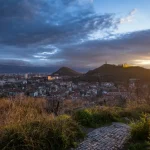
📷 Featured image by Georgi Kalaydzhiev on Unsplash.