On this page
- What Makes Tryavna Different From Other Bulgarian Towns
- The Old Quarter: Walking Through a Living Museum
- Tryavna’s Woodcarving Legacy (and Where to See It Today)
- Where to Eat: Local Food Done Right
- Day Trip or Overnight? Making the Call
- Getting to Tryavna in 2026
- 2026 Budget Reality: What Things Actually Cost
- Practical Tips Before You Go
- Frequently Asked Questions
💰 Click here to see Bulgaria Budget Breakdown
💰 Prices updated: October, 2026. Budget figures are estimates — always verify before travel.
Exchange Rate: $1 USD = €0.88
Daily Budget (per person)
Shoestring: €35.00 – €50.00 ($39.77 – $56.82)
Mid-range: €60.00 – €100.00 ($68.18 – $113.64)
Comfortable: €150.00 – €200.00 ($170.45 – $227.27)
Accommodation (per night)
Hostel/guesthouse: €5.00 – €20.00 ($5.68 – $22.73)
Mid-range hotel: €55.00 – €95.00 ($62.50 – $107.95)
Food (per meal)
Budget meal: €7.00 ($7.95)
Mid-range meal: €20.00 ($22.73)
Upscale meal: €60.00 ($68.18)
Transport
Single metro/bus trip: €1.00 ($1.14)
Monthly transport pass: €26.00 ($29.55)
Most visitors to the Balkan Mountains head straight to Veliko Tarnovo, spend two days there, and leave feeling satisfied. Tryavna sits just 36 kilometres away, quietly ignored by the majority of tourist itineraries — and that is exactly why it rewards the people who do show up. In 2026, with Bulgaria‘s Schengen membership now settled and visitor numbers to the main cities climbing steadily, the case for finding the less-crowded alternatives has never been stronger.
What Makes Tryavna Different From Other Bulgarian Towns
Tryavna does not try to compete with the drama of Veliko Tarnovo’s fortress or the Ottoman grandeur of Plovdiv’s Old Town. Its identity is quieter and more specific: this is a town built by craftsmen, shaped entirely by the guilds of woodcarvers, stonemasons, and painters who defined the Bulgarian National Revival period from the late 18th century into the 19th.
The result is a town where the architecture feels cohesive rather than patchy. The cobblestone streets, the dark timber facades, the low arched bridge over the Tryavna River — it all fits together in a way that larger, more tourist-developed towns can no longer quite manage. There is no loud souvenir strip, no queue at a single famous monument. The whole town centre is the monument.
What also sets Tryavna apart is its living artistic tradition. The woodcarving schools here were not just historical — the craft is still practiced and taught. You can walk into a workshop, watch someone carve a panel, and buy the finished piece directly from the person who made it.
The Old Quarter: Walking Through a Living Museum
The heart of Tryavna is Stoyan Rachkov Square, anchored by the medieval clock tower that has been marking time here since 1814. The clock face is plain and slightly lopsided from certain angles, which makes it feel more honest than picturesque. Around the square, the Revival-era houses lean slightly toward each other across the narrow lanes — a side effect of the original builders maximising upper-floor space over the cobbled paths below.
The old arched bridge (Stariniyat Most) crosses the Tryavna River a short walk from the square. On a still morning, the reflection of the stone arch in the shallow water below is sharp enough to make you stop mid-step. The sound of the river — a consistent, unhurried rush over flat stones — runs through almost everywhere you walk in the old quarter.
The Church of the Archangel Michael, built in 1819, stands on the edge of the old town. The church is low-slung and partially sunken into the ground, a common feature of Bulgarian churches built under Ottoman rule when houses of worship were not permitted to tower over the surrounding buildings. The interior is covered in frescoes and carved wooden iconostasis panels that represent some of the finest surviving work of the Tryavna School.
Tryavna’s Woodcarving Legacy (and Where to See It Today)
The Tryavna School of woodcarving produced the craftsmen who decorated churches and monasteries across the Balkans during the 18th and 19th centuries. The intricate geometric sunburst patterns — called rozeti — became the school’s signature style, and examples of their work can be found from Rila Monastery to Mount Athos in Greece.
The Museum of Woodcarving and Icon Painting, located in the Slaveykov House complex near the square, holds an extensive permanent collection showing the full range of the school’s output: ceiling panels, altarscreens, furniture, and devotional objects. Entry costs around 5 BGN (approximately €2.55 / $2.75). The museum staff are genuinely knowledgeable and will walk you through pieces if you ask — this is not a passive exhibition.
For something more immediate, the street of Ангел Кънчев (Angel Kanchev) running off the main square has several active woodcarving workshops. The smell of freshly cut lime wood — slightly sweet, dry, clean — greets you before you even step through the door. Smaller carved pieces start from around 15 BGN (€7.70 / $8.30), while larger decorative panels can run into several hundred lev depending on the complexity.
Where to Eat: Local Food Done Right
Tryavna’s restaurant scene is small but reliable. The town’s size means restaurants depend almost entirely on repeat visitors and word of mouth, which keeps quality honest.
Starata Loza (The Old Vine), tucked into a Revival-era house near the clock tower, serves the kind of Bulgarian menu that has not been simplified for tourist palates. The kavarma here — a slow-cooked clay pot dish of pork or chicken with peppers and onions — arrives genuinely hot from the oven with a thick crust on the clay lid. Mains run from 14 to 22 BGN (€7–€11).
Mehana Pri Slaveykovite focuses on Balkan mountain recipes with local sourcing. The grilled meats are straightforward and generous, and the shopska salata comes with feta that is crumbled rather than sliced — a small detail, but it makes a difference to the texture. Expect to pay 10 to 18 BGN (€5–€9) for a main course.
For breakfast or a midday break, the small bakeries along the main street sell fresh banitsa from the early morning. The warm, flaky pastry — crisp on the outside, soft with white cheese inside — pairs with a glass of ayran (cold yoghurt drink) for a total outlay of about 3 BGN (€1.55).
Day Trip or Overnight? Making the Call
Tryavna is genuinely manageable as a day trip from Veliko Tarnovo. The two towns are 36 kilometres apart, the bus connection is reliable, and the core of Tryavna’s old town can be covered comfortably in four to five hours. If you are already based in Gabrovo (12 kilometres away), a half-day visit is enough.
That said, staying overnight changes the experience substantially. The town empties of day visitors by late afternoon, and the old quarter in the early evening — when the last of the daylight catches the stone facades and the square is nearly quiet — is a different place entirely from midday. Accommodation options are limited but well-suited to the setting: several guesthouses occupy authentic Revival-era houses, which means low ceilings, carved wooden details, and courtyards.
The case for staying: You want to visit the woodcarving festival, you plan to hike in the nearby Balkan Mountains (the trail network above the town connects to longer routes toward Shipka), or you simply want to experience the town without other visitors around.
The case for a day trip: You are based in Veliko Tarnovo, have already covered the museums, and want to add a half-day excursion without changing accommodation.
Getting to Tryavna in 2026
The most straightforward approach from Sofia is by train. The Sofia–Gorna Oryahovitsa line stops at Tryavna, with the journey taking approximately three to three and a half hours depending on the service. Ticket prices on the Bulgarian State Railways (BDZh) network sit around 14–18 BGN (€7–€9) one way. The Tryavna train station is small and about ten minutes’ walk from the old town centre.
From Veliko Tarnovo, the easiest connection is by bus via Gabrovo. Direct bus services run several times daily, with the journey taking around 45 minutes to an hour. The bus drops passengers close to the town centre.
Driving is straightforward from the Hemus Motorway (A2), which continues to be the fastest Sofia–northeast corridor link in 2026. Exit toward Gabrovo and follow the regional road to Tryavna — total driving time from Sofia is roughly two hours under normal conditions. Parking in the old town area is limited; the small car park near the clock tower square fills up on weekends, so arriving before 10:00 is advisable.
There are no direct flights to Tryavna. The closest airports are Gorna Oryahovitsa (limited scheduled service) and Sofia Airport, which handles all major international routes.
2026 Budget Reality: What Things Actually Cost
- Budget traveller (day trip): Return bus/train from Veliko Tarnovo or Gabrovo, museum entry, a bakery lunch, and one café stop — total around 25–35 BGN (€13–€18 / $14–$19).
- Mid-range (overnight stay): A night in a guesthouse Revival house costs 60–90 BGN (€31–€46 / $33–$50) for a double room. Add dinner at a mehana, breakfast, and museum entry — expect 120–160 BGN (€61–€82 / $66–$88) per person for a one-night stay excluding transport.
- Comfortable (overnight with extras): The better-appointed guesthouses with private bathrooms and courtyard gardens run 100–140 BGN (€51–€71 / $55–$77) per night. A sit-down dinner with wine at Starata Loza adds another 35–50 BGN (€18–€26). Total per person for one night: 180–230 BGN (€92–€118 / $100–$128).
Tryavna remains significantly more affordable than comparable heritage towns in Western Europe, and prices have increased modestly since 2024 — roughly in line with Bulgaria’s general inflation trend — without pricing out budget visitors.
Practical Tips Before You Go
- Most museums in Tryavna close on Mondays. Plan accordingly.
- The old town cobblestones are uneven in places. Comfortable walking shoes matter more than they might seem.
- Card payments are accepted at larger restaurants, but smaller workshops and bakeries are cash-only. There is an ATM near the central square.
- If you plan to hike above the town, pick up a trail map from the tourist information office on the main square — the signage on the higher trails can be inconsistent.
- Summer weekends (July–August) bring the largest crowds. The shoulder months — May, June, September, and October — offer better weather for walking and significantly fewer visitors.
- The town has reliable mobile coverage and most guesthouses offer Wi-Fi, but do not expect fast speeds suitable for video calls.
Frequently Asked Questions
Is Tryavna worth visiting if I have already seen Veliko Tarnovo?
Yes — the two towns offer genuinely different experiences. Veliko Tarnovo centres on medieval history and fortress drama. Tryavna is about the Bulgarian National Revival period, intimate craft traditions, and a slower pace. They complement each other well and are close enough to visit both on the same trip without difficulty.
How long do I need in Tryavna?
Four to five hours covers the old quarter, the main museum, and a meal comfortably on a day trip. If you want to explore the woodcarving workshops in depth, visit the Church of the Archangel Michael, and take a short walk above the town, a full day or an overnight stay gives you more room to breathe.
Is Tryavna suitable for children?
The town works well with older children who have some interest in history or craft. The woodcarving workshops are genuinely engaging for curious kids. The cobblestone streets and lack of large open play spaces make it less suited to very young children or toddlers, though the riverside area near the old bridge offers some open ground.
What is the best time of year to visit Tryavna?
Late spring (May–June) and early autumn (September–October) offer the best combination of mild weather, manageable crowds, and fully open attractions. September is particularly rewarding if the woodcarving festival falls during your visit. Winter visits are quiet and atmospheric but check museum hours, as some reduce their schedules outside peak season.
Can I visit Tryavna without a car?
Completely. The train connection from Sofia and the bus links from Veliko Tarnovo and Gabrovo make Tryavna accessible without a vehicle. Once in town, everything in the old quarter is within walking distance. The only limitation without a car is reaching the higher hiking trails above the town, which require either a taxi or a longer approach on foot from the town centre.
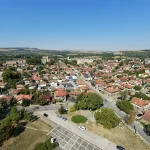
📷 Featured image by Vera Mezhvynskiy on Unsplash.