On this page
- How Bulgarians Communicate: Directness, Silence, and the Head-Nod Paradox
- Family Structures and Social Obligations That Affect Daily Expat Life
- The Orthodox Calendar and How Religious Rhythms Shape the Work-Life Pattern
- Attitudes Toward Outsiders: Warming Up, Earning Trust, and What Kills It
- Food and Hospitality Rules That Go Deeper Than Eating Together
- Workplace Culture and Professional Norms
- 2026 Budget Reality: What Cultural Integration Actually Costs
- Frequently Asked Questions
Most expats arriving in Bulgaria in 2026 have done their homework on visa types, rental costs, and internet speeds. What they haven’t prepared for is the Tuesday morning their landlord shows up unannounced with a bag of homegrown tomatoes, or the office meeting where nobody disagrees out loud but nothing moves forward. Bulgarian culture is not hostile to outsiders — it’s just operating on a different set of assumptions than most Western Europeans or North Americans are used to. This guide exists to close that gap before the misunderstandings start stacking up.
How Bulgarians Communicate: Directness, Silence, and the Head-Nod Paradox
The single most disorienting thing for new expats is the head gesture system. In Bulgaria, shaking your head side to side means yes, and nodding up and down means no. This is not a myth or an exaggeration — it is real, it varies by generation and region, and it will cause genuine confusion in face-to-face conversations, especially when you’re already dealing with a language barrier. Younger Bulgarians in cities have often adopted the Western convention, but switch back unconsciously in emotionally loaded moments. When in doubt, ask for a verbal confirmation.
Beyond the physical gesture, Bulgarians tend toward directness in ways that can feel abrupt. A Bulgarian colleague who tells you your report has a mistake is not being rude — they’re being efficient. There is no cultural cushion of “great work, but perhaps consider…” that you’d find in many Northern European or American professional settings. At the same time, Bulgarians are not blunt about everything. On personal topics — salary, relationship problems, family conflict — expect evasion, deflection, and a rapid subject change.
Silence in conversation is also handled differently. Pauses in a discussion don’t signal awkwardness or the end of a topic. They mean someone is thinking, and filling that pause with chatter reads as nervous or disrespectful. If you’re in a meeting or a social gathering and the room goes quiet for ten seconds, let it breathe.
Family Structures and Social Obligations That Affect Daily Expat Life
Bulgarian family ties are close in ways that have practical consequences for you as an expat. Your landlord may be the grandmother of the person who manages the building. Your colleague may disappear for a week because a relative in a village two hours away is sick and family visits are not optional — they are a form of social contract. Understanding this helps you stop interpreting these behaviours as unprofessional or unreliable.
The extended family functions as an informal welfare system. Grandparents raise grandchildren while parents work. Adult children are expected to care for aging parents, often in the same home. This means the concept of “personal time” is not sharply separated from family time. Bulgarians don’t typically say they’re “busy” the way an office worker in Amsterdam might — they say they have “family things,” and that phrase carries significant weight.
For expats, this structure has a social upside: if you are accepted into a Bulgarian’s social circle, you get pulled into their broader network quickly. You will be introduced to cousins, neighbours, childhood friends. The downside is that declining invitations repeatedly — even for legitimate reasons — reads as a rejection of the relationship itself. You don’t have to attend every family gathering you’re invited to, but you should attend some, and you should always bring something: wine, baklava, or fresh fruit are all appropriate.
The Orthodox Calendar and How Religious Rhythms Shape the Work-Life Pattern
Bulgaria is formally a secular state, but the Bulgarian Orthodox Church is deeply woven into the country’s cultural identity. In 2026, approximately 70–75% of Bulgarians identify as Orthodox Christian, and even those who don’t practice religion actively observe major feast days as cultural events. For expats, this has concrete effects on scheduling and social life.
The Orthodox calendar differs from the Western Christian one. Easter (Великден, Velikden) is the most significant holiday of the year — more so than Christmas. It is calculated on the Julian calendar, which means it often falls on a different date than Catholic or Protestant Easter. Businesses slow down, families gather, and the smell of freshly baked kozunak (a sweet, braided bread) fills stairwells across Bulgarian apartment buildings for days beforehand. If you’re working with local partners or employees, plan nothing consequential for the week surrounding Orthodox Easter.
Name days (имен ден, imen den) are celebrated more enthusiastically than birthdays in many Bulgarian households. If your colleague is named Georgi, he will expect colleagues to acknowledge March 6th (St. George’s Day) — possibly with a small gift or at minimum a genuine “Честит имен ден!” (Happy name day!). A list of Bulgarian name days is easy to find online and worth keeping handy.
Beyond holidays, Sunday retains a rhythm of its own. Large family lunches on Sunday afternoons are a cultural institution. Shops in smaller towns may close or open late. Scheduling work calls or social events on Sunday afternoon will be politely declined more often than not.
Attitudes Toward Outsiders: Warming Up, Earning Trust, and What Kills It
Bulgarians are not unfriendly. But they are reserved with strangers in a way that reads as cold until the threshold is crossed. That threshold is not crossed with charm or small talk — it is crossed with consistency, reliability, and time. Show up when you say you will. Follow through on what you promise. Don’t perform enthusiasm you don’t feel.
There is a layer of historical context here. Bulgaria has spent significant stretches of its modern history under foreign political and economic influence — Ottoman, Soviet, and then the turbulent post-1989 transition. A mild cultural scepticism toward outsiders promising things is rational, not paranoid. Your warmth and good intentions are not immediately legible to people whose experience taught them to watch behaviour over time.
What erodes trust quickly: making promises you can’t keep, treating Bulgarian customs as quaint or backward, being openly condescending about Bulgarian infrastructure or institutions (even when frustrations are valid), or applying pressure tactics in negotiations. The Bulgarian concept of достойнство (dostoynstvo — dignity) is real and important. People will disengage completely rather than tolerate being talked down to.
What builds trust: consistency, showing genuine curiosity about history and language, acknowledging when you don’t know something, and accepting hospitality graciously without turning it into a transaction. If a Bulgarian invites you to their home and cooks for three hours, the correct response is to eat well and stay long enough for a second coffee. Leaving in forty-five minutes to get back to your laptop signals that you consider their time less valuable than yours.
Food and Hospitality Rules That Go Deeper Than Eating Together
Bulgarian hospitality is built around feeding people, and the rules around it are specific enough to be worth understanding in detail. When you arrive at a Bulgarian home for the first time, you will almost certainly be offered food regardless of the time of day. Refusing entirely — especially if you’re hungry — is interpreted as distrust or discomfort with the host. Taking a small amount and genuinely complimenting it is the right move.
Meals are social events, not fuel stops. The table will be loaded before anyone sits down — shopska salad, cold cuts, bread, dips — and dishes will keep arriving. Pace yourself. Finishing your plate signals to the host that you want more. Leaving a small amount is the signal that you’ve had enough, which is the opposite of what many Western Europeans or Americans might expect.
Rakiya (ракия), the Bulgarian fruit brandy, is offered at the start of almost every meal. You don’t have to drink alcohol, but declining should come with a brief explanation (“I don’t drink, thank you” is perfectly acceptable and will be respected). What isn’t acceptable is refusing wine or rakiya and then ordering a beer twenty minutes later — that reads as insulting to the host’s specific offer.
The table ritual of наздраве (nazdrave — cheers) involves eye contact with each person you clink glasses with. Missing someone is considered bad luck and mildly rude. In a group of eight people, this takes a moment to do properly. Do it anyway.
Workplace Culture and Professional Norms
Bulgaria’s professional landscape in 2026 is genuinely split between two cultures: the internationalized tech and outsourcing sector, which has absorbed a lot of Western working norms, and the traditional public sector and local business environment, which operates on entirely different rhythms. If you’re working remotely for a foreign employer while living in Bulgaria, you’re largely insulated from the second category. If you’re employed by a Bulgarian company or running a business with local partners, you need to understand both.
In local Bulgarian workplaces, hierarchy is real and respected. Decisions come from the top, and bypassing your direct manager to speak to theirs is a serious social error, even if the outcome would be faster. Seniority — both in age and in company tenure — is given visible weight. This doesn’t mean ideas from junior staff are dismissed, but they need to be channelled through the right person.
Punctuality is a nuanced topic. Bulgarians are generally punctual for formal meetings, less so for social ones. A dinner at 7 PM probably starts at 7:30 PM. A business meeting at 10 AM starts at 10 AM. Showing up fifteen minutes late to a formal appointment without notice is considered disrespectful.
Disagreement is often expressed indirectly. If a Bulgarian colleague says “we’ll see” or “maybe we can look at that” without any follow-up action, the answer is no. Direct pushback in a group setting is uncommon. If you want honest feedback, build enough of a one-on-one relationship that the person feels safe giving it to you privately.
2026 Budget Reality: What Cultural Integration Actually Costs
Living in Bulgaria is still genuinely affordable by EU standards in 2026, but costs have risen noticeably since 2023. Here is an honest breakdown for expats focused on long-term stays:
Accommodation (Monthly Rent, Unfurnished)
- Budget: Sofia outer districts or Plovdiv centre — 700–900 BGN (360–460 EUR / 390–500 USD) for a one-bedroom apartment
- Mid-range: Sofia centre or Varna seafront area — 1,100–1,500 BGN (560–770 EUR / 610–840 USD) for a one-bedroom
- Comfortable: Modern Sofia developments (Lozenets, Manastirski Livadi) — 1,800–2,500 BGN (920–1,280 EUR / 1,000–1,390 USD) for a two-bedroom
Daily Living Costs
- Groceries (one person, weekly): 60–100 BGN (30–51 EUR), depending on whether you shop at local markets or international supermarkets
- Restaurant meal (local mehana): 15–25 BGN (8–13 EUR) for a full meal with a drink
- Public transport monthly pass (Sofia): 50 BGN (26 EUR) — the expanded Metro Line 3, now running to the northern residential districts, has made this significantly more useful since 2025
- Health insurance (private, expat plan): 90–200 BGN (46–102 EUR) per month depending on age and coverage level — mandatory if you’re on the Digital Nomad Visa
Social and Cultural Integration Costs
- Bulgarian language classes: 30–60 BGN (15–31 EUR) per hour for private tutoring; group courses at 400–600 BGN (205–307 EUR) per semester at language schools in Sofia
- Name day gifts and social contributions: Budget roughly 50–100 BGN (26–51 EUR) per month if you’re actively integrating into a local social circle — small gifts, shared meals, and contributions to group dinners add up
The cost of cultural integration is mostly time, not money. But having a realistic budget for the social side of expat life — language learning, occasional gifts, shared meals — prevents the common mistake of isolating yourself because you’re trying to keep costs to a minimum.
Frequently Asked Questions
Is it difficult to make genuine Bulgarian friends as an expat?
It takes longer than in some countries, but it is absolutely possible. Bulgarians are loyal and generous once trust is established. The main barrier is time and consistency — showing up reliably over months rather than being intensely social for two weeks and then disappearing. Learn a few phrases in Bulgarian; it signals respect and opens doors faster than almost anything else.
How important is it to learn Bulgarian as a long-term expat?
In Sofia’s tech and international business circles, English is sufficient for professional life. But for daily life — dealing with landlords, navigating bureaucracy, shopping at local markets, building real friendships — even basic Bulgarian changes the experience significantly. Cyrillc literacy is particularly useful for reading street signs, menus, and official documents without relying on a phone camera.
Do Bulgarians expect foreigners to follow Orthodox traditions?
No. Nobody expects you to observe religious customs you don’t hold. But acknowledging them — saying “Честит Великден” (Happy Easter) at the right time, accepting a dyed egg if offered, understanding why name days matter — is received as cultural respect rather than religious compliance. Ignorance is forgiven; dismissiveness is not.
What are the most common mistakes expats make in Bulgarian social situations?
The most damaging ones are: declining hospitality repeatedly without explanation, complaining openly about Bulgaria to Bulgarians (venting is fine with close friends, not with acquaintances), being visibly impatient with slow bureaucratic processes, and treating social invitations as optional extras rather than relationship investments. None of these are catastrophic in isolation, but they compound quickly.
Has Bulgarian culture changed significantly since 2024 for expats arriving in 2026?
The urban-rural cultural divide has widened slightly as Sofia and Plovdiv have absorbed more international professionals and remote workers. Digital nomad communities are now visible enough that Bulgarians in major cities are more familiar with the concept. However, core cultural values — family, dignity, hospitality, and earned trust — have not changed and remain the foundation of genuine integration.
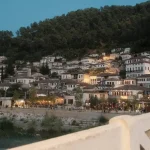
📷 Featured image by Caroline Ross on Unsplash.