On this page
- What Makes Sozopol Different from Bulgaria’s Other Coastal Towns
- The Old Town: Walking the Ancient Peninsula
- Beaches: Which One Is Right for You
- Where to Eat in Sozopol (and What to Order)
- Getting to Sozopol in 2026
- Day Trip or Overnight? Making the Right Call
- 2026 Budget Reality: What Sozopol Actually Costs
- Practical Tips Before You Go
- Frequently Asked Questions
💰 Click here to see Bulgaria Budget Breakdown
💰 Prices updated: October, 2026. Budget figures are estimates — always verify before travel.
Exchange Rate: $1 USD = €0.88
Daily Budget (per person)
Shoestring: €35.00 – €50.00 ($39.77 – $56.82)
Mid-range: €60.00 – €100.00 ($68.18 – $113.64)
Comfortable: €150.00 – €200.00 ($170.45 – $227.27)
Accommodation (per night)
Hostel/guesthouse: €5.00 – €20.00 ($5.68 – $22.73)
Mid-range hotel: €55.00 – €95.00 ($62.50 – $107.95)
Food (per meal)
Budget meal: €7.00 ($7.95)
Mid-range meal: €20.00 ($22.73)
Upscale meal: €60.00 ($68.18)
Transport
Single metro/bus trip: €1.00 ($1.14)
Monthly transport pass: €26.00 ($29.55)
Bulgaria‘s Black Sea coast has a reputation problem in 2026. Sunny Beach dominates the headlines for all the wrong reasons — overcrowding, noise, package-tour fatigue — and even Nessebar, the UNESCO-listed peninsula town just up the road, gets so choked with day-trip buses in July and August that the cobblestones disappear under a carpet of selfie sticks. Sozopol sits 35 kilometres south of Burgas and manages to hold onto something those places have largely lost: the feeling that you actually chose to be somewhere, rather than being deposited there by a conveyor belt.
What Makes Sozopol Different from Bulgaria’s Other Coastal Towns
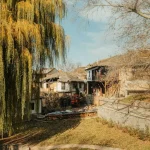
Sozopol is one of the oldest continuously inhabited towns in Bulgaria, founded by Greek colonists as Apollonia Pontica around 610 BC. That age shows in a good way. The Old Town sits on a narrow rocky peninsula jutting into the sea, its wooden houses leaning over each other like gossiping neighbours. There is no casino strip here, no waterpark, no all-inclusive resort swallowing the coastline.
What you get instead is a town that works on two scales at once. In summer it’s genuinely lively — good restaurants, the Apollonia Arts Festival in September, beach bars that don’t feel desperate — but it never tips over into the chaos of the resorts further north. Outside of June to September, Sozopol becomes almost meditative. The waves hit harder, the restaurants thin out, and the few travellers left feel like they’ve found something. Many have.
The town also benefits from its position on the southern coast. Strandzha Nature Park begins practically at its doorstep, giving Sozopol a natural buffer that limits the kind of ribbon development that has swallowed stretches of coast between Nessebar and Varna.
The Old Town: Walking the Ancient Peninsula
The Old Town peninsula is compact enough to walk in an afternoon but rewards slower exploration. The characteristic houses — two and three-storey wooden structures with bay windows overhanging the street, painted in faded blues, ochres, and terracotta — date mostly from the Bulgarian National Revival period of the 18th and 19th centuries, though they sit on foundations that are sometimes ancient. Streets here are narrow enough that neighbours on opposite sides could, in theory, shake hands across the gap.
The Church of St George, dating to the 19th century, anchors the middle of the peninsula with a courtyard shaded by a large tree where cats sprawl unbothered in the heat. Near the southern tip, the Archaeological Museum holds artefacts from the Apollonia Pontica era, including anchors, ceramics, and jewellery recovered from the seabed. It’s a small museum — you won’t spend more than 90 minutes — but the context it gives the town is genuine and worth the 5 BGN (around 2.50 EUR) entry.
The seawall path that runs along the western edge of the peninsula is the best walk in town. In the evening, when the light drops low over the water, the sky turns the colour of old brass, and you can hear the slap of waves on the rocks directly below your feet. That walk, with a coffee in hand and no particular destination, is what most people remember about Sozopol.
Beaches: Which One Is Right for You
Sozopol has two main town beaches and several more within easy reach. They serve different purposes, and picking the wrong one for your mood can colour a whole day.
- Harmanite Beach (New Town): The longer of the two town beaches, around 800 metres, with more facilities — sun loungers, beach bars, showers. This is where families and younger visitors congregate. It can get crowded in late July and August but never reaches Sunny Beach levels of density.
- Old Town Beach: Smaller, rockier at the edges, and backed by the wooden houses of the peninsula. More atmospheric, better for a morning swim before the crowds arrive. The water here is clear.
- Kavatsi Beach: About 3 kilometres south of town, quieter and less organised. Some sections are undeveloped. Good if you want space over facilities.
- Smokinya Beach: Part of Ropotamo Reserve, accessible by footpath or short drive. Considered one of the cleanest and least commercialised beaches on the southern coast. Worth the extra effort.
The water along this stretch of coast is generally cleaner than beaches north of Burgas. EU Blue Flag status has been maintained at Harmanite consistently, which in practical terms means regular water quality monitoring and visible enforcement of rules.
Where to Eat in Sozopol (and What to Order)
The fish here is not a marketing concept — it arrives fresh because local fishermen still work out of the small harbour on the northern side of the peninsula. The smell of salt and diesel around the harbour in the early morning tells you the boats have been out.
Order the chernomorska ribena chorba (Black Sea fish soup) wherever you see it on the menu. It’s a regional staple done properly in a handful of places: thick, tomato-based, heavy with whatever came in that morning. Grilled kefal (grey mullet) and tsatsa (fried sprats) are the local standards and are usually cheaper than they look on touristy menus.
- Mehana Pri Moreto: On the seawall in the Old Town. One of the more reliable spots for traditional Bulgarian-Black Sea cooking. Portions are large. Reserve ahead in July and August.
- Restaurant Panorama: Good views over the southern bay, slightly more polished than the mehana-style spots. The grilled fish platters are well-executed.
- Windmill Café (Vetrohod): A short walk from the old lighthouse area. Coffee, banitsa, light lunches. Useful for breakfast without paying Old Town premium prices.
Avoid restaurants that display photographs of every dish with heavy lamination — a reliable indicator of tourist-trap pricing without the corresponding quality. The places worth eating at in Sozopol mostly have handwritten daily specials on a chalkboard.
Getting to Sozopol in 2026
Burgas is the gateway. Burgas Airport has expanded its direct European connections since 2024, with new seasonal routes from Vienna, Warsaw, and several UK regional airports added in 2025–2026. Ryanair, Wizz Air, and Bulgaria Air all operate there. From the airport to Burgas bus station takes about 10–15 minutes by taxi (around 15–20 BGN / 7.50–10 EUR).
From Burgas bus station, minibuses (marshrutki) run to Sozopol roughly every 30–40 minutes during the day in summer. The ride takes 35–45 minutes and costs around 5 BGN (2.50 EUR). In 2026, the Burgas city bus network reorganisation means Route 7 and the Sozopol marshrutka now share an updated departure bay — check the posted timetables at the central bus station rather than relying on older information.
Sofia to Sozopol is around 390 kilometres; the bus from Sofia’s Central Bus Station takes approximately 5–6 hours. If you’re coming from Plovdiv, allow 3.5–4 hours by bus via Burgas. There is no train directly to Sozopol — the nearest station is Burgas.
Day Trip or Overnight? Making the Right Call
Sozopol is frequently visited as a day trip from Burgas, and that works — you can see the Old Town, swim, have lunch, and be back in Burgas by early evening. But you’ll be sharing most of that experience with every other day-tripper who had the same idea.
Staying overnight changes the dynamic entirely. The day visitors leave by mid-afternoon, the light on the peninsula becomes extraordinary in the early evening, and the restaurants are quieter by 8pm. The morning swim before anyone else has churned the water is one of the better ways to start a day on the Bulgarian coast.
The recommendation: if you’re basing yourself on the south coast for more than two days, make Sozopol your base rather than treating it as a stop. If you have one day, arrive by 9am and leave after dinner rather than rushing back on the afternoon bus.
September is arguably the best month. The Apollonia Arts Festival brings music, theatre, and visual arts to outdoor venues across the Old Town peninsula — performances often happen against the backdrop of the sea and the old walls. Temperatures are still warm enough for swimming (typically 22–24°C water temperature), and the crowds have thinned from August peaks.
2026 Budget Reality: What Sozopol Actually Costs
Sozopol is not cheap by Bulgarian standards, but it’s reasonable compared to equivalent coastal towns in Greece or Croatia. Here’s what to expect in peak season (July–August):
- Budget: Private room in a guesthouse or small pension in the New Town — 80–120 BGN per night (40–60 EUR). Self-catering from the market. Eating tsatsa and soup at simpler mehanas. Daily spend around 150–180 BGN (75–90 EUR) for one person.
- Mid-range: Small hotel or Old Town guesthouse — 150–220 BGN per night (75–110 EUR). Sit-down meals twice a day at decent restaurants, beach lounger hire (15–20 BGN/day). Daily spend around 280–350 BGN (140–175 EUR).
- Comfortable: Boutique hotel with sea view — 280–400 BGN per night (140–200 EUR). Fine dining, wine, organised boat trips (around 60–80 BGN per person). Daily spend 500+ BGN (250+ EUR).
Outside peak season (May–June and September–October), accommodation prices drop 30–40% and availability is easy. In October and later, many restaurants and smaller hotels close entirely.
Practical Tips Before You Go
- Parking in peak season is a genuine problem. If you’re driving, use the paid car parks on the edge of the New Town and walk in. The streets of the Old Town are largely pedestrianised or too narrow for cars anyway.
- Cash is useful. Many smaller mehanas, guesthouses, and market stalls don’t accept cards reliably. Bring enough BGN for a day’s expenses. ATMs are available in the New Town.
- The Apollonia Arts Festival in September requires planning — accommodation books up weeks in advance for festival weekends. If that’s your reason for visiting, confirm your dates against the official programme and book early.
- Jellyfish occasionally appear in significant numbers along the southern coast in late summer, particularly August. It varies year to year and is impossible to predict in advance, but worth knowing.
- Bulgaria entered Schengen’s land border zone in January 2024, and the full Schengen integration (air and sea) was completed in 2024. For EU visitors in 2026, entry is seamless — no border checks at Burgas Airport from Schengen countries.
Frequently Asked Questions
Is Sozopol worth visiting, or is it overhyped?
It genuinely delivers on its reputation, provided you manage expectations. It’s a small, atmospheric coastal town with good food and a beautiful Old Town — not a resort. If you want nightclubs and waterparks, it will disappoint. If you want a place that feels like the Black Sea coast should feel, it’s hard to beat.
When is the best time to visit Sozopol?
September is the sweet spot for most travellers. Warm water, fewer crowds, and the Apollonia Arts Festival create a combination that July and August can’t match despite the livelier atmosphere. June is also excellent — facilities are open and visitor numbers haven’t peaked yet.
How far is Sozopol from Burgas, and how do I get there?
Sozopol is about 35 kilometres south of Burgas and takes 35–45 minutes by minibus. Buses run regularly from Burgas central bus station throughout the day in summer for around 5 BGN (2.50 EUR). It’s also reachable by taxi or rental car, though parking in the town itself is limited.
Can I visit Sozopol as a day trip from Sunny Beach or Nessebar?
Yes, though the drive south along the coast takes about 45–60 minutes depending on summer traffic. Many visitors combine it with a stop at Ropotamo Reserve. Arriving early is key — by midday the Old Town fills with other day-trippers, and the experience is better in the morning or late afternoon.
Is Sozopol family-friendly?
Very much so. Harmanite Beach has calm, shallow water suitable for children, and the town is walkable without heavy traffic in the centre. The Archaeological Museum is engaging enough for older children. Accommodation ranges from simple guesthouses to small hotels — standard family facilities without the resort infrastructure of larger coastal towns.
📷 Featured image by Nadia Hristova on Unsplash.