On this page
- Know Your Train Types: Fast, Express and Passenger
- How to Buy a BDZ Ticket Step by Step
- 2026 Budget Reality: What Train Rides Cost
- Sofia to Plovdiv: The Easy First Journey
- Black Sea Routes: Sofia to Varna and Burgas
- Septemvri to Dobrinishte: The Rhodope Narrow-Gauge Ride
- Sofia to Veliko Tarnovo: The Journey with a Change
- International Trains: Bucharest and Istanbul
- Train, Bus or Plane: Choosing the Right Option
- Getting to and from the Station
- Common Mistakes to Avoid
- Frequently Asked Questions
Planning a rail trip in Bulgaria used to mean guessing. Which train is actually worth taking? Does the website work? Do you need a seat reservation? In 2026, BDZ has made booking much easier, but the choices can still feel confusing if you do not know the system. This guide covers the routes that matter most, from the busy Sofia–Plovdiv line to the slow mountain ride through the Rhodopes. It also shows what each journey costs, how to book, and when a bus or plane makes more sense. All prices use the fixed rate of 1 EUR = 1.95583 BGN.
Know Your Train Types: Fast, Express and Passenger
BDZ (БДЖ – Български държавни железници) is the national rail operator. Three train types cover almost every trip you will take.
- Fast trains (Бърз влак): The most common intercity service. They balance speed with a reasonable number of stops.
- Express trains (Експрес): Fewer stops, connecting major cities directly, and often slightly higher fares. Some express services may require a seat reservation, so check the booking screen before you travel.
- Passenger trains (Пътнически влак): The slow ones. They stop at almost every station, which makes them good for short regional hops and for seeing everyday local life.
Most trains have 1st class (Първа класа) and 2nd class (Втора класа). First class usually means a bit more space, often in compartments of 6 seats. Second class can be open-plan or in 8-seat compartments. The price gap is usually around 30–50%.
How to Buy a BDZ Ticket Step by Step
You have four ways to buy, and the online route is now the easiest.
Online at www.bdz.bg
- Go to www.bdz.bg.
- Select “Buy a ticket” (Купи билет).
- Enter your departure and arrival stations, date and time.
- Choose your train and class (1st or 2nd).
- Select the number of passengers and apply any discounts, such as child or student.
- Pick your seats on the virtual train layout, if the route offers it.
- Pay with Visa, Mastercard or Maestro.
- Receive your e-ticket by email. Show it on your phone or print it.
The BDZ Tickets app
BDZ has launched its official mobile app, “BDZ Tickets”, for Android and iOS. It mirrors the website: you can buy tickets, check schedules and keep your digital tickets in one place. Confirm the exact app name in your app store, as the service is still developing.
At the station
Station counters always accept cash (BGN). Larger stations often have self-service kiosks that take cards. Arrive 20–30 minutes before departure on popular routes. Queues at the counter move slowly, and nobody will hold the train for you.

On board
At small stations without a ticket counter, you can buy from the conductor. A small surcharge may apply, for example 2 BGN (1.02 EUR). Do not rely on this at major stations or on busy routes.
2026 Budget Reality: What Train Rides Cost
Rail is one of the cheapest ways to see Bulgaria. These are the estimated 2026 one-way fares, sorted by how much you want to spend.
Budget (2nd class)
- Sofia–Plovdiv: 11.00 BGN (5.63 EUR)
- Septemvri–Dobrinishte (full route): 10.00 BGN (5.12 EUR)
- Sofia–Veliko Tarnovo: 20.00 BGN (10.24 EUR)
- Sofia–Burgas: 30.00 BGN (15.37 EUR)
- Sofia–Varna: 33.00 BGN (16.90 EUR)
Mid-range (1st class)
- Sofia–Plovdiv: 15.00 BGN (7.68 EUR)
- Sofia–Burgas: 41.00 BGN (21.00 EUR)
- Sofia–Varna: 45.00 BGN (23.05 EUR)
Comfortable (1st class plus sleeper)
- Overnight to the coast: the 1st class fare plus a sleeper berth supplement of roughly 10–20 BGN (5.12–10.24 EUR), depending on type.
- Sofia–Istanbul: 75 BGN (38.35 EUR) plus a couchette or sleeper supplement.
Discounts and extras
- Return tickets: Often 10–15% cheaper than two singles.
- Children under 7: Free when accompanied.
- Children 7–14: 50% off.
- Students with an ISIC card: Around 50% off on specific routes or passes. Check the current policy before you rely on it.
- Seniors over 65: Specific passes or reductions of roughly 25–50% for certain periods. Confirm the details at the counter or on www.bdz.bg.
- Seat reservations: Optional on most 2nd class tickets at around 0.50 BGN (0.26 EUR). First class often includes one.
- Bicycles: Around 2–4 BGN (1.02–2.05 EUR) per bike on trains with bike carriages. Not every train has one, so check in advance.
Sofia to Plovdiv: The Easy First Journey
This is the busiest intercity line in the country and the best one to start with. It links the capital with Bulgaria’s second-largest city and a major cultural hub. Expect around 10–15 trains a day. Fast trains take roughly 2 hours 15 minutes to 2 hours 45 minutes, and the landscape changes steadily as you leave the Sofia valley behind.
Newer Siemens Desiro trains now run on key routes, including this one. That means smoother rides and better comfort than the old carriages. At 11.00 BGN (5.63 EUR) in 2nd class, it is hard to beat for value. Book a seat on Friday and Sunday trains, when locals travel too.

Black Sea Routes: Sofia to Varna and Burgas
These are the long-haul domestic rides, and they are the ones where a sleeper makes sense. Both routes have about 4–6 direct trains a day, including one or two overnight services.
- Sofia–Varna: Fast trains take about 7 hours 30 minutes to 8 hours 30 minutes. The line crosses central Bulgaria’s plains and hills. Fares are 33.00 BGN (16.90 EUR) in 2nd class and 45.00 BGN (23.05 EUR) in 1st.
- Sofia–Burgas: Fast trains take about 6 hours 45 minutes to 7 hours 30 minutes. Fares are 30.00 BGN (15.37 EUR) in 2nd class and 41.00 BGN (21.00 EUR) in 1st.
Overnight sleepers take longer because of stops, but you save a night’s accommodation. Book these a few days ahead, and further ahead from June to September when the coast fills up. By late afternoon on a summer day, the carriages smell of sun cream and sandwiches as families head for the beach.
Septemvri to Dobrinishte: The Rhodope Narrow-Gauge Ride
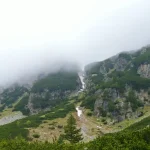
This is the ride that justifies planning a trip around a train. The Septemvri–Dobrinishte line is Bulgaria’s last remaining narrow-gauge railway, and it is one of Europe’s most scenic rail journeys. The small train winds through the Rhodope Mountains, crossing high bridges and passing through numerous tunnels. Expect the rhythmic clatter of the narrow carriage and the sudden dark and echo of each tunnel before the valley opens up again.
- Frequency: 4 trains daily in each direction.
- Duration: About 5 hours for the full route.
- Price: 10.00 BGN (5.12 EUR) one-way in 2nd class for the full route. Shorter segments cost proportionally less.
Do not treat it as transport only. Sit by a window, pack your own snacks, and give it the whole day. You can also ride just a section and return.
Sofia to Veliko Tarnovo: The Journey with a Change
Veliko Tarnovo, the former capital and home of Tsarevets Fortress, has no direct train from Sofia. You typically change at Gorna Oryahovitsa. Multiple connections run daily, and the total journey takes about 4 hours to 5 hours 30 minutes, depending on how well the connection lines up. The fare is about 20.00 BGN (10.24 EUR) in 2nd class.
Check the connection time before you buy. A tight change on a day with a delay can leave you waiting on a platform, so choose a connection with a comfortable gap. Buses may suit you better here, but the train is a relaxed option if you are not in a hurry.

International Trains: Bucharest and Istanbul
BDZ has resumed year-round direct services to Bucharest and introduced a modernized summer service to Istanbul with improved rolling stock.
- Sofia–Bucharest: One daily train, about 9–10 hours. Estimated fare: 60 BGN (30.68 EUR).
- Sofia–Istanbul: Daily in summer, 3 times a week off-season. It is an overnight train with couchette and sleeper options, taking about 11–12 hours. Estimated fare: 75 BGN (38.35 EUR) plus a couchette or sleeper supplement.
- Sofia–Belgrade: Less frequent and often needs changes at border stations, so plan extra time.
Train, Bus or Plane: Choosing the Right Option
Trains are scenic and cheap, but they are not always the fastest. Here is how the alternatives compare in 2026.
- Intercity buses: Often faster and more direct on some routes, with more departures and better coverage of towns off the rail network. Operators include Union Ivkoni (www.union-ivkoni.com), Biomet (www.biomet.bg) and Plovdiv Bus (www.plovdivbus.com). Estimated prices: Sofia–Plovdiv 15–18 BGN (7.68–9.22 EUR), Sofia–Varna 35–45 BGN (17.91–23.05 EUR), Sofia–Burgas 30–40 BGN (15.37–20.47 EUR). Modern coaches with AC and Wi-Fi are common.
- Domestic flights: Bulgaria Air (www.air.bg), Wizz Air (www.wizzair.com) and Ryanair (www.ryanair.com) fly Sofia (SOF) to Varna (VAR) and Burgas (BOJ). The Sofia–Varna flight takes about 50 minutes. One-way tickets range from 40 BGN (20.47 EUR) on budget carriers booked early to 150 BGN (76.70 EUR) with Bulgaria Air, excluding luggage. Airport transfers add time and cost, and you lose the scenery.
- Car rental: From 40 BGN (20.47 EUR) per day for a compact car, excluding fuel and insurance. You need a valid licence, and non-EU drivers should carry an international driving permit. Main roads are generally good, but secondary roads can be poor. Winter tires are mandatory from November 15 to March 1.
Choose the train for scenery, comfort and overnight trips. Choose the bus when timing matters or your destination has no station. Buses are also generally more punctual.
Getting to and from the Station
The journey does not end at the platform, so plan the last mile.
- Sofia Metro: The only metro system in Bulgaria, with lines M1, M2, M3 and M4, running roughly 05:00 to 00:00. A single ride costs 1.60 BGN (0.82 EUR) and a day pass is 4.00 BGN (2.05 EUR). Contactless bank cards work at the turnstiles. Details are at www.metropolitan.bg.
- Taxi apps: In Sofia, use Yellow!333, TaxiMe or InDriver. Daytime fares start around 1.20 BGN (0.61 EUR) and nighttime around 1.50 BGN (0.77 EUR), plus 0.90–1.20 BGN (0.46–0.61 EUR) per km by day. Apps are mainly in Sofia, Plovdiv, Varna and Burgas. Never take unmarked cars.
- Sofia Airport (SOF): Metro Line 4 connects Terminal 2 to the city centre in about 25–30 minutes for 1.60 BGN (0.82 EUR). A free shuttle bus links Terminal 1 to Terminal 2. Official taxis cost roughly 18–25 BGN (9.22–12.81 EUR).

Common Mistakes to Avoid
- Arriving at the last minute. Counters can have queues. Give yourself 20–30 minutes.
- Skipping the reservation on busy trains. Reservations are optional in most 2nd class, but they are highly recommended on long or busy journeys.
- Booking tight connections. BDZ punctuality has improved but delays still happen. Leave buffer time, especially in Gorna Oryahovitsa.
- Assuming every train takes bikes. Only some have bike compartments. Check on www.bdz.bg or at the station.
- Relying on the conductor in big stations. On-board sales are for small stations without counters.
- Having no cash. Cards are common now, but BGN cash helps in rural areas and on buses.
- Ignoring accessibility. Newer trains have ramps and wheelchair spaces, but older trains and small stations are still hard. Call BDZ customer service on 0700 10 200 ahead of time.
- Trusting old timetables. Check www.bdz.bg for current schedules and prices before you go.
Frequently Asked Questions
How do I buy a train ticket in Bulgaria?
The easiest way is online at www.bdz.bg or through the BDZ Tickets app, paying with Visa, Mastercard or Maestro. You receive an e-ticket by email. You can also buy at station counters with cash or card, or from the conductor at small stations, sometimes with a surcharge.
How long does the train from Sofia to Plovdiv take?
Fast trains take about 2 hours 15 minutes to 2 hours 45 minutes, with roughly 10–15 departures daily. A 2nd class ticket costs about 11.00 BGN (5.63 EUR) and 1st class about 15.00 BGN (7.68 EUR), making it the most popular and best-value route in Bulgaria.
Is there a direct train from Sofia to Veliko Tarnovo?
No. The journey normally involves a change at Gorna Oryahovitsa. Multiple connections run daily, and total travel time is about 4 hours to 5 hours 30 minutes depending on the connection. A 2nd class fare is around 20.00 BGN (10.24 EUR). Check the change time before booking.
What is the most scenic train ride in Bulgaria?
The Septemvri–Dobrinishte narrow-gauge line through the Rhodope Mountains. It is Bulgaria’s last remaining narrow-gauge railway, crossing high bridges and many tunnels. Four trains run daily each way, the full trip takes about 5 hours, and a 2nd class ticket costs around 10.00 BGN (5.12 EUR).
Are trains or buses better in Bulgaria?
It depends on the route. Trains are cheaper on some lines and far more scenic. Buses are often faster and more direct, run more often, and reach towns with no station. Sofia–Plovdiv costs 15–18 BGN (7.68–9.22 EUR) by bus versus 11.00 BGN (5.63 EUR) by train, 2nd class.
📷 Featured image by Todor Andonov on Unsplash.