On this page
- Understanding the Bulgarian Lev — Denominations, the Euro Peg, and Quick Mental Math
- Cash vs. Card in 2026 — Knowing Which to Reach For
- Dynamic Currency Conversion — The #1 Hidden Fee in Bulgaria
- ATMs in Bulgaria — Bank Machines vs. Independent Operators, Fee Breakdown
- The Best Cards to Use in Bulgaria — Revolut, Wise, N26, and Traditional Banks
- Currency Exchange Without Getting Burned
- Tipping in Bulgaria — Amounts, Etiquette, and How to Actually Pay
- 2026 Budget Reality — What Things Actually Cost in BGN
- What Changed Since 2024
- Common Mistakes Travelers Make with Money in Bulgaria
- Frequently Asked Questions
💰 Click here to see Bulgaria Budget Breakdown
💰 Prices updated: August, 2026. Budget figures are estimates — always verify before travel.
Exchange Rate: $1 USD = €0.86
Daily Budget (per person)
Shoestring: €35.00 – €50.00 ($40.70 – $58.14)
Mid-range: €60.00 – €100.00 ($69.77 – $116.28)
Comfortable: €150.00 – €200.00 ($174.42 – $232.56)
Accommodation (per night)
Hostel/guesthouse: €5.00 – €20.00 ($5.81 – $23.26)
Mid-range hotel: €55.00 – €95.00 ($63.95 – $110.47)
Food (per meal)
Budget meal: €12.00 ($13.95)
Mid-range meal: €25.00 ($29.07)
Upscale meal: €60.00 ($69.77)
Transport
Single metro/bus trip: €0.80 ($0.93)
Monthly transport pass: €25.50 ($29.65)
Bulgaria regularly tops lists of Europe’s most affordable destinations, and in 2026 that reputation still holds. But cheap doesn’t mean fee-free. A growing number of travelers arrive expecting easy, frictionless payments and leave having quietly handed 15–20% of their spending to ATM operators and currency conversion middlemen — without ever realizing it. The confusion around Bulgaria’s delayed euro adoption has added another layer of uncertainty this year. This guide cuts through all of it: what currency you actually need, where fees hide, and exactly how to avoid them.
Understanding the Bulgarian Lev — Denominations, the Euro Peg, and Quick Mental Math
The official currency of Bulgaria in 2026 is the Bulgarian Lev (BGN). Despite years of anticipation, Bulgaria has not yet adopted the euro. The euro adoption timeline has shifted — 2027 is now the more realistic target, with economic and technical criteria still being worked through. For your entire trip in 2026, every transaction will be in BGN.
The good news: the lev is pegged to the euro at a fixed rate of 1 EUR = 1.95583 BGN. This rate does not fluctuate. For quick mental math at a market stall or taxi, simply divide any BGN price by 2 to get a rough euro equivalent. It’s slightly generous (the real rate is closer to 1.96), but close enough for a sanity check.
Banknotes come in denominations of 2, 5, 10, 20, 50, and 100 BGN. The 100 BGN note (roughly EUR 51 / USD 55) exists but can be tricky to break at small shops and street vendors — avoid holding too many of them. Coins are called stotinki (one stotinka = 0.01 BGN) and come in 1, 2, 5, 10, 20, 50 stotinki, and 1 BGN denominations.
Keep a healthy supply of 5 and 10 BGN notes. These are the workhorses of daily life in Bulgaria — the right size for a coffee, a market purchase, a bus ticket in a smaller town, or a tip left on a restaurant table.
Cash vs. Card in 2026 — Knowing Which to Reach For

The honest picture in 2026: Bulgaria has made serious strides in card acceptance, but it is not yet a cashless country. The urban/rural divide is real and sharp.
In Sofia, Plovdiv, Varna, and Burgas, you can comfortably pay by card at supermarkets, restaurants, larger cafes, petrol stations, pharmacies, and most retail shops. Contactless tap-to-pay — including Apple Pay and Google Pay — works at the vast majority of point-of-sale terminals in these cities. Visa and Mastercard are the dominant networks. American Express and Discover are accepted at international hotels and some upmarket restaurants, but don’t count on them elsewhere.
In smaller towns, villages, local markets, and rural guesthouses, cash is still king. A bakery in Koprivshtitsa, a vegetable vendor at the Zhenski Pazar market in Sofia, or a family-run mehana (tavern) in the Rhodope mountains — none of these are guaranteed to have a card terminal. If they do, it may be offline or only accept Bulgarian cards.
The practical recommendation: carry BGN 50–100 (EUR 25–50) in cash at all times as a buffer. Use your card for larger purchases in cities. Use cash for anything under BGN 10, anything in a rural setting, and anything from a vendor or market stall.
Dynamic Currency Conversion — The #1 Hidden Fee in Bulgaria
Dynamic Currency Conversion (DCC) is the single most lucrative trap set for foreign travelers in Bulgaria, and it appears both at card terminals and ATMs. Understanding it takes 60 seconds. Falling for it costs you 3–10% of every transaction.

Here’s how it works: when you pay by card or withdraw at an ATM, the system detects that your card is from another country. It then offers to complete the transaction in your home currency — euros, US dollars, British pounds — rather than in BGN. It frames this as a convenience. It is not. The exchange rate applied is set by the merchant’s payment processor, not by your bank, and it is systematically worse than the rate your bank would use.
How to refuse DCC every time:
- At a card terminal, if the screen shows a price in your home currency and asks you to confirm, decline. Look for a button labelled “BGN,” “Local currency,” or “Decline conversion.” If the cashier has already confirmed on their end, ask them to cancel and re-run the transaction.
- At an ATM, you will often see a screen asking whether you want to proceed “with conversion” (showing your home currency amount) or “without conversion.” Always select “without conversion” or “withdraw in BGN.”
- If a terminal doesn’t give you a choice and charges you in your home currency anyway, that is technically against card network rules. Report it to your card issuer.
Independent ATM operators (more on those below) are the worst offenders for DCC. Some machines make it genuinely difficult to find the “decline” option, burying it in small text or timing out to the conversion-accepted option. Read every screen carefully and take your time.

ATMs in Bulgaria — Bank Machines vs. Independent Operators, Fee Breakdown
Not all ATMs in Bulgaria are equal, and the difference in what they cost you is substantial.
Bank-Branded ATMs
ATMs operated by Bulgarian banks — DSK Bank (www.dskbank.bg), UBB (www.ubb.bg), UniCredit Bulbank, Postbank, and Raiffeisenbank — are your best option. These machines generally charge lower fees for international card withdrawals, typically a flat fee of BGN 2–4 (EUR 1–2) or sometimes nothing at all, depending on your card. They are found at bank branches (use these during business hours when possible), shopping malls, larger supermarkets, and petrol stations on major routes.
Independent ATMs
Machines operated by companies like Euronet and B-pay are a different story. In 2026, these independent ATMs charge withdrawal fees ranging from BGN 8 to BGN 15 per transaction (EUR 4–7.50), on top of whatever your home bank charges. They are also aggressive about pushing DCC. You’ll find them in airports, high-traffic tourist zones, and convenience stores — positioned precisely where you’re most likely to need cash in a hurry. Avoid them whenever a bank ATM is accessible.
Step-by-Step ATM Withdrawal
- Insert your card into a bank-branded ATM.
- Select your language (English is available on all machines in major cities).
- Choose “Withdrawal” and select your account type — savings or checking. If you’re using a debit card, “savings” or “checking” both work; for a credit card, select “credit.”
- Enter the amount in BGN.
- If a DCC screen appears offering conversion to your home currency, decline it. Select “Continue without conversion” or “Withdraw in BGN.”
- Collect your cash, card, and receipt. Count the notes before stepping away.
To locate bank ATMs in advance, use the Visa ATM locator at www.visa.com/atmlocator or the Mastercard locator at www.mastercard.com/atmlocator. DSK Bank and UBB both have locators on their respective websites.

The Best Cards to Use in Bulgaria — Revolut, Wise, N26, and Traditional Banks
Your choice of card has a bigger impact on your total costs in Bulgaria than almost any other financial decision. Here’s how the main options compare in 2026.
Revolut
Revolut remains one of the most practical tools for traveling in Bulgaria. On the Standard (free) plan, you get fee-free currency exchange up to a monthly limit and fee-free ATM withdrawals up to approximately BGN 400–800 (EUR 200–400) per month, after which a 2% fee applies. Paid plans (Plus, Premium, Metal) offer higher or unlimited fee-free ATM withdrawal limits. Revolut uses the interbank exchange rate on weekdays. Check your specific plan terms before travel, as Revolut adjusts these figures periodically.
Wise (formerly TransferWise)
The Wise card converts at the mid-market rate with a small transparent conversion fee (typically 0.4–1% depending on currency). ATM withdrawals are free up to two withdrawals or BGN 400 (approximately EUR 200) per month; after that, a 1.75% fee applies plus a fixed fee per withdrawal. Wise is particularly strong if you’re arriving from outside the eurozone, as it handles multiple currencies cleanly.
N26
Available to EU/EEA residents, N26 offers fee-free payments in BGN and some ATM withdrawals depending on your plan tier. The free account charges a small fee per ATM withdrawal abroad; paid tiers remove this. N26 uses the Mastercard exchange rate, which is close to interbank.
Traditional Bank Cards
A standard debit or credit card from a traditional bank will work everywhere Visa or Mastercard is accepted. The cost is the issue: most traditional banks charge a foreign transaction fee of 1–3% per purchase, plus a flat fee of EUR 3–7 per ATM withdrawal abroad. Over a two-week trip, that adds up fast. If a travel card like Revolut or Wise is available to you, use it for Bulgaria and relegate your traditional bank card to backup.

Currency Exchange Without Getting Burned
Where to Exchange
- Licensed exchange offices (обменно бюро / obmenno byuro): These are the best option for cash exchange. Look for offices displaying a license certificate, clear buy/sell rate boards for major currencies, and signs reading “NO COMMISSION” (Без Комисиона). The major cities — Sofia, Plovdiv, Varna — have dozens of reputable offices, many in pedestrian zones.
- Banks: Safe and transparent, but typically offer less competitive rates than exchange offices and may have limited hours.
- Hotel exchange desks: Convenient and consistently overpriced. Use only in genuine emergencies.
- Unofficial street changers: Avoid entirely. This practice has declined significantly in recent years, but it still surfaces in tourist areas. The risks include counterfeit notes, short counts, and outright theft.
How to Read an Exchange Office Board
Every licensed exchange office displays two rates: Купува (Buy) — the rate at which the office buys foreign currency from you — and Продава (Sell) — the rate at which it sells foreign currency to you. When you’re exchanging euros for BGN, the “Buy” (Купува) rate for EUR is what matters. The higher this number, the more BGN you receive. Compare this against the official rate (1.95583 BGN per EUR) to gauge how much the office is taking.
Step-by-Step Exchange
- Check the current interbank rate on Google (“EUR to BGN”) before approaching any office.
- Read the board rates. Ask: “If I give you 100 EUR, how many BGN do I receive?” Get the exact figure before handing over anything.
- If the rate is significantly worse than the interbank rate (more than 1–2% difference), walk to the next office.
- Complete the exchange, receive your receipt, and count the notes at the counter before walking away.

Tipping in Bulgaria — Amounts, Etiquette, and How to Actually Pay
Tipping is customary in Bulgaria but not obligatory. The culture around it is more relaxed than in North America — no one will chase you down the street — but leaving a fair tip for good service is a respected gesture.
Restaurants and Cafes
10% is the standard tip for good service. For exceptional service, 15% is generous and genuinely appreciated. The important practical note: most Bulgarian card terminals do not have a tip-adding function during the payment process. If you want to tip, leave cash on the table or hand it directly to your server. Alternatively, if paying cash for the bill, simply tell the waiter the total you want to pay (including the tip) and they’ll return the correct change.
Taxis
Round up the fare to the nearest whole lev, or add 5–10% for good service. On a BGN 14.60 fare, leaving BGN 16 is perfectly appropriate. Use the OK Supertrans or Yellow Taxi apps in Sofia to book metered rides and avoid unofficial taxis that sometimes inflate prices for foreign-looking passengers.
Tour Guides
For a half-day guided tour, BGN 10–20 (EUR 5–10) per person is appropriate. For a full-day tour, BGN 20–40 (EUR 10–20) per person. Cash in hand, given directly to the guide at the end of the tour, is the norm.
Hotel Staff
Porters and housekeeping staff: BGN 2–5 (EUR 1–2.50) per service or per day is appropriate. Leave it on the pillow or nightstand with a small note if leaving for housekeeping.
2026 Budget Reality — What Things Actually Cost in BGN
Understanding the fee landscape is more useful when anchored to real prices. Here’s an honest snapshot of daily costs in Bulgaria in 2026.
Food and Drink
- Budget: A banitsa (cheese pastry) from a street bakery: BGN 1.50–2.50 (EUR 0.75–1.30). A coffee at a local café: BGN 2.50–4 (EUR 1.25–2). A set lunch menu (lunch special) at a restaurant: BGN 10–15 (EUR 5–7.50).
- Mid-range: A full sit-down dinner for two with drinks: BGN 50–80 (EUR 25–40).
- Comfortable: Fine dining dinner for two in Sofia or a seaside resort: BGN 100–180 (EUR 50–92).

Transport
- Sofia Metro single ride: BGN 1.60 (EUR 0.82). Day pass: BGN 4 (EUR 2.05).
- Intercity bus (e.g., Sofia to Plovdiv): BGN 14–18 (EUR 7–9).
- Train — Sofia to Plovdiv (second class): BGN 18–25 (EUR 9–12.50).
- Train — Sofia to Varna: BGN 25–45 (EUR 12.50–23), depending on train type.
- Taxi in Sofia (short urban ride, 5 km): BGN 8–14 (EUR 4–7).
Accommodation
- Budget: Hostel dorm in Sofia or Plovdiv: BGN 30–50/night (EUR 15–25).
- Mid-range: Double room in a 3-star hotel: BGN 100–160/night (EUR 50–82).
- Comfortable: Boutique hotel or 4-star: BGN 180–350/night (EUR 92–179).
What Changed Since 2024
If you visited Bulgaria before 2024 and are planning a return, a few things have shifted in ways that affect how you manage money.
Contactless adoption is now near-universal in cities. The pace of POS terminal upgrades accelerated significantly in 2024–2025. In 2026, even mid-size towns have widespread tap-to-pay support. Mobile wallets (Apple Pay, Google Pay) work reliably across Sofia, Plovdiv, Varna, and Burgas.
The euro is not coming in 2026. Bulgaria’s euro adoption, originally targeted for 2025, has been pushed back. As of 2026, BGN remains the official and only legal tender. Do not arrive with only euros expecting to spend them freely — some businesses in tourist-heavy areas informally accept euros, but at poor rates and without obligation.
BDZ online ticketing has improved. The Bulgarian State Railways booking system at www.bdz.bg has been upgraded, with a more functional mobile experience. You can now purchase and store tickets digitally for most intercity routes, reducing the need to queue at ticket windows with cash. Major stations accept card payments; smaller rural stations remain cash-only.
Independent ATM fees have risen. Euronet and similar operators increased their per-withdrawal fees in 2025. The BGN 8–15 range reflects this. Awareness has grown — more travelers now seek out bank ATMs deliberately — but independent machines remain common in airports and resorts.

Exchange office regulation has tightened. There has been continued regulatory pressure on exchange offices to display rates clearly and eliminate bait-and-switch tactics (where advertised rates apply only to large exchange amounts). The practice hasn’t disappeared entirely, but it is less common than it was in 2022–2023.
Common Mistakes Travelers Make with Money in Bulgaria
These aren’t hypothetical. These are the errors that consistently appear in traveler forums and complaints.
- Using the first ATM they see at the airport. Sofia Airport has independent ATMs prominently positioned before you reach the exit. They charge high fees and push DCC hard. Walk past them, get to your accommodation, and use a bank-branded ATM nearby.
- Accepting DCC without reading the screen. The confirmation happens fast, especially when you’re jet-lagged. Slow down at every payment terminal and ATM screen.
- Exchanging large amounts at hotel desks. The rate difference between a hotel desk and a licensed exchange office can be 5–8%. On a BGN 500 exchange, that’s BGN 25–40 lost for no reason.
- Carrying only large notes. A 100 BGN note at a small market or a village bakery will cause genuine problems. You may be refused service or given change in a way that disadvantages you.
- Assuming euros work everywhere. They do not. Bulgaria is not in the eurozone. Some tourist businesses accept them as a courtesy, but always at an unfavorable rate. Pay in BGN.
- Not checking their home bank’s foreign transaction fees before departing. Some travelers use their standard bank card throughout a trip and return home to find a 2.5% foreign transaction fee applied to every single purchase. A Revolut or Wise card set up before you fly eliminates this entirely.
- Tipping by card when the terminal doesn’t support it. Attempting to tip on a card in Bulgaria often results in confusion and the tip not reaching the server. Always tip in cash.

Frequently Asked Questions
Does Bulgaria use the euro in 2026?
No. Bulgaria uses the Bulgarian Lev (BGN) in 2026. Euro adoption has been delayed and is now realistically targeted for 2027 at the earliest. The lev is pegged to the euro at a fixed rate of 1.95583 BGN per euro, but all prices and payments within the country are in BGN. Carry lev, not euros.
What is the best way to get Bulgarian lev without paying high fees?
Withdraw BGN from a bank-branded ATM (DSK Bank, UBB, UniCredit Bulbank, Postbank, or Raiffeisenbank) using a travel card like Revolut or Wise. Always decline Dynamic Currency Conversion when prompted. Avoid independent ATMs like Euronet, which charge BGN 8–15 per withdrawal on top of your home bank’s fees.
Is it safe to use credit and debit cards in Bulgaria?
Yes, card payments are safe and widely accepted in Bulgarian cities and tourist areas in 2026. Visa and Mastercard work at most terminals. Use contactless where possible to minimize card handling. Inspect ATMs for skimming devices before use, and always cover your PIN entry. Keep a backup card stored separately from your primary card.
How much cash should I carry in Bulgaria?
A buffer of BGN 50–100 (roughly EUR 25–50) is practical for most travelers. This covers small purchases, market stalls, rural guesthouses, and tipping. If traveling outside major cities — into the Rhodopes, rural northern Bulgaria, or smaller Black Sea villages — carry more, as card infrastructure becomes less reliable.
Do I need to tip in Bulgaria, and how much?
Tipping is customary but not mandatory. In restaurants, 10% for good service is standard. Round up taxi fares to the nearest whole lev. For guided tours, BGN 10–20 (half-day) or BGN 20–40 (full-day) per person is appropriate. Always tip in cash — most Bulgarian card terminals do not have a tip function during the payment process.
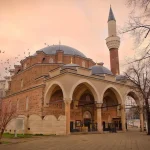
📷 Featured image by Money Knack on Unsplash.