On this page
- The Head Shake That Will Confuse You Every Single Time
- Greetings, Names, and First Impressions
- At the Dining Table: Toasts, Rakia, and the Art of Refusing Food
- Visiting Homes and Orthodox Churches
- How Orthodox Christianity Shapes Everyday Bulgarian Life
- Name Days: The Celebration That Matters More Than Birthdays
- Unwritten Public Rules: Queuing, Volume, and Tipping
- 2026 Budget Reality: Social Situations and Cultural Costs
- Frequently Asked Questions
The Head Shake That Will Confuse You Every Single Time
Bulgaria has been welcoming more international visitors since the country’s full Schengen integration smoothed out border crossings in 2024 and 2025. But in 2026, the number-one complaint still heard from first-time travelers is the same one it has always been: they said yes, but they shook their head. They thought the waiter disagreed, but the food arrived anyway. This is not a quirk you can simply read about once and then handle instinctively. It will catch you off guard in the middle of a real conversation, and it helps to be genuinely prepared for it.
In Bulgaria, a side-to-side head shake means yes. A single up-and-down nod means no. This is the opposite of what most Western travelers — and many travelers from Asia and the Middle East — expect. Younger Bulgarians in Sofia and Plovdiv sometimes adopt the Western convention, especially in hotels and tourist businesses. But outside the cities, and among older generations, the traditional Bulgarian head movements are firmly in place. Do not assume anything from visual cues alone. When in doubt, ask for verbal confirmation. A Bulgarian “da” (да) means yes. A Bulgarian “ne” (не) means no. Listen for the words, not the gestures, until you have spent enough time in the country to recalibrate.
Greetings, Names, and First Impressions
Bulgarians are warmer in private than they appear in public. On the street or in a shop, the default expression is neutral, even serious. This is not unfriendliness — it is cultural reserve. Do not interpret a blank face at a ticket counter as hostility. A polite “Zdraveĭte” (Здравейте) — the formal greeting — will almost always produce a visible softening.
Among friends and family, greetings involve kisses on the cheek — typically once on each cheek — between women and between men and women. Men who know each other well shake hands firmly and often grip the forearm or shoulder. Between strangers in a formal context, a handshake is standard. Do not initiate a cheek kiss with someone you have just met in a business or official setting — wait for the other person to lead.

First names are used relatively quickly in casual situations, but titles matter in formal ones. A doctor, lawyer, or professor is addressed by their title. When you are introduced to an older person, using “gospozha” (госпожа — Mrs/Ms) or “gospodin” (господин — Mr) followed by the family name is respectful until they invite informality. Bulgarians have three names — a given name, a patronymic, and a family name — though the patronymic is rarely used in everyday conversation.
At the Dining Table: Toasts, Rakia, and the Art of Refusing Food
Eating with Bulgarians is one of the most rewarding cultural experiences the country offers, but it comes with its own set of unspoken rules. The most important one: when someone offers you food or drink in their home, refusing outright is considered rude. If you genuinely cannot eat something — for health or dietary reasons — explain this clearly and early, before sitting down. Bulgarians will accommodate dietary needs when they understand them, but a vague “no thank you” at the table can cause real offence.
Rakia — the local fruit brandy, typically made from grapes or plums — is the social lubricant of Bulgarian life. It arrives before the meal, sometimes warm, sometimes at room temperature, never with ice. The toast is “Nazdrave!” (Наздраве!) — to your health. When toasting, make eye contact with each person you clink glasses with. Looking away while clinking is considered bad luck and slightly disrespectful. If you do not drink alcohol, say so clearly before the rakia appears. Bulgarians will not pressure you once they understand, but they do want to know so they can offer you something else — juice, ayran, or mineral water — to toast with.
The host will refill your plate and glass without asking. Leaving food on your plate signals that you are full. Finishing everything signals that you want more. Pace yourself accordingly, especially at Sunday family lunches, which can stretch across three or four hours. The smell of slow-cooked kavarma drifting from the kitchen, bread pulled fresh from a clay pot, a table that keeps expanding — this is Bulgarian hospitality at its most genuine, and it deserves your full attention.
Visiting Homes and Orthodox Churches
If you are invited to a Bulgarian home, bring something. Wine, good chocolate, a small pastry box, or flowers for the host are all appropriate. Avoid bringing an even number of flowers — even numbers are for funerals. Odd numbers are for celebrations. This rule is taken seriously across all age groups.

Remove your shoes at the door unless the host specifically tells you not to. You will usually see a rack of shoes in the entrance hallway — this is your signal. Many hosts will offer you house slippers.
When visiting Orthodox churches — and Bulgaria has some extraordinary ones, from the Rila Monastery to the Boyana Church on the edge of Sofia — dress modestly. Shoulders and knees should be covered, regardless of gender. Some churches provide wraps at the entrance, but carrying a light scarf or a pair of long trousers in your bag is a more reliable solution, especially in 2026 when many smaller monastic sites have tightened their dress code enforcement following a series of tourist incidents in 2024. Photography inside churches is often restricted or forbidden entirely. Look for signs, and if there are none, ask before you point a camera at an iconostasis.
How Orthodox Christianity Shapes Everyday Bulgarian Life
Bulgaria is around 80 percent Eastern Orthodox Christian, and the faith is embedded in the rhythm of daily life in ways that are not always obvious to outsiders. Fasting periods — particularly the Great Lent before Easter and the Nativity Fast before Christmas — genuinely affect what food is available and what people eat in homes, monasteries, and many traditional restaurants. During these periods, menus shift toward vegetables, legumes, and fish. If you are visiting in March or early April, or in late November and December, this context explains what you see on tables.
Easter is the most important holiday of the Bulgarian Orthodox year — more significant culturally than Christmas. The midnight Easter liturgy, celebrated outdoors with candles and chanting, is an atmosphere unlike anything else in the Bulgarian calendar. Visitors are generally welcome to attend, but stay quiet, stay to the side, and follow the lead of those around you. This is an act of worship, not a performance.
Crosses and icons in homes, cars, and public spaces are normal and unremarkable. Commenting negatively on religious imagery — even casually — is considered poor form.
Name Days: The Celebration That Matters More Than Birthdays
In Bulgaria, your name day (imenen den — именен ден) is often celebrated more enthusiastically than your birthday. Each name in the Bulgarian Orthodox tradition is associated with a saint’s feast day, and on that day, anyone who carries that name is expected to celebrate — and to host. This is the crucial difference from a birthday: the person whose name day it is provides the food and drinks. Guests arrive unannounced throughout the day. It is entirely acceptable to stop by a colleague’s desk or a neighbor’s home simply to say congratulations and share a glass of something.

Common name days that fall during peak tourist season include Georgi (St. George’s Day, May 6), Petko and Petya (July 12), and Ivan and Ivanka (January 7, though tourists rarely catch that one). If someone tells you it is their name day, the correct response is “Chestit imenen den!” (Честит именен ден!) — Happy name day. Bringing a small gift is welcome but not mandatory.
Unwritten Public Rules: Queuing, Volume, and Tipping
Bulgarians queue patiently at official counters — banks, post offices, pharmacies — but the concept of a clear line is sometimes fluid in more casual settings like bus stops or market stalls. Do not take this as aggression. Simply hold your position calmly.
Public spaces in Bulgaria are generally quieter than what travelers from the US or UK might expect. Speaking loudly on public transport draws attention — not always friendly. Phone calls on buses and trams are common, but kept short and relatively low in volume. Save the loud conversation for the outdoor terrace.
Tipping is appreciated but not obligatory in the way it is in the United States. In restaurants, rounding up the bill or leaving 10 percent is standard and well-received. For taxi drivers, rounding to the nearest lev is the norm. Do not tip in cash at the counter of a bakery or a fast food place — it will confuse more than it will impress.
2026 Budget Reality: Social Situations and Cultural Costs
- Budget (basic participation): A bottle of mid-range rakia to bring as a gift costs 12–20 BGN (6–10 EUR / 6.50–11 USD). A box of baklava from a good pastry shop runs 8–15 BGN (4–7.50 EUR). A bunch of flowers from a street vendor is typically 5–10 BGN (2.50–5 EUR).
- Mid-range (name day or birthday gift): A decent bottle of Bulgarian wine costs 15–35 BGN (7.50–17.50 EUR). A small gift item — local crafts, quality chocolates — falls in the 20–40 BGN range (10–20 EUR).
- Comfortable (special occasion hosting contribution): Contributing to a shared meal or bringing a quality spirit for a family gathering typically means spending 40–80 BGN (20–40 EUR). This is considered generous but not excessive.
Church entry fees at most Bulgarian Orthodox sites are either free or nominal — between 2 and 10 BGN (1–5 EUR). The Rila Monastery charges a small parking fee but no entrance fee to the church complex itself as of 2026. Some museums within monastery grounds charge separately, usually 5–10 BGN.

Frequently Asked Questions
Is it true Bulgarians shake their head to mean yes?
Yes — side-to-side means yes, a downward nod means no. Listen for “da” and “ne” whenever the stakes matter.
What should I bring if I am invited to a Bulgarian home?
Wine, chocolate, pastries, or flowers all work well. Keep flowers to an odd number — even numbers are reserved for funerals.
Is religion something I need to be aware of as a tourist in Bulgaria?
Yes. Orthodox Christianity shapes the food calendar, public holidays, and church etiquette. Cover shoulders and knees at religious sites, and check photography rules before raising your camera.
How does tipping work in Bulgaria in 2026?
Leave around 10 percent at sit-down restaurants and round up for taxis. Tipping at bakeries or fast food counters is not expected.
What is a name day and should I acknowledge it if a Bulgarian mentions theirs?
A name day celebrates the saint associated with a person’s first name — and the named person hosts rather than receives hosting. Respond with “Chestit imenen den!” A small gift is a nice touch but not required.
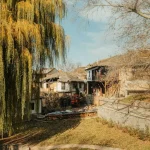
📷 Featured image by Francesca Tirico on Unsplash.