On this page
- What Makes Koprivshtitsa Different from Every Other “Historic Town” in Bulgaria
- The Six House-Museums: Which Ones Are Actually Worth Your Time
- Where to Eat in Koprivshtitsa (Real Recommendations, Not Tourist Traps)
- Day Trip or Overnight? How to Decide
- 2026 Budget Reality: What It Actually Costs to Visit
- Getting There: Trains, Buses, and the Road Less Taken
- Getting Around Town and Practical Tips for 2026
- Frequently Asked Questions
💰 Click here to see Bulgaria Budget Breakdown
💰 Prices updated: August, 2026. Budget figures are estimates — always verify before travel.
Exchange Rate: $1 USD = €0.86
Daily Budget (per person)
Shoestring: €35.00 – €50.00 ($40.70 – $58.14)
Mid-range: €60.00 – €100.00 ($69.77 – $116.28)
Comfortable: €150.00 – €200.00 ($174.42 – $232.56)
Accommodation (per night)
Hostel/guesthouse: €5.00 – €20.00 ($5.81 – $23.26)
Mid-range hotel: €55.00 – €95.00 ($63.95 – $110.47)
Food (per meal)
Budget meal: €12.00 ($13.95)
Mid-range meal: €25.00 ($29.07)
Upscale meal: €60.00 ($69.77)
Transport
Single metro/bus trip: €0.80 ($0.93)
Monthly transport pass: €25.50 ($29.65)
What Makes Koprivshtitsa Different from Every Other “Historic Town” in Bulgaria
Bulgaria has no shortage of towns selling themselves as “historic” or “preserved.” Most deliver a handful of renovated facades and a souvenir strip. Koprivshtitsa is different, and the difference is immediately obvious the moment you walk away from the central square. The town sits in a high valley in the Sredna Gora mountains at around 1,100 metres elevation, surrounded by forested hills that kept the industrial world at bay. What you get here is not a reconstructed impression of the Bulgarian National Revival period — it is the actual thing, still standing, still lived in.
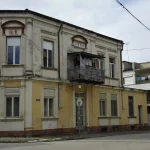
The Bulgarian National Revival (roughly 1700s to 1878) was the cultural and architectural flowering that happened as Bulgarians reasserted their identity under Ottoman rule. Koprivshtitsa was wealthy enough during that period to build extravagantly — and remote enough that almost none of it was torn down. About 380 protected Revival-era buildings remain. People live in many of them. You will see laundry hanging from ornate carved wooden balconies. You will hear the river that runs through the town centre, the Topolnitsa, before you see it. In spring, cherry blossoms drop petals onto cobblestone streets that have been here for 200 years.
The town is also the birthplace of the April Uprising of 1876, the failed but symbolically crucial revolt against Ottoman rule that accelerated Bulgaria’s liberation two years later. That history is embedded in every street name, every monument, every family who can trace their ancestors to the fighters. This is not background colour — it is the entire point of the place.
The Six House-Museums: Which Ones Are Actually Worth Your Time
Koprivshtitsa has six official house-museums, all managed under a combined ticket system. In 2026 the combined ticket costs 10 BGN (approximately 5 EUR / 5.50 USD) and covers all six. Individual entry is 4 BGN per house. The combined ticket is fair value if you have time, but if you are visiting for only a few hours, be selective.
Oslekov House
This is the one not to miss. Hristo Oslekov was a textile merchant who built his home in 1856 and packed it with everything his wealth could buy — carved wooden ceilings, trompe-l’œil painted murals that make flat walls look like arched Venetian windows, and a floor plan that reveals how a prosperous Revival family actually lived. The scale of the main reception hall is genuinely surprising. It takes about 30–40 minutes to do it properly.
Kableshkov House
Todor Kableshkov sent the famous “letter written in blood” that launched the April Uprising. His house is where he was born and raised. The exhibits connect personal history to national history in a way that feels human rather than museum-dry. Good for context before you visit the other sites.
Lyutov House
The most architecturally dramatic of the six. The symmetrical facade and the interior courtyard with its fountain are frequently photographed, but the interior woodwork — especially the carved rosette ceiling in the summer room — is what makes it memorable. Allow 20–25 minutes.
The Other Three
The Benkovski, Karavelov, and Topalova houses are worthwhile for serious history enthusiasts. For a casual visitor with limited time, Oslekov, Lyutov, and Kableshkov cover the essential range of architecture and historical significance. The houses are spread across different parts of town, so visiting all six also means a good deal of walking — factor that into your plan.
Where to Eat in Koprivshtitsa (Real Recommendations, Not Tourist Traps)
Food in Koprivshtitsa skews toward hearty mountain cooking: grilled meats, bean soups, kashkaval (yellow cheese) in various preparations, and the local lamb which comes from nearby mountain farms. The town is small enough that tourist restaurants dominate, but a few places stand out for actually feeding locals rather than performing authenticity.
- Dyado Liben Inn (Хан Дядо Либен): The oldest functioning inn in town, dating to 1845. The courtyard fills with the smell of woodsmoke from the kitchen in cooler months. The kavarma — a clay pot stew of meat and vegetables — is exactly what you want after walking the hills. Expect to pay 18–25 BGN for a main course.
- Restaurant Panorama: Sits on the hill above the centre with views across the valley. The food is solid traditional Bulgarian — shopska salad, grilled pork, roast potatoes. The setting earns it a place on the list. Slightly pricier, with mains around 20–28 BGN.
- The small bakeries near the central square: For breakfast or a midday stop, the local bakeries sell banitsa (cheese or spinach pastry) fresh from the oven for 1.50–2.50 BGN. The smell alone, warm cheese pastry in cold mountain air, is one of the sensory highlights of the visit.
Avoid the most prominent terrace restaurants directly on the tourist square — they are overpriced and serving food designed for people who will not return.
Day Trip or Overnight? How to Decide
Koprivshtitsa is 110 kilometres from Sofia, and the journey takes roughly 1.5 to 2 hours by car or direct bus. Most visitors come as a day trip, and for many people that is the right call. A focused day — arrive by 10:00, hit three or four house-museums, have lunch, walk the residential lanes and the river path, depart by 17:00 — covers the core experience thoroughly.
Overnight stays are worth considering if you fall into one of these categories:
- You want to attend the Koprivshtitsa National Folklore Festival, held every five years in August. The next edition after 2025 is scheduled for 2030, so this is not a 2026 factor — but the surrounding regional folk events in summer are still worth planning around.
- You want to hike the trails into the Sredna Gora hills above town. The loop to the Byala Cherkva peak area takes most of a day and the morning light on the valley is worth waking up for.
- You are travelling without a car and the return bus timing is inconvenient.
Guesthouses in town typically charge 60–100 BGN per night for a double room with breakfast. Several are housed in genuine Revival buildings, which adds to the experience considerably. Staying at Dyado Liben Inn puts you in a building from 1845 — that is unusual anywhere in the world.
2026 Budget Reality: What It Actually Costs to Visit
Koprivshtitsa remains one of the most affordable destinations in Bulgaria, which itself remains one of the most affordable countries in Europe even after the price adjustments of recent years.
- Budget (day trip, no accommodation): 40–60 BGN per person (20–30 EUR). This covers bus fare from Sofia, the combined museum ticket, a sit-down lunch, and snacks.
- Mid-range (overnight, comfortable guesthouse, two proper meals): 130–180 BGN per person per day (65–90 EUR). You are sleeping in a Revival house, eating well, and seeing everything.
- Comfortable (private room in a better guesthouse, car hire included): 220–280 BGN per person per day (110–140 EUR). This tier adds the flexibility to explore the surrounding villages and mountain roads at your own pace.
Museum entry, food, and transport have all seen modest increases since 2024, averaging around 8–12% in line with general inflation in Bulgaria. The town has not made a leap into premium pricing territory — it remains genuinely accessible.
Getting There: Trains, Buses, and the Road Less Taken
The most talked-about way to reach Koprivshtitsa is by train from Sofia, and the conversation is always complicated. The train station is actually 9 kilometres from the town centre — you arrive at Koprivshtitsa station and then need a taxi or a connecting minibus to cover the final stretch. In 2026 this situation has not changed. The train journey from Sofia Central Station takes around 2 hours and costs approximately 8–10 BGN one way. It is scenic through the Rose Valley approaches, but factor in the transfer time and cost (a taxi from the station costs about 15–18 BGN).
The direct bus from Sofia’s Yug (South) bus terminal is simpler. Buses run several times daily, the journey takes about 1.5 hours on a good run, and they drop you in the town centre. The 2026 fare is around 14–16 BGN one way. This is the recommended option if you are not driving.
By car from Sofia, take the Trakia Motorway east and turn off toward Koprivshtitsa. The drive is straightforward and takes about 1 hour 20 minutes in normal traffic. Parking is available at the edge of the old town — the central lanes are pedestrianised or effectively impassable by car anyway.
From Plovdiv, the drive is approximately 80 kilometres and takes around 1 hour via the Kapitan Andreevo road and through Klisura. This makes Koprivshtitsa a logical stop on a Plovdiv–Sofia route.
Getting Around Town and Practical Tips for 2026
Koprivshtitsa is entirely walkable. The town is compact, and most of the significant sites are within 1.5 kilometres of the central square. The cobblestone streets are uneven in places — wear shoes with proper grip, not sandals or fashion trainers.
The house-museums keep consistent hours in 2026: open Tuesday through Sunday, 09:30 to 17:30. They are closed on Mondays. Plan around this. Combined tickets can be purchased at any of the six houses or at the central information point near the main square.
Mobile coverage is fine throughout town on all major Bulgarian networks. There is no dedicated tourist app for Koprivshtitsa as of 2026, but the house-museum signage has improved significantly — most key exhibits now have English-language panels. Guided tours in English can be arranged through the town’s cultural centre for approximately 30–40 BGN per group.
ATMs are limited — there is one near the central square. Bring cash for smaller purchases. Most guesthouses and the larger restaurants accept cards, but the bakeries and smaller food stalls operate cash only.
The best months to visit are May, June, September, and October. July and August bring the most visitors. Winter visits are possible and strikingly atmospheric — snow on the Revival rooftops and empty streets — but confirm that your chosen guesthouses are open, as several close from December through February.
Frequently Asked Questions
How far is Koprivshtitsa from Sofia?
Koprivshtitsa is approximately 110 kilometres east of Sofia. The direct bus from Sofia’s Yug terminal is the simplest option, dropping you in the town centre in about 1.5 hours. The train is scenic but requires a 9-kilometre taxi transfer from the station. See the Getting There section above for full fare and timing details.
Is Koprivshtitsa worth visiting if you only have one day?
Yes, a single focused day is enough for most visitors. You can cover three or four of the six house-museums, walk the river path and the main residential lanes, and have a proper sit-down lunch. Arrive by 10:00 and you have a comfortable full day before the return journey. Prioritise Oslekov House and Lyutov House if time is tight.
What is the best time of year to visit Koprivshtitsa?
May and June offer the most balanced experience — warm enough to walk comfortably, quieter than summer, and the surrounding hills are green. September and early October are excellent for similar reasons. See the practical tips section above for notes on summer crowds and winter closures.
Are the Koprivshtitsa house-museums open year-round?
The six house-museums are open Tuesday through Sunday and closed on Mondays. Hours may be reduced in the deepest winter months — confirm directly with the cultural centre if visiting between December and February. The combined ticket (10 BGN) covers all six houses.
Is Koprivshtitsa suitable for children?
Broadly yes, with some caveats. The historic architecture and open cobblestone streets are engaging for curious children. The house-museums are interesting for older kids but can feel slow for under-10s. The outdoor spaces — the river path, the hills, the wide central meadow area — give younger children room to move. Bring comfortable walking shoes for everyone and expect uneven terrain throughout.
📷 Featured image by Anton Atanasov on Unsplash.