On this page
- Why a Few Phrases Beat a Translation App
- The Yes/No Gesture Trap and Polite Openers
- Asking for Directions: Phrases That Work
- Understanding the Answer: Directions, Numbers and Distance
- Buses, Trains and the Metro
- Taxis and Car Hire
- Dialect Differences You Will Hear
- 2026 Transport Budget Reality
- Frequently Asked Questions
You step off the train, your phone has 6% battery, and every sign around you is in Cyrillic. In 2026, with Bulgaria now in the eurozone and fully inside Schengen, more visitors than ever are arriving, and many are heading beyond Sofia, where English is less common. A handful of Bulgarian phrases can save you from a missed bus and a very long walk.
Why a Few Phrases Beat a Translation App
Apps fail when you need them most: weak signal in the Rhodopes, a cracked screen, or a driver who does not want to wait while you type. Spoken phrases are faster, and people respond warmly when you try. Even a clumsy Здравейте (zdra-VEY-te, “hello”, formal) changes the mood of the conversation.
Spend 20 minutes on the Cyrillic alphabet before you fly. Many letters look familiar. These are the ones that trip people up:
- В sounds like “v”, not “b”
- Н sounds like “n”
- Р sounds like a rolled “r”
- С sounds like “s”
- У sounds like “oo”
- Ч sounds like “ch”
- Ш sounds like “sh”
Once you can read ГАРА (GA-ra, station) and СПИРКА (SPEER-ka, stop), most of your navigation problems go away.
The Yes/No Gesture Trap and Polite Openers
This catches almost everyone. In Bulgaria, a head shake side to side means “yes” and a nod means “no”. If a ticket seller shakes their head when you ask “Is this the right platform?”, they are confirming it. Listen to the words, not the head.
- Да (da) – yes
- Не (neh) – no
- Моля (MO-lya) – please / you’re welcome / pardon?
- Благодаря (bla-go-da-RYA) – thank you
- Извинете (iz-vi-NEH-te) – excuse me / sorry
- Говорите ли английски? (go-VO-ri-te li an-GLEE-ski) – Do you speak English?
- Не разбирам (neh raz-BEE-ram) – I don’t understand
- Моля, по-бавно (MO-lya, po-BAV-no) – Slower, please
Always open with Извинете before asking a stranger anything. It takes one second and makes people far more willing to help.
Asking for Directions: Phrases That Work
The formula is simple: Извинете, къде е…? (iz-vi-NEH-te, kuh-DEH eh) means “Excuse me, where is…?” Add the place and you are done.
- Къде е гарата? (kuh-DEH eh GA-ra-ta) – Where is the station?
- Къде е автогарата? (kuh-DEH eh af-to-GA-ra-ta) – Where is the bus station?
- Къде е спирката? (kuh-DEH eh SPEER-ka-ta) – Where is the stop?
- Къде е метрото? (kuh-DEH eh met-RO-to) – Where is the metro?
- Къде е центърът? (kuh-DEH eh TSEN-tuh-ruht) – Where is the centre?
- Може ли да ми покажете на картата? (MO-zheh li da mi po-KA-zheh-te na KAR-ta-ta) – Can you show me on the map?
Hold your phone map out. Bulgarians love pointing at screens, and this removes any pronunciation worries.
Understanding the Answer: Directions, Numbers and Distance
Asking is the easy half. Here is what you will hear back:
- Направо (na-PRA-vo) – straight ahead
- Наляво (na-LYA-vo) – left
- Надясно (na-DYAS-no) – right
- На ъгъла (na UH-guh-la) – at the corner
- Срещу (SREH-shtoo) – opposite
- Зад / пред / до (zad / pred / do) – behind / in front of / next to
- Близо / далече (BLEE-zo / da-LEH-cheh) – near / far
Ask Колко минути пеша? (KOL-ko mi-NOO-ti PEH-sha) for “How many minutes on foot?” Numbers help: един (e-DEEN) 1, два (dva) 2, три (tree) 3, пет (pet) 5, десет (DEH-set) 10. A local saying “пет минути” will often mean closer to ten, so treat it as a rough guide.
Buses, Trains and the Metro
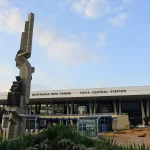
At a busy Sofia station, you will hear announcements echo under the high ceilings while the smell of coffee and fresh pastries drifts from kiosks. Keep these phrases ready:
- Един билет до Пловдив, моля (e-DEEN bi-LET do PLOV-div, MO-lya) – One ticket to Plovdiv, please
- Отиване и връщане (o-TEE-va-neh ee VRUH-shta-neh) – Return ticket
- Кога тръгва следващият влак? (ko-GA TRUHG-va SLED-vash-tiyat vlak) – When does the next train leave?
- От кой перон? (ot koy pe-RON) – From which platform?
- Това ли е автобусът за Варна? (to-VA li eh af-to-BOO-suht za VAR-na) – Is this the bus for Varna?
- Закъснение (za-kuhs-NEH-nee-eh) – delay
- Отменен (ot-MEH-nen) – cancelled
- Слизам тук (SLEE-zam took) – I’m getting off here
In 2026, Sofia’s public transport accepts contactless bank cards on many routes, and the metro network keeps growing with the M4 line expansion. Metro announcements are in Bulgarian and English, but surface buses are much less predictable, so Слизам тук is worth memorising for the moment you need to push through a crowded bus.
Taxis and Car Hire
Taxis are cheap by Western European standards, but a few words protect you from overcharging.
- Включете таксиметъра, моля (vklyu-CHEH-te tak-see-ME-tuh-ra, MO-lya) – Please turn on the meter
- Колко ще струва до летището? (KOL-ko shteh STROO-va do le-TEESH-te-to) – How much to the airport?
- Спрете тук, моля (SPREH-te took, MO-lya) – Stop here, please
- Ще платя с карта (shteh PLA-tya s KAR-ta) – I’ll pay by card
Ask for the price or the meter before the car moves. For rental cars and petrol stations, you only need пълен резервоар (PUH-len re-zer-vo-AR, full tank) and бензин / дизел (ben-ZEEN / DEE-zel). Note that the road signs on the main motorways, such as Struma and Trakia, also show Latin letters, but local roads often do not.
Dialect Differences You Will Hear
Standard Bulgarian is understood everywhere, but accents shift as you travel. In the west, around Sofia, the Shopluk dialect is fast and clipped, and some speakers say хлеб (hleb) where the standard is хляб (hlyab). Eastern speakers, near Varna or Burgas, tend to sound softer and more drawn out. In the Rhodopes and Pirin, older speakers use local words and rhythms, and you may hear expressions that differ from textbook Bulgarian.
Do not panic if a phrase gets an unexpected reply. Repeat it slowly, point at your map, and add Моля. Younger people in cities often switch to English, while older villagers will respond to patient gestures and a smile.
2026 Transport Budget Reality
Bulgaria adopted the euro on 1 January 2026, at a fixed rate of 1 EUR = 1.95583 BGN. Many shops and ticket offices still display both currencies, so these figures are shown in BGN with euro equivalents. Prices are approximate and vary by city and operator.
- Budget (8–20 BGN / €4–10 per day): a Sofia single ticket costs about 1.60 BGN (€0.82), a day of city buses and metro is cheap, and one intercity bus ride, such as Sofia to Plovdiv, costs roughly 15–20 BGN (€8–10).
- Mid-range (30–60 BGN / €15–31 per day): short taxi rides at about 1.30–1.80 BGN per km (€0.66–0.92), plus an intercity train in second class.
- Comfortable (120–200 BGN / €61–102 per day): a rental car at about 70–120 BGN (€36–61) per day, fuel, and the occasional private transfer.
Airport taxis can be more expensive than street taxis, so confirm the price first with Колко ще струва?
Frequently Asked Questions
Do I need to speak Bulgarian to travel around Bulgaria?
No, but it helps a lot. English is common in Sofia, Plovdiv, Varna and Bansko among younger people. In villages, small bus stations and on local trains, Bulgarian phrases and Cyrillic reading skills make travel noticeably easier and friendlier.
What does the Bulgarian head shake mean?
A side-to-side head shake usually means “yes” in Bulgaria, and a nod means “no”. This is the opposite of most countries. If words and gestures seem to disagree, trust the words, and ask “да или не?” (da EE-li neh) to confirm.
How do I ask where the bus stop is in Bulgarian?
Say “Извинете, къде е спирката?” (iz-vi-NEH-te, kuh-DEH eh SPEER-ka-ta). It means “Excuse me, where is the stop?” For long-distance buses, ask for “автогарата” (af-to-GA-ra-ta), which is the bus station, instead.
Is the Cyrillic alphabet hard to learn for travel?
No. Most visitors can learn the key letters in an hour or two. Focus on place names and common signs like “гара”, “спирка”, “изход” (exit) and “вход” (entrance). Many letters match Latin ones, and the rest become familiar quickly with practice.
Can I pay by card for transport in Bulgaria in 2026?
Often, yes. Contactless cards work on many Sofia public transport routes, at larger train stations and with most taxis, but not everywhere. Small intercity bus offices, village taxis and some rural services still prefer cash, so carry some small notes and coins.