On this page
- Why Salamanca Looks Like It’s on Fire
- The University Quarter — More Than a Photo Stop
- Beyond the Plaza Mayor — Neighbourhoods Worth Exploring
- Where to Eat and Drink Like a Local
- Day Trip or Overnight? Making the Call
- Getting to Salamanca in 2026
- 2026 Budget Reality — What Everything Actually Costs
- Practical Tips Before You Go
- Frequently Asked Questions
💰 Click here to see Bulgaria Budget Breakdown
💰 Prices updated: May, 2026. Budget figures are estimates — always verify before travel.
Exchange Rate: $1 USD = €0.86
Daily Budget (per person)
Shoestring: €30.00 – €50.00 ($34.88 – $58.14)
Mid-range: €60.00 – €130.00 ($69.77 – $151.16)
Comfortable: €150.00 – €300.00 ($174.42 – $348.84)
Accommodation (per night)
Hostel/guesthouse: €20.00 – €50.00 ($23.26 – $58.14)
Mid-range hotel: €40.00 – €90.00 ($46.51 – $104.65)
Food (per meal)
Budget meal: €10.00 ($11.63)
Mid-range meal: €25.00 ($29.07)
Upscale meal: €60.00 ($69.77)
Transport
Single metro/bus trip: €1.00 ($1.16)
Monthly transport pass: €25.50 ($29.65)
Salamanca keeps appearing on every “most beautiful city in Spain” list, and in 2026, that reputation has a downside: summer weekends pack the Plaza Mayor so tightly that you can barely move. The good news is that the city rewards visitors who show up on a weekday, in the shoulder season, or simply know where to walk once the tour groups have gone back to their coaches. This guide cuts through the Instagram highlights and tells you what the city actually feels like to walk around — and how to get the most out of it without the crowds eating your experience alive.
Why Salamanca Looks Like It’s on Fire
The first thing that stops most visitors in their tracks has nothing to do with history or architecture specifically — it’s the colour. Salamanca is built almost entirely from a local sandstone called piedra de Villamayor, quarried from the ground about 12 kilometres outside the city. When afternoon light hits the cathedral towers or the university facade, the stone shifts from pale gold to a deep amber-orange that genuinely looks like the city is glowing from within. Stand on the Puente Romano (the Roman bridge) around 6 p.m. in late spring and the effect is almost surreal — the old city rising above the Tormes River, every surface burning warm in the low sun.
What makes the effect even stronger is that Salamanca hasn’t mixed in much concrete or modern construction within its historic core. UNESCO inscribed the entire old town as a World Heritage Site in 1988, and building controls have kept the visual coherence intact. The stone also ages in an interesting way: older buildings develop a deeper, richer patina, so the 12th-century Romanesque Old Cathedral (Catedral Vieja) looks noticeably darker than the 16th-century New Cathedral right beside it. That contrast tells you something real about the city’s timeline without needing a guidebook to explain it.

Photographers and painters have been obsessing over this light for centuries, but you don’t need any special equipment to appreciate it. Just plan to be outside in the old town between 5 p.m. and sunset. In summer that gives you until well after 9 p.m. In winter the window is shorter but the low angle makes the colour even more intense.
The University Quarter — More Than a Photo Stop
The University of Salamanca, founded in 1218, is one of the oldest in the world. Most visitors photograph the famous Plateresque facade of the main building and move on — which means they miss the more interesting parts entirely.
The facade itself is worth a proper look. It’s covered in carved stone relief work so detailed and layered that you could spend 20 minutes on it and still find new elements. Somewhere in that carved stonework is a hidden frog sitting on a skull — a centuries-old tradition holds that students who spot it without help will pass their exams. Tour guides will offer to point it out, but finding it yourself is considerably more satisfying.
Buy a ticket and go inside. The interior courtyards, the old lecture halls, and especially the historic library are far less crowded than the street outside. The library holds tens of thousands of manuscripts and early printed books behind glass, and the wooden shelving and vaulted ceilings create an atmosphere that feels genuinely centuries old rather than curated. Tickets in 2026 run around €10–12 for the full university visit, and the queues are shorter in the first two hours after opening.
The surrounding streets — Calle Libreros, Calle Palominos, the area around Patio de Escuelas — have a texture that stays interesting even outside tourist hours. This is still a working university city with around 25,000 students enrolled. During term time (October to June), the neighbourhood has real energy: people arguing about lectures at cafe tables, students chalking protest messages on walls, the smell of strong coffee drifting from doorways that look like they haven’t changed since the 1970s.
Beyond the Plaza Mayor — Neighbourhoods Worth Exploring
The Plaza Mayor is spectacular — it genuinely is one of the finest baroque squares in Europe, and the late-18th-century arcaded buildings surrounding it are perfectly proportioned. But if you stay in the plaza for long, you’re mostly surrounded by other tourists and overpriced café terraces. The city’s more interesting texture lives in the streets behind it.
The Van Dyck Quarter and Calle Van Dyck
Head northwest from the Plaza Mayor, past the covered market (Mercado Central), and the streets get quieter almost immediately. This is where local families shop, where the bars have handwritten menus on chalkboards, and where the price of a beer drops noticeably. The architecture stays beautiful — Salamanca’s sandstone doesn’t suddenly stop — but the audience changes.
The Irish Quarter (Barrio de los Irlandeses)
Near the Colegio de los Irlandeses — an institution founded in the 17th century for Irish Catholic priests fleeing persecution — the neighbourhood has a quietly interesting history. The building itself has a beautiful courtyard and is part of the Pontifical University complex. The streets around it are uncrowded and architecturally rich, with carved doorways and small plazas that most visitors walk right past.

Along the Tormes River
Walk south from the old cathedral down to the riverbank. The Tormes is slow and green here, and the path along the water is used almost entirely by locals — joggers, dog walkers, families on weekend afternoons. Looking back up at the cathedral complex from river level gives you a completely different perspective on the city’s scale. The Roman bridge stretching across the water is genuinely Roman in its lower sections (1st century AD), though the upper parts were rebuilt in the 17th century after flood damage.
Where to Eat and Drink Like a Local
Salamanca is in Castile and León, and the food reflects that: serious, meat-forward, unfussy. The regional speciality is hornazo, a dense pastry stuffed with chorizo, cured loin, and hard-boiled egg. It’s traditionally eaten during Lunes de Aguas (the Monday after Easter week), but you’ll find it in bakeries year-round. One bite and you understand immediately why this was designed to fuel people working outdoors all day.
For tapas and wine, the area around Calle Van Dyck and the streets immediately north of the Plaza Mayor are where locals actually go. El Pecado on Plaza Poeta Iglesias has been serving creative Spanish cooking since the early 2000s and remains one of the better restaurants in the city for a proper sit-down meal — reserve ahead. For something more casual, the tapas bars along Calle Prior operate on the classic Castilian model: order a drink, get a free tapa with it. The tapas quality here is noticeably better than what you get on the tourist-facing streets.
The local wine is Arribes del Duero — not as famous as Ribera del Duero further east, but worth trying precisely because it’s regional and rarely exported. Ask for it specifically; many bars will have it by the glass. For breakfast, find a bar doing churros con chocolate — in Salamanca these tend to be the thicker porras style rather than the thin Madrid version, and on a cold morning, the thick chocolate dipping sauce is exactly what the temperature demands.
The covered market at Mercado Central is best visited on a Saturday morning. The stalls run to excellent jamón, local cheeses, fresh vegetables, and pastries. It’s a working food market, not a tourist attraction, and the prices reflect that.
Day Trip or Overnight? Making the Call
Salamanca is 200 kilometres west of Madrid by road and easily reachable by bus or train in two to two and a half hours. A significant number of visitors treat it as a long day trip, arriving mid-morning and leaving by early evening. That approach works — you can see the main sights — but it cuts out the two things that make Salamanca genuinely memorable: the golden hour light and the evening atmosphere.
The city has a real nightlife culture driven by its student population, and the Plaza Mayor at 10 p.m. on a warm night — when locals fill the outdoor tables and the illuminated sandstone glows against a dark sky — is a completely different experience from the same square at noon. The cathedral towers lit up at night, the university bars filling with students after 9 p.m., the late Spanish dinner culture in full swing: these things require staying overnight.
If you’re coming from Madrid, an overnight stay of one to two nights is the right call. If you’re already in Salamanca for a language course or visiting from somewhere nearby in Castile, a single full day can cover the essential sights. Families with young children who find late evenings impractical can still do a good day trip — just aim to arrive by 10 a.m. and leave time to be in the old town from late afternoon onward for the light.
Getting to Salamanca in 2026
Salamanca does not have a commercial airport with scheduled passenger flights. The nearest functioning airports are Madrid Barajas (MAD), roughly 212 kilometres east, and Valladolid (VLL), about 115 kilometres northeast. In practice, almost everyone arrives overland.
By Train
The train connection from Madrid Chamartín runs via Ávila and takes approximately 1 hour 40 minutes to 2 hours depending on the service. Renfe operates multiple departures daily. In 2026, fares on the Salamanca route range from around €13–€28 one-way depending on how far ahead you book. The station is about 10 minutes’ walk from the city centre or a short taxi ride.
By Bus
ALSA operates frequent buses from Madrid’s Moncloa bus station to Salamanca. Journey time is around 2.5 hours and tickets typically cost €12–€20. Buses also connect Salamanca to Valladolid, Zamora, and several other Castilian cities. The bus station in Salamanca is conveniently central.
By Car
The A-50 motorway connects Salamanca directly to Ávila and from there to Madrid. Driving is straightforward, but parking in the historic centre is limited and expensive. Most visitors staying overnight use a hotel with parking or one of the city’s peripheral car parks and walk in. Do not attempt to drive into the pedestrianised centre.
2026 Budget Reality — What Everything Actually Costs
Salamanca is notably cheaper than Madrid or Barcelona for accommodation and food, which makes it a good-value destination even in 2026 when Spanish tourism prices have risen across the board.
Accommodation
- Budget: Hostel dorm beds run €18–€26 per night. There are several well-run hostels within walking distance of the Plaza Mayor targeting language students and backpackers.
- Mid-range: A good double room in a 3-star hotel near the historic centre costs €75–€120 per night. The quality at this level is solid — Salamanca has invested in hotel stock to serve conference and academic tourism.
- Comfortable: The city’s better boutique hotels and 4-star properties run €130–€200 per night for a double. The NH Palacio de Castellanos, converted from a 15th-century palace, sits in this range and delivers genuine historic atmosphere.
Food and Drink
- Coffee at a local bar: €1.50–€2.00
- Menu del día (three-course lunch with wine): €12–€16
- Evening tapas bar (drink + tapa): €2.50–€4 per round
- Sit-down dinner at a mid-range restaurant: €25–€40 per person with wine
- Hornazo pastry from a bakery: €3–€5 depending on size
Attractions
- University of Salamanca (full ticket): €10–€12
- Cathedral complex entry: €6–€8
- Ieronimus tower climb: €5 (book ahead)
- Casa de las Conchas (free to enter the courtyard)
A realistic daily budget for a mid-range visitor doing the main sights, eating well, and having drinks in the evening is around €80–€120 per person excluding accommodation — lower than equivalent days in Madrid or Seville.
Practical Tips Before You Go
- Best time to visit: April–June and September–October give you the best combination of good weather, manageable crowds, and lower prices. July and August are hot (often above 35°C) and busy with domestic Spanish tourists. December to February is cold but beautifully quiet, and the sandstone light in winter is dramatic.
- Language: English is spoken in tourist-facing businesses, but Salamanca is not as internationally oriented as Madrid or Barcelona. A few words of Spanish — especially in local bars and the market — goes a long way and is genuinely appreciated.
- Student energy: If you’re visiting during term time (October to June), the city is noticeably livelier. Erasmus and international students create a cosmopolitan atmosphere that disappears in summer when the university empties.
- Walking shoes: The historic centre is almost entirely pedestrianised and paved with cobblestones. Comfortable walking shoes are essential, particularly if you plan to be on your feet for a full day.
- Sunday closures: Many smaller shops and some restaurants close on Sunday afternoons. The main sights and most bars and cafés stay open, but plan grocery shopping or market visits for earlier in the week.
- Siesta hours: Local shops still observe siesta (roughly 2 p.m.–5 p.m.). This is actually a useful signal to take a long lunch and rest before the afternoon golden hour walk.
Frequently Asked Questions
How many days do you need in Salamanca?
Two days is ideal for most visitors — one full day covers the main historic sights comfortably, and a second day lets you explore at a slower pace, walk the river, visit the market, and experience the evening atmosphere properly. A single long day from Madrid is possible but means missing the best light and the nighttime city.
Is Salamanca worth visiting if you’ve already been to Toledo or Segovia?
Yes, and for different reasons. Toledo is more medieval and multi-cultural in its heritage; Segovia is dominated by its aqueduct and castle. Salamanca’s character is defined by its living university culture and its extraordinary architectural consistency. The atmosphere is distinctly different — younger, more intellectual, less museum-like.
What is the best neighbourhood to stay in Salamanca?
Staying within or immediately adjacent to the historic centre (Casco Histórico) is the clear best option. The city is compact, and being within walking distance of the Plaza Mayor, the cathedral, and the university means you can use the city on foot without needing taxis or public transport for any of the main sights.
Is Salamanca safe for solo travellers?
Salamanca is considered one of the safer Spanish cities, with low levels of violent crime. The large student population keeps the city active and populated well into the night. Standard urban precautions apply — watch bags in crowded areas, be aware of your surroundings late at night — but solo travellers of any gender report feeling comfortable here.
Can you visit Salamanca as a day trip from Porto or Lisbon?
Technically possible from Porto (roughly 3.5 hours by car), though it makes for a very long day. From Lisbon it’s closer to 4.5 hours by road. A better approach if you’re travelling between Portugal and Spain overland is to stop in Salamanca overnight as part of the route rather than treating it as a day trip from either Portuguese city.
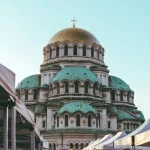
📷 Featured image by Hristo Sahatchiev on Unsplash.