On this page
- Why Koprivshtitsa Matters More Than Ever in 2026
- Navigating the National Revival Architecture
- The Revolutionary Stories Behind Every Doorway
- Where to Eat Traditional Bulgarian Cuisine
- Getting There: Your Transport Options from Sofia and Beyond
- Planning Your Visit: Timing, Routes, and Practical Details
- Budget Breakdown: What to Expect in 2026
- Frequently Asked Questions
💰 Click here to see Bulgaria Budget Breakdown
💰 Prices updated: August, 2026. Budget figures are estimates — always verify before travel.
Exchange Rate: $1 USD = €0.86
Daily Budget (per person)
Shoestring: €35.00 – €50.00 ($40.70 – $58.14)
Mid-range: €60.00 – €100.00 ($69.77 – $116.28)
Comfortable: €150.00 – €200.00 ($174.42 – $232.56)
Accommodation (per night)
Hostel/guesthouse: €5.00 – €20.00 ($5.81 – $23.26)
Mid-range hotel: €55.00 – €95.00 ($63.95 – $110.47)
Food (per meal)
Budget meal: €12.00 ($13.95)
Mid-range meal: €25.00 ($29.07)
Upscale meal: €60.00 ($69.77)
Transport
Single metro/bus trip: €0.80 ($0.93)
Monthly transport pass: €25.50 ($29.65)
Bulgaria‘s mountain towns have become increasingly popular with domestic tourists seeking authentic experiences away from Black Sea crowds, but many visitors still overlook Koprivshtitsa. This UNESCO-protected town, nestled in the Sredna Gora mountains just 90 minutes from Sofia, offers something most Bulgarian destinations cannot: a completely preserved 19th-century Revival period streetscape where every building tells a story of resistance, revolution, and remarkable craftsmanship.
Why Koprivshtitsa Matters More Than Ever in 2026
The scent of wood smoke drifts from chimneys above hand-carved eaves as you enter Koprivshtitsa, immediately transporting you to Bulgaria’s most turbulent historical period. This town of 2,400 residents has become the country’s premier example of National Revival architecture, but it’s far from a museum piece.
In 2026, Koprivshtitsa represents something increasingly rare in the Balkans: an untouched historical center that functions as a living community. Unlike Plovdiv’s Old Town, which has become heavily commercialized, or Arbanasi’s tourist-focused development, Koprivshtitsa maintains its authentic character while welcoming visitors.
The town played a pivotal role in the April Uprising of 1876, the rebellion that ultimately led to Bulgaria’s liberation from Ottoman rule. Here, revolutionary leader Todor Kableshkov fired the first shot of the uprising, transforming this mountain settlement into the birthplace of modern Bulgaria. Walking these cobblestone streets means following in the footsteps of revolutionaries who shaped the nation’s destiny.
What makes Koprivshtitsa special is its architectural completeness. The entire town center consists of 388 monuments of culture, creating an immersive experience where every turn reveals another example of the distinctive Bulgarian Revival style: asymmetrical facades, bay windows (chardaks), colorful wooden trim, and stone foundations that have withstood mountain winters for over two centuries.
Navigating the National Revival Architecture
Six house-museums form the core of Koprivshtitsa’s cultural heritage, each representing different aspects of 19th-century Bulgarian life and revolutionary history. Your visit should prioritize these carefully preserved examples of Revival-era domestic architecture.

The Oslekova House stands as the most photographed building in town, and for good reason. Built in 1856, its distinctive blue and white facade showcases the asymmetrical design principles that defined Bulgarian Revival architecture. Inside, the house museum displays period furniture, traditional costumes, and artifacts from the Oslekova family, who were prominent merchants and cultural figures.
Kableshkov’s House tells the story of the April Uprising’s beginning. Todor Kableshkov, the local governor who initiated the rebellion, lived in this modest but elegant home. The house preserves the room where he wrote the famous “Bloody Letter” to other Bulgarian towns, calling them to join the uprising. The original bloodstained letter (actually written in cherry juice) is displayed alongside period weapons and documents.
The Debelyanov House honors Bulgaria’s beloved poet Dimcho Debelyanov, who was born here in 1887. The museum recreates the poet’s childhood environment and displays manuscripts, photographs, and personal belongings. The house also offers insight into early 20th-century intellectual life in small-town Bulgaria.
Lyutova House represents the merchant class that drove Koprivshtitsa’s prosperity during the Revival period. Built in 1854, it features some of the finest interior woodwork in town, including intricately carved ceilings and built-in cupboards. The house museum explains how Bulgarian merchants operated under Ottoman rule while secretly funding revolutionary activities.
Benkovski House commemorates Georgi Benkovski, leader of the revolutionary flying detachment during the April Uprising. The house displays weapons, uniforms, and documents related to the revolutionary movement, providing context for understanding the uprising’s military aspects.
The Karavelov House completes your architectural tour, dedicated to the brothers Lyuben and Petko Karavelov, both prominent writers and revolutionaries. The house museum contains the most comprehensive library and archive related to the Bulgarian National Revival period.

Architectural Details Worth Noting
Revival architecture in Koprivshtitsa follows specific principles that become apparent as you explore. The ground floors are built from local stone, providing stability and protection from flooding. Upper floors use a timber frame construction filled with clay and straw, then covered with wooden planking painted in distinctive colors.
Bay windows (chardaks) project from upper floors, creating additional interior space while allowing maximum light into rooms. These architectural features also served a social function, enabling residents to observe street activity while remaining inside. The elaborate wooden trim around windows and under eaves demonstrates the high level of craftsmanship achieved by local builders.
The Revolutionary Stories Behind Every Doorway
The cobblestone streets echo with footsteps from 1876 when Koprivshtitsa became the epicenter of Bulgarian resistance against Ottoman rule. Understanding these revolutionary stories transforms your visit from architectural tourism into historical immersion.
The April Uprising began on April 20, 1876, when Todor Kableshkov raised the flag of rebellion at the local church. Within hours, the town’s 12,000 residents (far larger than today’s population) had joined the revolutionary movement. The uprising’s initial success in Koprivshtitsa inspired other Bulgarian towns to revolt, though Ottoman forces ultimately suppressed the rebellion with brutal force.
The Church of the Assumption, built between 1813-1817, served as the rebellion’s spiritual center. Here, revolutionary leaders took their oath before the uprising began. The church’s interior frescoes, painted by the renowned Samokov School artists, include subtle symbols of Bulgarian national identity that would have been dangerous under Ottoman rule.
Near the church, a simple stone bridge marks where Kableshkov’s men first engaged Ottoman forces. The revolutionaries held this strategic position for three days before retreating into the mountains. Local guides often point out bullet marks still visible on nearby buildings, tangible reminders of the fighting that occurred here.

The town’s fountain square became a gathering point where revolutionary proclamations were read to assembled crowds. The original Ottoman-era fountain was replaced in 1973, but the square maintains its historical significance as the place where ordinary Bulgarian villagers first heard calls for national liberation.
Memorial plaques throughout town mark sites where specific events occurred: the house where weapons were stored, the garden where revolutionary leaders met in secret, the barn where the first revolutionary flag was sewn. These markers, installed by the Bulgarian government in 1976 for the uprising’s centennial, help visitors follow the chronology of events that unfolded over those dramatic April days.
Where to Eat Traditional Bulgarian Cuisine
The aroma of slow-cooked beans and grilled meat wafts from traditional restaurants housed in Revival-era buildings, offering authentic Bulgarian mountain cuisine in atmospheric settings that enhance the historical experience.
Dyado Liben Restaurant occupies a restored 19th-century house near the town center, serving traditional recipes passed down through generations of local families. Their specialty is wild boar with mushrooms (15 BGN/€7.50), slow-cooked in clay pots using techniques unchanged since the Revival period. The restaurant’s interior preserves original wooden beams and stone walls, creating an authentic dining atmosphere.
The restaurant at Hotel Kalina offers elevated versions of traditional dishes in a elegant Revival-era mansion setting. Their lamb with herbs and mountain vegetables (18 BGN/€9) uses ingredients sourced from local farms. The wine list features Bulgarian varieties that pair well with mountain cuisine, particularly local Mavrud reds.
For casual dining, Starata Kashta provides hearty portions at reasonable prices in a family-run establishment. Their bean soup with sausage (8 BGN/€4) and freshly baked bread represents the type of meal that sustained revolutionaries during their mountain campaigns. The outdoor terrace overlooks traditional gardens where locals still grow vegetables using heritage seeds.

Mehana Koprivshtitsa, located in the town’s oldest commercial building, specializes in grilled meats and traditional appetizers. Their mixed grill platter (22 BGN/€11) includes locally-made sausages, lamb chops, and grilled vegetables. The restaurant maintains a traditional Bulgarian mehana atmosphere with folk music performances on weekend evenings.
Several small cafes serve Bulgarian coffee and traditional pastries throughout the day. Cafe Central, housed in a former merchant’s shop, offers banitsa (cheese-filled pastry) and strong Turkish coffee in settings that evoke the town’s commercial heritage. Their outdoor seating provides excellent people-watching opportunities as locals go about their daily routines.
Getting There: Your Transport Options from Sofia and Beyond
Koprivshtitsa’s mountain location requires some planning, but improved road infrastructure in 2026 has made the journey more comfortable than in previous years. The town sits 106 kilometers east of Sofia, accessible via the A1/A6 motorway system that was completed in 2025.
Driving from Sofia takes approximately 90 minutes via the A1 motorway towards Plovdiv, then the A6 towards Burgas, exiting at the Koprivshtitsa junction. The final 18 kilometers follow a winding mountain road through scenic countryside. Parking is available at the town entrance for 2 BGN per day, with spaces clearly marked for tourist vehicles.
Public transport requires a combination of train and bus. Take the morning train from Sofia Central Station towards Burgas, disembarking at Anton station (journey time: 2 hours, 8.60 BGN). From Anton station, local buses run to Koprivshtitsa every 90 minutes during tourist season (April-October), with the 12-kilometer journey taking 25 minutes (3 BGN). Return buses operate until 6 PM, making day trips feasible.
Organized tours from Sofia operate daily during tourist season, typically departing at 8 AM and returning by 6 PM. These tours cost 65-85 BGN per person, including transport and guide services, but exclude museum entry fees and meals. Several Sofia-based operators offer English-language tours that combine Koprivshtitsa with nearby attractions.

The nearest major city is Plovdiv, 70 kilometers south. From Plovdiv, driving takes about 75 minutes via rural roads through the Sredna Gora mountains. Direct bus service operates twice daily from Plovdiv’s South Bus Station, with journey time of 2 hours (12 BGN).
Planning Your Visit: Timing, Routes, and Practical Details
Most visitors arrive in Koprivshtitsa for day trips, but the town’s character changes dramatically between day and evening, making overnight stays worthwhile for those seeking deeper cultural immersion.
Day trip visitors can comfortably see the main house-museums, eat lunch at a traditional restaurant, and explore the central streets within 5-6 hours. This schedule works well for those staying in Sofia or Plovdiv who want to experience Revival architecture and revolutionary history without extending their Bulgaria itinerary.
The optimal day trip schedule starts with arrival by 10 AM, allowing time to visit 3-4 house-museums before lunch. Afternoon exploration covers the remaining museums and includes a walking tour of architectural highlights. Most day visitors leave by 4 PM to avoid mountain roads in darkness, particularly during winter months.
Overnight visitors experience Koprivshtitsa’s tranquil evening atmosphere when day-trip crowds depart. The town becomes remarkably quiet after 5 PM, with only the sound of mountain streams and occasional horse-drawn carts disturbing the peace. Evening walks reveal architectural details difficult to appreciate during busy daytime hours.
Accommodation options range from family-run guesthouses to restored Revival-era hotels. Hotel Kalina offers 12 rooms in a converted merchant’s house (75-95 BGN per night), while smaller guesthouses charge 35-50 BGN for basic but comfortable accommodations. Advanced booking is essential during summer months and folk festival periods.

Overnight stays also enable early morning photography when soft light enhances the colorful wooden facades. Professional photographers particularly value the golden hour illumination that occurs just after sunrise, creating dramatic contrasts between shadow and highlight on the traditional architecture.
A logical walking route maximizes your time while ensuring you see all significant sites without unnecessary backtracking. The town’s compact size makes walking the preferred exploration method, though comfortable shoes are essential for navigating uneven cobblestones.
Begin at the main parking area near the Tourist Information Center, where maps and tickets are available. Head directly to Oslekova House, the most photographed building, while morning light is optimal for exterior photos. The house museum visit takes approximately 30 minutes.
From Oslekova House, walk uphill towards Kableshkov House, following the main cobblestone street past traditional shops selling crafts and souvenirs. This 10-minute walk provides excellent examples of domestic Revival architecture still used as private residences. Kableshkov House requires 45 minutes for a thorough visit, as the revolutionary exhibits contain extensive historical information.
Continue to the Church of the Assumption, located at the town’s highest point. The church visit takes 15-20 minutes, but the adjacent cemetery contains graves of uprising participants and provides panoramic views over the Sredna Gora mountains. This elevated position helps visitors understand Koprivshtitsa’s strategic location.
Descend towards the town center via the fountain square, stopping at Debelyanov House if you’re interested in Bulgarian literature. The poet’s museum appeals primarily to cultural enthusiasts and can be skipped if time is limited. The route continues to Lyutova House, which showcases the best preserved interior decorations.
Complete your circuit at Benkovski House and Karavelov House, both located near the original entry point. These final two museums provide military and literary contexts for the revolutionary period, rounding out your understanding of the April Uprising’s complexity.

The complete walking circuit covers approximately 2.5 kilometers with moderate elevation changes. Allow 4-5 hours for a thorough visit including all museum stops, or 3 hours for highlights only. The route is suitable for most fitness levels, though elderly visitors may find some uphill sections challenging.
Budget Breakdown: What to Expect in 2026
Koprivshtitsa remains one of Bulgaria’s more affordable cultural destinations, though prices have increased modestly since 2024 due to growing domestic tourism and inflation pressures affecting mountain communities.
Budget Tier (Under 40 BGN per person)
Entry fees for all six house-museums: 15 BGN. Lunch at Starata Kashta or similar family restaurant: 12-15 BGN. Coffee and traditional pastry: 4 BGN. Parking (if driving): 2 BGN. Souvenirs from local craft shops: 5-10 BGN. Total daily cost: 38-46 BGN (€19-23).
Mid-Range Tier (40-80 BGN per person)
Museum entries: 15 BGN. Lunch at Dyado Liben with wine: 25 BGN. Morning coffee and afternoon drinks: 8 BGN. Local guide services (group rate): 15 BGN per person. Quality souvenirs or crafts: 15-20 BGN. Parking: 2 BGN. Total daily cost: 65-85 BGN (€33-43).
Comfortable Tier (Over 80 BGN per person)
Organized tour from Sofia including transport and guide: 75 BGN. Premium lunch at Hotel Kalina: 35 BGN. Museum entries: 15 BGN. Private guide for personalized tour: 40 BGN per group. High-quality crafts or artwork: 30-50 BGN. Total daily cost: 120-170 BGN (€60-85).
Accommodation costs for overnight visitors range from 35 BGN for basic guesthouse rooms to 95 BGN for restored Revival-era hotel rooms. Dinner at traditional restaurants adds 18-30 BGN per person, depending on menu selections and wine choices.
Transport costs vary significantly by origin point. From Sofia: 8.60 BGN by train plus 3 BGN local bus, versus 25-30 BGN in fuel costs for private vehicles. Organized tours eliminate transport planning but cost 65-85 BGN including guide services.
Frequently Asked Questions

Is Koprivshtitsa worth visiting if I only have one day?
Yes, the compact town center allows you to see all major house-museums and experience Revival architecture in 5-6 hours. Start early and prioritize Oslekova House, Kableshkov House, and the church for the most comprehensive historical overview.
Can I visit Koprivshtitsa year-round?
The town is accessible year-round, though winter visits require careful planning due to mountain weather. House-museums operate daily except Mondays, with reduced hours November-March. Summer and early autumn offer the best weather for walking tours.
Do I need a guide to understand the historical significance?
English information is available at all museums, but local guides provide valuable context about the April Uprising and architectural details. Group guides cost 40 BGN total, while audio guides are available for 8 BGN at the information center.
How does Koprivshtitsa compare to other Bulgarian Revival towns?
Koprivshtitsa offers the most complete and authentic Revival architecture in Bulgaria, with minimal modern intrusion. Unlike Tryavna or Bansko, which have been partially modernized, Koprivshtitsa maintains its 19th-century streetscape almost entirely intact.
What should I bring for a day trip to Koprivshtitsa?
Comfortable walking shoes are essential for cobblestone streets. Bring a camera, water bottle, and light jacket as mountain weather can change quickly. Cash is preferred at museums and restaurants, as card acceptance remains limited in 2026.
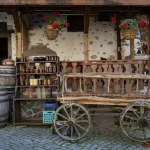
📷 Featured image by Christian Spasov on Unsplash.