💰 Click here to see Bulgaria Budget Breakdown
💰 Prices updated: October, 2026. Budget figures are estimates — always verify before travel.
Exchange Rate: $1 USD = €0.88
Daily Budget (per person)
Shoestring: €35.00 – €50.00 ($39.77 – $56.82)
Mid-range: €60.00 – €100.00 ($68.18 – $113.64)
Comfortable: €150.00 – €200.00 ($170.45 – $227.27)
Accommodation (per night)
Hostel/guesthouse: €5.00 – €20.00 ($5.68 – $22.73)
Mid-range hotel: €55.00 – €95.00 ($62.50 – $107.95)
Food (per meal)
Budget meal: €7.00 ($7.95)
Mid-range meal: €20.00 ($22.73)
Upscale meal: €60.00 ($68.18)
Transport
Single metro/bus trip: €1.00 ($1.14)
Monthly transport pass: €26.00 ($29.55)
What Makes Tryavna Different
Most visitors to the Balkan Mountains pass through Gabrovo on their way to somewhere else. Tryavna, sitting 18 kilometres south in a narrow river valley, rewards the people who stop. Unlike Koprivshtitsa, which feels preserved more for tourists than for residents, Tryavna is still a living town — locals shop at the market, children go to school in National Revival-era buildings, and craftsmen actually work in the workshops you visit. That balance between authenticity and accessibility is increasingly rare in Bulgaria‘s heritage towns, and in 2026, with weekend visitor numbers rising thanks to improved road access from Gabrovo, it still holds. Just about.
The Old Quarter: Walking Through Living History
Tryavna’s old quarter is compact enough to cover on foot in a morning, but dense enough to fill a full day if you pay attention. The centre anchors itself around the medieval clock tower and the arched stone bridge over the Tryavna River — Starinnat most, built in 1845. Cross it on a cool morning and you can hear the water running fast beneath the worn stones, smell the damp moss on the bridge walls, and watch a single street vendor setting up his carved wooden bowls before the tour groups arrive.
The main pedestrian street, ul. Angel Kanchev, runs through the heart of the old quarter and is lined with Bulgarian National Revival houses — their characteristic bay windows jutting over the street, whitewashed facades contrasting with dark timber frames. Many are privately owned and lived in, which is exactly why the street feels real rather than theatrical.
Key stops along the way:
- Slaveykov House — birthplace of poet Petko Slaveykov, now a small museum with original furnishings and manuscripts
- The Church of Archangel Michael — an 1819 church with an unusually low roofline (built during Ottoman-era restrictions on church height) and intricate carved iconostasis inside
- The Medieval Fortress ruins — a short uphill walk from the centre, offering views down the valley and a quiet contrast to the polished old quarter below
Tryavna’s Art Scene: Wood-Carving and Beyond
Tryavna is not just associated with woodcarving — it essentially defined the Bulgarian woodcarving tradition. The Tryavna School of Woodcarving emerged in the 18th century and the town’s masters decorated churches and monasteries across Bulgaria, including significant work at Rila Monastery. The craft never died here. It evolved.
The Museum of Woodcarving and Icon Painting (open daily 09:00–17:30, closed Mondays in winter) houses an extraordinary permanent collection — multi-panel carved ceilings, iconostasis sections, and devotional icons spanning two centuries. Budget at least 90 minutes here. The ticket costs 6 BGN (about €3 / $3.30).
More interesting for many visitors is the School of Fine Arts, which has operated continuously since 1895 and still trains students in woodcarving, icon painting, and applied arts. The school holds open exhibitions periodically, and if you visit on a weekday, you can sometimes walk through the working studios — ask at the reception desk.
Several private workshops along ul. Angel Kanchev sell work directly. Prices range from 15 BGN for a small carved panel to several hundred BGN for larger commissioned pieces. The quality varies, so take your time before buying. The best indicator: look at whether the craftsman is actually present and working, rather than selling mass-produced pieces imported from elsewhere.
Where to Eat in Tryavna
The food scene in Tryavna punches above its size. The town’s restaurants lean heavily on Balkan mountain cooking — slow-cooked meats, game in season, sheep’s cheese from local farms, and bean soups that actually taste like someone’s grandmother made them.
Starata Loza (The Old Vine), on ul. Slaveykov near the clock tower, is the go-to recommendation for a reason. The kavarma (clay-pot stew) here uses local pork and arrives bubbling hot, the lid still sealed at the table. Mains run 14–20 BGN. The interior is a converted National Revival house with low ceilings and wooden beams — the kind of place that feels warm even in January.
Mehana Pri Kmetstvoto sits close to the old municipal building and does excellent grilled meats and shopska salad. It’s more of a local haunt than a tourist restaurant, with plastic chairs and a chalkboard menu — that is not a criticism. The wine list is short but includes a couple of good Thracian reds by the glass for around 4–5 BGN.
For breakfast, the small bakeries (furni) near the market square open by 07:00 and sell fresh banitsa and mekitsi. Eating a cheese banitsa while standing at the counter with a plastic cup of coffee costs under 4 BGN and is exactly the right way to start a Tryavna morning.
Day Trip or Overnight?
Tryavna is 35 kilometres from Veliko Tarnovo and 18 kilometres from Gabrovo, which makes it a natural day-trip candidate from either city. And a day trip works — if you arrive by 09:30, spend the morning in the old quarter and museum, eat lunch at Starata Loza, browse the workshops in the afternoon, and leave by 17:00, you will have seen the essential Tryavna without feeling rushed.
But an overnight stay changes the experience meaningfully. By evening, the day-trippers are gone. The clock tower square empties out, the mehanas fill with locals, and the town settles into its own rhythm. The surrounding Balkan Mountain trails — particularly the path toward Sokolski Monastery (about 7 kilometres from town) — are best walked in the early morning when the light is low through the trees and the trail is quiet. You cannot do that on a day trip from Tarnovo.
Recommendation: if you have two nights in the Gabrovo or Tarnovo area, give one to Tryavna. If you only have one, a day trip is still worth doing.
Getting to Tryavna
By train: Tryavna sits on the Gorna Oryahovitsa–Stara Zagora railway line, which makes it unusually well-connected for a town this size. Direct trains run from Gorna Oryahovitsa (the junction for Veliko Tarnovo) several times daily — the journey takes around 45 minutes. From Sofia, you can reach Tryavna by changing at Gorna Oryahovitsa; total journey time is approximately 3.5–4 hours. The train station is a 10-minute walk from the old quarter. In 2026, BDZ updated the Gorna Oryahovitsa timetable with two additional afternoon departures toward Tryavna, making same-day returns from Tarnovo more practical.
By bus: Buses connect Tryavna to Gabrovo (around 30 minutes) several times daily. From Gabrovo, you can reach Sofia in around 2.5 hours by express bus. There is no direct Tryavna–Tarnovo bus; the train is a better option for that route.
By car: From Veliko Tarnovo, take road III-5004 southwest through Plakovo — about 40 minutes. From Sofia, take the Hemus Motorway (A2) to Sevlievo and then follow signs toward Gabrovo and Tryavna — approximately 2.5 hours. Parking in the old quarter is limited; use the free lot near the train station and walk in.
2026 Budget Reality
Tryavna is one of Bulgaria’s more affordable heritage destinations. Prices have risen since 2023 but remain well below what you’d pay in Koprivshtitsa or the larger cities.
- Budget tier: Staying in a guesthouse (квартира) with shared bathroom: 35–50 BGN per person (€18–€26 / $19–$28). Eating banitsa and coffee for breakfast, a set lunch menu (дневно меню) at a mehana for 12–15 BGN, and simple dinner. Total daily spend: 70–90 BGN (€36–€46 / $39–$50).
- Mid-range tier: En-suite guesthouse or small hotel room: 80–130 BGN per room (€41–€67 / $44–$72). Sit-down meals at Starata Loza or similar, museum entry, a carved souvenir. Total daily spend: 150–200 BGN (€77–€102 / $83–$111).
- Comfortable tier: Boutique hotel in a restored National Revival house: 160–220 BGN per room (€82–€113 / $88–$122). Expect private bathrooms, breakfast included, and possibly a garden or terrace. Total daily spend: 250–320 BGN (€128–€164 / $138–$177).
Museum entry: 6 BGN per adult. Train from Gorna Oryahovitsa: 5–6 BGN one way. Coffee in town: 2.50–3.50 BGN.
Practical Tips Before You Go
When to visit: Late April through June and September through October are ideal — mild temperatures, green hills, and manageable crowds. July and August bring day-trip visitors from the Black Sea coast and Sofia. January and February are cold (often dropping to -5°C or below) but the snow-covered old quarter is genuinely beautiful and completely quiet.
Language: English is understood at the main museums and hotels, but less so in local mehanas and shops. A few words of Bulgarian go a long way here — more so than in Tarnovo or Plovdiv, where tourism staff are more practised with international visitors.
Cash: Carry lev. Several of the smaller workshops and mehanas do not accept cards. The nearest ATM is on the main square.
Connectivity: Mobile signal is reliable throughout the town centre. Most guesthouses offer Wi-Fi, though speeds vary in older buildings.
Schengen note: Following Bulgaria’s full Schengen accession in 2025, EU travellers no longer face land border document checks when entering from Romania or Greece. Non-EU visitors should confirm their visa requirements cover Bulgaria specifically — a standard Schengen visa applies.
Frequently Asked Questions
Is Tryavna worth visiting if I’ve already been to Koprivshtitsa?
Yes — the two towns have different characters. Koprivshtitsa is oriented around its April Uprising history and feels more like an open-air museum. Tryavna is defined by its craft tradition and remains a genuinely lived-in community. The woodcarving heritage here is unique, and the National Revival architecture has a different regional style worth seeing on its own terms.
How much time do I need in Tryavna?
A focused day trip of 6–7 hours covers the old quarter, the Museum of Woodcarving and Icon Painting, and lunch. An overnight stay adds the evening atmosphere, the morning trail options toward Sokolski Monastery, and a much slower pace that suits the town better. Two days is the comfortable maximum before you’ve seen everything.
Can I get to Tryavna without a car?
Yes. The train from Gorna Oryahovitsa (the Veliko Tarnovo junction) runs several times daily and costs around 5–6 BGN one way. Buses connect to Gabrovo regularly. The town itself is entirely walkable once you arrive.
What is the Tryavna School of Woodcarving?
It refers to the distinct regional tradition of decorative woodcarving that developed in Tryavna from the 18th century onward. Tryavna masters carved iconostases, ceilings, and furniture for churches and wealthy homes across Bulgaria. The style features precise geometric patterns and deep relief work. The tradition continues today through the town’s School of Fine Arts and active private workshops.
Are there good hiking options near Tryavna?
Several. The trail to Sokolski Monastery (about 7 kilometres, well-marked, mostly forest path) is the most popular and takes roughly 2 hours one way. The Balkan Mountains above the town offer longer ridge routes connecting to the broader Central Balkan National Park trail network. The terrain is moderately demanding — sturdy shoes are sufficient for the monastery trail, but the ridge routes require proper hiking boots.
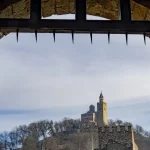
📷 Featured image by Konpasu.de on Unsplash.