On this page
- What Makes the Rhodopes Different from Bulgaria’s Other Mountain Ranges
- The Landscapes You Actually Come For
- Where to Base Yourself — Villages and Towns Worth Knowing
- Hiking the Rhodopes Without a Guide
- The Food Culture Here Is Unlike Anywhere Else in Bulgaria
- Getting to the Rhodopes in 2026
- 2026 Budget Reality — What Things Actually Cost
- Frequently Asked Questions
💰 Click here to see Bulgaria Budget Breakdown
💰 Prices updated: October, 2026. Budget figures are estimates — always verify before travel.
Exchange Rate: $1 USD = €0.88
Daily Budget (per person)
Shoestring: €35.00 – €50.00 ($39.77 – $56.82)
Mid-range: €60.00 – €100.00 ($68.18 – $113.64)
Comfortable: €150.00 – €200.00 ($170.45 – $227.27)
Accommodation (per night)
Hostel/guesthouse: €5.00 – €20.00 ($5.68 – $22.73)
Mid-range hotel: €55.00 – €95.00 ($62.50 – $107.95)
Food (per meal)
Budget meal: €7.00 ($7.95)
Mid-range meal: €20.00 ($22.73)
Upscale meal: €60.00 ($68.18)
Transport
Single metro/bus trip: €1.00 ($1.14)
Monthly transport pass: €26.00 ($29.55)
What Makes the Rhodopes Different from Bulgaria’s Other Mountain Ranges
By 2026, Bansko is fully saturated with ski tourism infrastructure, Vitosha is essentially Sofia’s backyard, and even the quieter corners of the Balkan Range are showing up on mainstream travel lists. If you want Bulgarian mountain wilderness without the crowds, the Rhodopes — stretching across roughly 14,700 square kilometres in south-central Bulgaria — are where serious nature travelers are quietly relocating their itineraries.
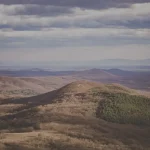
The Rhodopes don’t announce themselves the way Rila does. There’s no dramatic pyramid peak visible from a motorway, no single landmark that ends up on every postcard. What they offer instead is depth — endless forested ridges, river gorges that cut hundreds of metres into the earth, and villages where the pace of life hasn’t been adjusted for tourism. The mountains are older and more rounded than Rila or Pirin, which gives them a softer, almost ancient quality. Walking through dense beech and pine forests here, especially in early autumn when the canopy turns amber and copper, feels genuinely remote in a way that’s increasingly hard to find in Europe.
There’s also a cultural dimension that sets the Rhodopes apart. This is one of the regions where Bulgarian Muslim (Pomak) communities have lived for centuries, alongside Orthodox Christian villages, creating a blend of traditions, architecture, and cuisine you won’t find in the same concentration anywhere else in the country. Mosques and churches sit within kilometres of each other. The local dialect is distinct. The music — slow, dissonant, deeply emotional — gave rise to the famous Mystère des Voix Bulgares recordings that reached world audiences. You hear echoes of it at local festivals and even in village kafeneya if you’re lucky.
The Landscapes You Actually Come For
The single most dramatic natural feature in the Rhodopes is the Trigrad Gorge, a narrow limestone canyon in the western range where sheer rock walls rise up to 300 metres above the Trigradska River. The gorge leads to the Devil’s Throat Cave (Dyavolskoto Garlo), where the river disappears underground through a 42-metre waterfall — the sound of it inside the cave is something between a roar and a hum that you feel in your chest as much as hear. It’s accessible year-round, though early spring brings the most dramatic water volume.
Further east, the Arda River winds through a landscape of artificial lakes — Kardzhali, Studen Kladenets, and Ivaylovgrad — that have become important wetland habitats. Birdwatchers come specifically for the Eastern Rhodopes, which hosts breeding pairs of Egyptian vultures, black vultures, and eagle owls, populations that have stabilized over the past decade due to conservation work by the Bulgarian Society for the Protection of Birds.
The Wonderful Bridges (Chudnite Mostove) near Chepelare are natural rock arches formed by a collapsed cave system — the largest arch spans about 96 metres. They sit at around 1,450 metres altitude in an open meadow landscape, making them accessible even to non-hikers. The area around Shiroka Laka, with its traditional stone houses and the Shiroka Laka River cutting through a narrow valley below, gives you the Rhodope visual vocabulary in compact form.
Where to Base Yourself — Villages and Towns Worth Knowing
Your base choice determines which part of the range you can realistically explore. The Rhodopes are large enough that driving from the western to the eastern end takes well over two hours on mountain roads.
- Smolyan — the largest town in the range, with a proper hotel infrastructure, the excellent Rhodopes Regional Museum, and a planetarium. It’s the practical choice if you want reliable services and a central location for the western and central Rhodopes.
- Devin — known for its mineral water springs (you’ll see Devin water brand everywhere in Bulgaria), with a smaller, more relaxed feel and good access to Trigrad and Yagodinska Cave.
- Shiroka Laka — a village of preserved National Revival architecture, fewer than 600 residents, and one of the most atmospheric places to spend a night in the whole mountain range. There’s a small number of family guesthouses here.
- Momchilgrad or Kardzhali — for the Eastern Rhodopes and birdwatching routes. Kardzhali is a proper regional centre with budget accommodation options.
- Yagodina — tiny, close to the Bulgarian-Greek border area, and the best base for exploring Yagodinska Cave (one of the longest cave systems in Bulgaria at over 8,900 metres).
Most visitors base in Smolyan or Devin and do day trips. But spending even one night in Shiroka Laka or a village like Kovachevitsa changes the experience entirely — the mornings are silent except for water and birds, and the smell of wood smoke from the stone houses drifts through the cold air before breakfast.
Hiking the Rhodopes Without a Guide
The Rhodopes are well-suited to independent hiking, though the trail marking is less consistent than in Rila. The national trail system (marked with red, blue, or yellow blazes) covers the main routes, and the E4 European long-distance path passes through the range. Maps from Kartografia are the most reliable — the 1:50,000 Rhodopes series is still the standard in 2026, and paper copies are worth having because mobile signal disappears in the deeper gorges.
Difficulty is generally moderate compared to Rila. The highest peak, Golyam Perelik, reaches 2,191 metres — achievable by fit beginners. The terrain is more about sustained forest walking than technical scrambling. What catches people out is distance: trails that look short on a map can take longer than expected due to elevation changes and dense forest that slows navigation.
Three trails worth prioritizing:
- Trigrad Gorge loop — starting from Trigrad village, descending into the gorge, visiting Devil’s Throat Cave, and returning via the ridge path. Around 12 kilometres, moderate difficulty, 4–5 hours.
- Wonderful Bridges to Progled — a plateau walk through open meadows and old-growth forest. Relatively flat, good for families. 8 kilometres one way.
- Golyam Perelik summit trail — from the Studenets area near Smolyan. 14 kilometres return, around 700 metres elevation gain. Clear weather views stretch to the Aegean in ideal conditions.
The Food Culture Here Is Unlike Anywhere Else in Bulgaria
Rhodope cuisine has its own logic, shaped by isolation, altitude, and the mixed cultural heritage of the region. The signature dish is katino meze — a slow-cooked combination of pork, mushrooms, and peppers that varies slightly village by village but always involves long cooking time and a deep, smoky richness. In the Muslim communities, you’ll find lamb dishes that draw on older Ottoman culinary traditions — lamb with dried fruits, or slow-baked in a clay pot called a gyuvech.
Smilyan beans (Smilyansko fasul) deserve specific attention. These large, creamy white beans grown only in the microclimate around Smilyan have EU protected designation of origin status. Cooked simply with dried red peppers and local oil, they’re one of the genuinely distinctive tastes of the region. You’ll find them in almost every village mehana (tavern).
Specific places to eat:
- Mehana Vodenicharkata, Smolyan — in a converted old mill building, serves local game dishes and Smilyan beans. Reservations recommended on weekends.
- Shiroka Laka village mehanas — several family-run spots along the main road, best for lunch after the morning fog lifts from the valley.
- Devin’s mineral spa hotels have started incorporating Rhodope farm-to-table menus since 2024, with a noticeable improvement in quality by 2026.
At the weekly markets in Smolyan and Zlatograd, local producers sell dried mushrooms, mountain herb teas (mursalski chai — Rhodope tea — is the local equivalent of a superfood and tastes like thyme crossed with rosemary), sheep’s cheese, and small-batch rakiya made from plums or pears. Buy more than you think you need.
Getting to the Rhodopes in 2026
There is no train service into the high Rhodopes from Bulgaria’s main rail network — the terrain made it impossible to build. The narrow-gauge Septemvri–Dobrinishte line runs along the western edge of the range through the Mesta valley but doesn’t penetrate the core Rhodope area.
By bus, Plovdiv is your main hub. From Plovdiv’s South Bus Terminal, direct services run to Smolyan (journey time approximately 2 hours, several departures daily), Devin (around 2 hours), and Kardzhali (2.5 hours). From Sofia, services to Smolyan take around 3.5 hours and have improved in frequency since 2025 with additional Biomet and Union Ivkoni routes added.
By car remains the most flexible option, and the road network has seen modest improvements. The Plovdiv–Smolyan road via Asenovgrad (Route 86) is well-maintained and scenic. Note that some of the smaller roads connecting villages in the western Rhodopes — particularly around Trigrad and Yagodina — are narrow and gain significant altitude in short distances. A standard sedan handles them without issue in dry conditions; in winter, snow chains or winter tyres are required.
From Greece, the Rhodopes are increasingly accessible via the Xanthi–Kardzhali border crossing, which has seen growing use since Bulgaria’s full Schengen land border integration in 2025. Greek visitors and travelers entering from northern Greece now cross without the previous documentation delays.
2026 Budget Reality — What Things Actually Cost
The Rhodopes remain one of the most affordable mountain destinations in Bulgaria, which itself is still well below Western European price levels.
- Budget tier — Hostel dorms and basic family guesthouses: 30–50 BGN per person per night (15–25 EUR / 16–27 USD). Village mehana meal with a drink: 15–22 BGN (7.50–11 EUR). This is entirely viable for independent travelers.
- Mid-range — En-suite guesthouse or small hotel in Smolyan or Devin: 80–130 BGN per double room (40–65 EUR / 43–70 USD). Sit-down restaurant dinner for two with wine: 50–70 BGN. This is where most visitors end up.
- Comfortable — Spa hotels in Devin (mineral water pools included): 180–280 BGN per double room (90–140 EUR / 97–151 USD). These offer a notable step up in comfort without hitting luxury pricing by Western standards.
Entrance fees to the main attractions remain modest: Devil’s Throat Cave costs 8 BGN (4 EUR) in 2026, Yagodinska Cave 10 BGN (5 EUR). Nature park fees are not charged for day hikers on standard trails. Guided tours of the Eastern Rhodopes for birdwatching typically run 80–120 BGN per person for a half-day with a specialist guide.
Fuel costs if driving from Plovdiv: a round trip Plovdiv–Smolyan–Plovdiv is roughly 200 kilometres total, costing approximately 25–30 BGN in fuel for an average car at 2026 pump prices.
Frequently Asked Questions
When is the best time to visit the Rhodope Mountains?
Late May through June offers wildflower meadows and full rivers without summer heat. September and early October bring the best autumn colours and cooler hiking temperatures. July and August are warm but manageable at altitude. Winter is possible for snowshoeing but requires 4WD or winter tyres on mountain roads, and some guesthouses close from November to March.
Do I need to speak Bulgarian to travel independently in the Rhodopes?
Basic Bulgarian phrases help significantly in smaller villages, where English is limited among older residents. In Smolyan, Devin, and spa hotels, English is workable. A translation app handles most practical situations. The warmth of local hospitality tends to bridge language gaps more effectively here than in urban tourist zones.
Is the Devil’s Throat Cave suitable for children and less mobile visitors?
The main cave chamber is accessible via a paved path with steps and handrails, manageable for older children and moderately mobile adults. The internal stairs (around 140 steps down) rule it out for wheelchair users or those with significant mobility limitations. The gorge road outside is accessible for all and worthwhile in itself even without entering the cave.
Are there bears and wolves in the Rhodopes, and is hiking safe?
Brown bears and wolves are present in the Rhodopes, but encounters on marked trails are extremely rare. Standard precautions apply: make noise while walking, don’t leave food unattended at camp, and check with local rangers or guesthouse owners about recent animal activity in specific areas. No hiker attacks have been recorded on popular Rhodope trails in recent years.
Can I visit the Rhodopes as a day trip from Plovdiv?
Yes, but only for specific sites like Trigrad Gorge or the Wonderful Bridges. A single day is enough for one destination with an early start. To genuinely experience the mountain character — the villages, the slower pace, the food culture — at least one overnight stay makes a meaningful difference. Most travelers who do one night return wishing they had planned two.
📷 Featured image by Anton Atanasov on Unsplash.