On this page
- Why October Is Bulgaria’s Underrated Spa Season
- The Main Thermal Spa Regions to Know
- What Bulgarian Thermal Spas Actually Look Like
- 2026 Budget Reality: What You’ll Pay for a Spa Retreat
- How to Get to Bulgaria’s Spa Towns from Sofia and Beyond
- Combining Thermal Spas with October’s Wider Landscape
- Practical Tips Before You Go
- Frequently Asked Questions
Why October Is Bulgaria’s Underrated Spa Season
Most visitors to Bulgaria think of ski season (December through March) or beach season (June through August). October sits in a gap that many travellers overlook — and that is exactly what makes it valuable. By early October, summer crowds have cleared out, hotel prices drop noticeably, and the landscape turns amber and red across the valleys. The air is cool enough that sitting in a 38°C thermal pool feels genuinely restorative rather than uncomfortable. If you tried booking a spa weekend in the Rhodope foothills in August 2026, you likely found packed facilities and inflated rates. In October, the same pools are quiet.
There is a practical reason Bulgarians themselves favour this window. The country’s thermal springs have been used continuously since Roman times, and locals treat them as medicine, not tourism. October is when many Bulgarian families visit for a few days of rest before winter — so the atmosphere is calm and purposeful rather than festive. That suits travellers who want real recovery, not a party.
The Main Thermal Spa Regions to Know
Bulgaria has an unusually high concentration of natural thermal springs for a country of its size. They are spread across several distinct regions, each with a different character.
Velingrad — The Spa Capital
Velingrad, in the western Rhodope Mountains, is consistently described as Bulgaria’s spa capital, and for good reason. The town sits at around 750 metres altitude and has dozens of springs with temperatures ranging from 27°C to over 90°C. Some springs are municipally managed and open to the public for very low entry fees. There are also larger hotel complexes with private pools fed by the same mineral water. In October, the beech forests surrounding the town are at peak autumn colour — the drive in from Plovdiv through the Rhodope is genuinely beautiful.
Hisarya
Hisarya sits in the Thracian Plain between Plovdiv and Karlovo, at a lower altitude than Velingrad. It is one of the oldest spa settlements in Bulgaria, with Roman ruins still visible near the springs. The town feels low-key and slightly faded, which is part of its appeal. Hotels here tend toward the mid-range and functional rather than luxury, but the thermal water access is reliable and inexpensive. It is an easy day trip from Plovdiv or a short overnight stay.
Sapareva Banya
Near Dupnitsa in the western part of the country, Sapareva Banya is home to one of the hottest springs in Bulgaria — a geyser that reaches around 103°C. The water is cooled before use, obviously, but the mineral content is high and the setting, at the foot of Rila Mountain, is dramatic in October when early snow may already be visible on the higher peaks. The town itself is small, but there are several hotels with their own thermal pools.

Banya, near Razlog
This small village near Razlog and Bansko has hot springs that have been used for centuries. It sits in the Razlog Valley with Pirin Mountain as a backdrop. In October, this area sees far fewer visitors than during the ski season, so you get mountain scenery and thermal water without the winter crowds. Facilities here are simpler than Velingrad, but prices reflect that.
What Bulgarian Thermal Spas Actually Look Like
Before you arrive expecting a Scandinavian-style wellness resort, it helps to understand what Bulgarian thermal spas typically are. The majority of facilities — especially the municipal ones — are straightforward: a pool of mineral water, changing rooms, and not much else. The water itself is the point. There are no mood-lit relaxation lounges, no essential oil diffusers, no silent zones. People chat, children splash at the edges, and older men sit in the hot section for longer than any doctor would recommend.
That said, the hotel-based spa complexes have evolved significantly. Many mid-range and comfortable hotels in Velingrad and Hisarya now offer private thermal pools, sauna facilities, massage services, and proper treatment rooms. These are not quite Western luxury spa standards, but they are genuinely good value and well-maintained. The mineral water quality — rich in calcium, magnesium, and various trace elements depending on the spring — is the real draw regardless of setting.
The smell of sulphur is present at some springs more than others. Velingrad’s water tends to be relatively mild in smell. Some springs near Sapareva Banya are more pronounced. If you are sensitive to that, check which specific hotel or pool you are booking and read recent guest reviews from 2025 or 2026.
2026 Budget Reality: What You’ll Pay for a Spa Retreat
Thermal spa tourism in Bulgaria remains genuinely affordable by European standards, even accounting for modest price increases since 2024.
- Budget: Municipal thermal pools charge entry fees typically between 5 and 10 BGN per person (roughly €2.50–€5 / $2.70–$5.50). A basic guesthouse or small hotel room in Velingrad or Hisarya with shared or private thermal pool access starts at around 60–90 BGN per night (€30–€46 / $33–$50).
- Mid-range: A comfortable hotel room with private bathroom, in-house thermal pool access included, and breakfast runs 130–220 BGN per night (€66–€112 / $72–$122). Massage sessions at these hotels typically cost 50–80 BGN per hour (€25–€41 / $27–$44).
- Comfortable: The better hotel complexes in Velingrad — not luxury by Western definitions, but well-equipped, with multiple pools, treatment menus, and good food — charge 250–400 BGN per night (€128–€204 / $140–$223) for a double room including pool access. Full-day spa packages with treatments can run 150–250 BGN per person (€77–€128 / $84–$140).
Dining in spa towns is inexpensive. A full meal at a local restaurant — soup, grilled meat or fish, salad, and a drink — costs 20–35 BGN (€10–€18 / $11–$20) per person. October is not a peak season for restaurants either, so service is attentive and portions tend to be generous.
How to Get to Bulgaria’s Spa Towns from Sofia and Beyond
Sofia is the natural starting point for most international visitors. From Sofia Airport, you can reach the main spa regions by several means, all well-established.
To Velingrad: Direct buses run from Sofia’s Central Bus Station. The journey takes roughly two to two and a half hours depending on the route and traffic. Some services go via Pazardzhik. There is no direct train to Velingrad from Sofia, though a scenic narrow-gauge railway connects Septemvri to Dobrinishte and passes through Velingrad — slow but memorable.
To Hisarya: The easiest approach is via Plovdiv. Plovdiv is well-connected to Sofia by both bus and intercity train. From Plovdiv, buses and shared taxis serve Hisarya regularly. The total journey from Sofia to Hisarya by public transport takes around two hours.
To Sapareva Banya: Regular buses connect Sofia to Dupnitsa. From Dupnitsa, local buses or taxis cover the short distance to Sapareva Banya. Total journey time from Sofia is around an hour and a half to two hours.
If you are driving, all these destinations are reachable on good roads within two hours of Sofia. Parking at hotels and municipal spas is generally free or very cheap. Renting a car gives you flexibility to combine multiple spa towns in one trip.
Combining Thermal Spas with October’s Wider Landscape
One of the underappreciated aspects of an October spa trip to Bulgaria is what surrounds the springs. The Rhodope Mountains in October carry a particular stillness — the summer hikers are gone, the ski season has not started, and the forests are burning with colour. Walking even a short trail through the beech woods above Velingrad and then returning to a thermal pool afterwards is a combination that earns its reputation. The contrast between cold autumn air and warm mineral water is something that stays with you.
Near Hisarya, the Roman ruins of Diocletianopolis are right in town and worth an hour of exploration. The Thracian Plain in October has a hazy, golden quality to the light in the afternoons that makes even a short drive feel scenic.
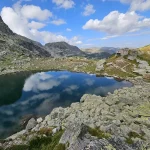
If you are based near Sapareva Banya, the lower trails of Rila National Park are accessible and uncrowded in October. The Seven Rila Lakes are at high altitude and can be cold or snowy by late October, so check conditions before heading up. The lower forest trails, however, are typically fine through the end of the month.
Practical Tips Before You Go
- Pack layers. October in Bulgarian mountain towns means mornings around 5–10°C, afternoons potentially reaching 15–18°C in lower areas, and evenings dropping quickly. The contrast with warm pools makes layers essential.
- Bring flip-flops. Pool areas at Bulgarian spas — even good hotels — expect you to have them. Some hotels provide them, many do not.
- Cash still matters. Municipal pools and smaller guesthouses often do not accept cards. Keep some BGN on hand. ATMs are available in Velingrad and Hisarya town centres.
- Health note: Thermal spring water at high temperatures is not suitable for everyone. People with cardiovascular conditions, low blood pressure, or skin sensitivities should consult a doctor before extended pool use. This applies at any temperature above 38°C.
- Language: English is spoken in most hotel receptions but less reliably at municipal pools or smaller guesthouses. A translation app helps. Bulgarian staff are generally patient and accommodating with non-Bulgarian speakers.
- Schengen entry: Bulgaria is now part of the Schengen Area for air and sea travel, simplifying entry for many international visitors. Check current requirements for your specific nationality before travel, as the rules that apply to you depend on your passport.
Frequently Asked Questions
Is October a good month to visit Bulgarian thermal spas?
October is one of the best months. Crowds are low, prices are down from summer peaks, and the cool autumn air makes the warm mineral pools genuinely enjoyable. The autumn foliage in mountain spa towns like Velingrad adds a visual dimension that summer visits simply do not offer. Weekday stays are especially quiet and affordable.
Which Bulgarian spa town is best for a first-time visitor?
Velingrad is the most practical first choice. It has the widest range of accommodation, the highest concentration of thermal pools, good transport connections from Sofia, and enough restaurants and cafés to feel comfortable for several nights. It is also the town with the most English-language information available from hotels.
Do I need to book thermal spa treatments in advance?
For pool-only access at municipal facilities, walk-in is standard. For hotel spa treatments — massages, hydrotherapy, or package days — booking at least a few days ahead is sensible in October, particularly around the Bulgarian school autumn holiday week in late October. Some smaller hotels have only one or two therapists on staff.
Are Bulgarian thermal spas medically supervised?
Many Bulgarian spa hotels offer access to a doctor or balneologist (a specialist in mineral water therapy) as part of their services, particularly the older sanatorium-style establishments. This is a genuine tradition in Bulgarian spa culture, not a marketing term. If medical oversight matters to you, ask the hotel specifically before booking whether a doctor is on-site.
How far are Bulgaria’s spa towns from Sofia Airport?
Velingrad is roughly 130 kilometres from Sofia — around two to two and a half hours by road. Hisarya is about 140 kilometres, reachable in under two hours on the motorway to Plovdiv and then a short detour. Sapareva Banya is among the closest at around 80 kilometres from Sofia, making it feasible even for a long day trip.
Explore more
September 2026: Bulgaria’s Charm Without the Summer Crowds
Taste of Autumn: Discovering Bulgaria’s Seasonal Delights in September 2026
Bulgaria’s Monasteries in September 2026: A Serene Autumn Visit
📷 Featured image by Antonio Sharaliev on Unsplash.